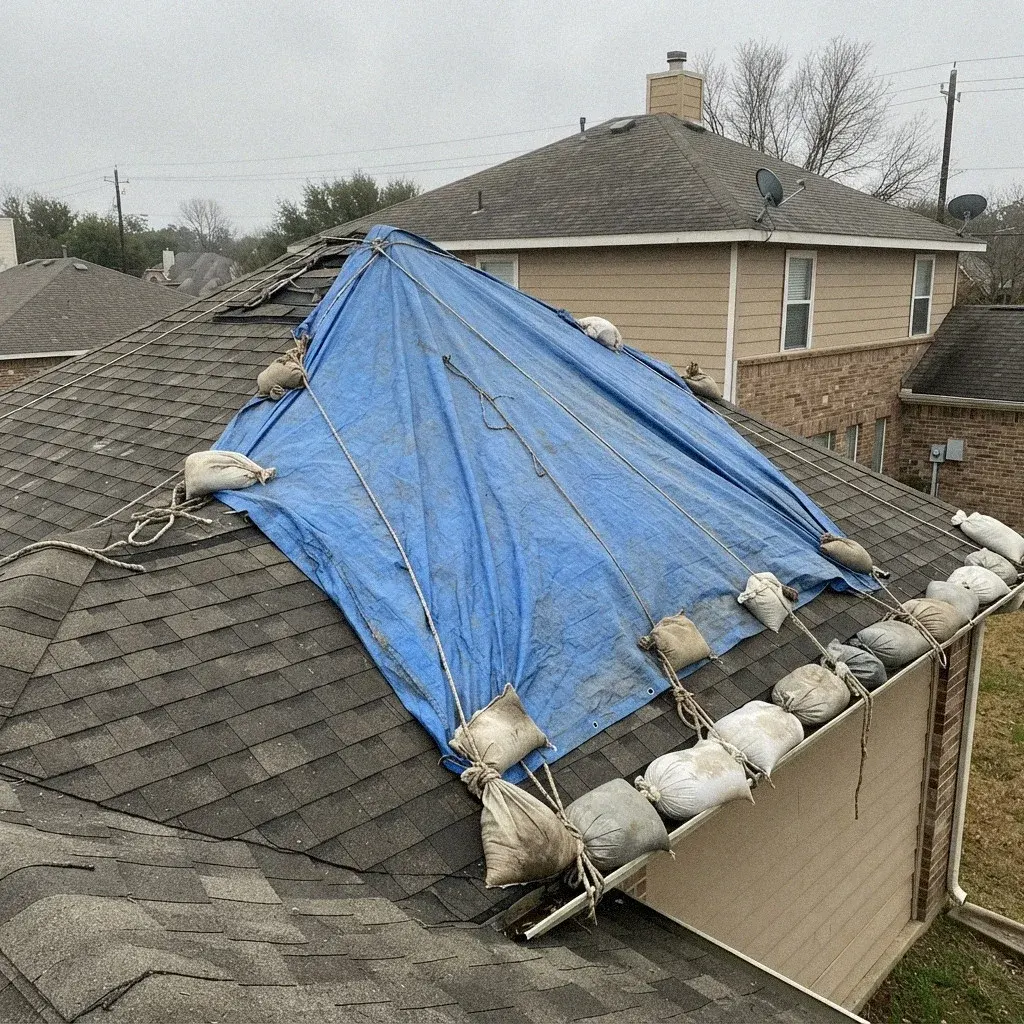
Emergency Roof Tarping
An open roof covered and anchored today, before the next rain finds it.
Learn about Emergency Roof TarpingDowntown Minneapolis's riverfront district, built up recently around U.S. Bank Stadium.
Downtown East is a mixed neighborhood of converted warehouses, mid-rise apartment blocks, and the U.S. Bank Stadium footprint, built up largely since the 2000s alongside older brick structures near Washington Avenue. It has no single-family blocks or cul-de-sacs; nearly every roof here belongs to a multi-unit building rather than a house on its own lot line.
Freeze-thaw cycling, heavy snow load, and summer hail wear down roofs here more than any one storm does.
Freeze and thaw work on fasteners. Through a run of Minnesota winters the deck under a roof in Downtown East shifts a little with every cycle and nails back out a fraction each time. A proud nail head holds the course above it off the deck, which is all the purchase a gust needs.
Anywhere close to Mississippi River, expect the roof to stay wet longer after rain. A slope that never dries out properly holds moss in the shingle seams, and moss lifts the course above it, which is how a cosmetic problem turns into a leak.
Flat commercial roofing here deals with ponding water and ice buildup differently than a pitched residential roof, since there's no slope pushing snowmelt off during Minnesota's freeze-thaw swings. Summer hail from Twin Cities thunderstorms is the other recurring stress on these membrane surfaces. Fall is the narrow window for getting ahead of winter, not a season to wait out. A roof with a small weakness in October usually turns into an ice dam problem in January, once snow load and cold settle in for months.
Downtown East has U.S. Bank Stadium nearby, which means flat and low-slope roofs as well as pitched ones. Those live or die on documentation: a warranty is only worth what the paperwork behind it can prove.
Ballpark figures so you can plan. Nothing is charged until you have seen a written estimate for your own property.
| Service | Estimated cost |
|---|---|
| Emergency Roof Tarping | an estimated $350–$1400 |
| Flashing & Chimney Repair | an estimated $350–$1900 |
| Flat & Low-Slope Roofing | an estimated $9000–$26000 |
| Gutter Repair & Replacement | an estimated $1200–$4800 |
| Gutter Cleaning & Gutter Guards | an estimated $175–$500 |
Gold Medal Park sits along the river frontage near the old mill district, a green marker between the stadium blocks and the older brick buildings that predate this neighborhood's current build era.
The Mill District borders Downtown East along the river, sharing the same mix of converted industrial buildings and newer construction that defines low-slope roofing needs in this corridor.
Stone Arch Bridge marks the edge of this neighborhood along the Mississippi, a fixed point locals use for directions when the newer stadium-area streets don't yet register on a map.
An open roof covered and anchored today, before the next rain finds it.
Learn about Emergency Roof Tarping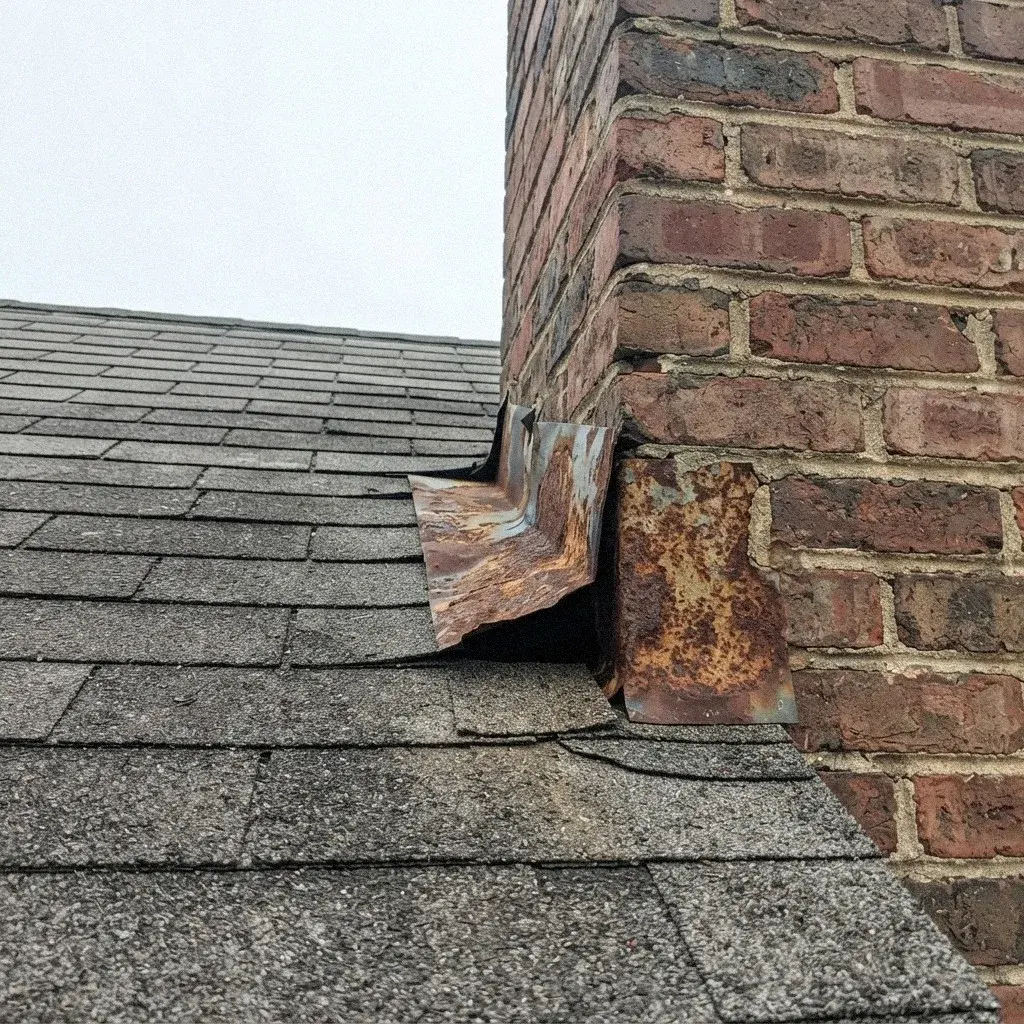
Repairing the metal seals at your chimney, valleys, and walls.
Learn about Flashing & Chimney Repair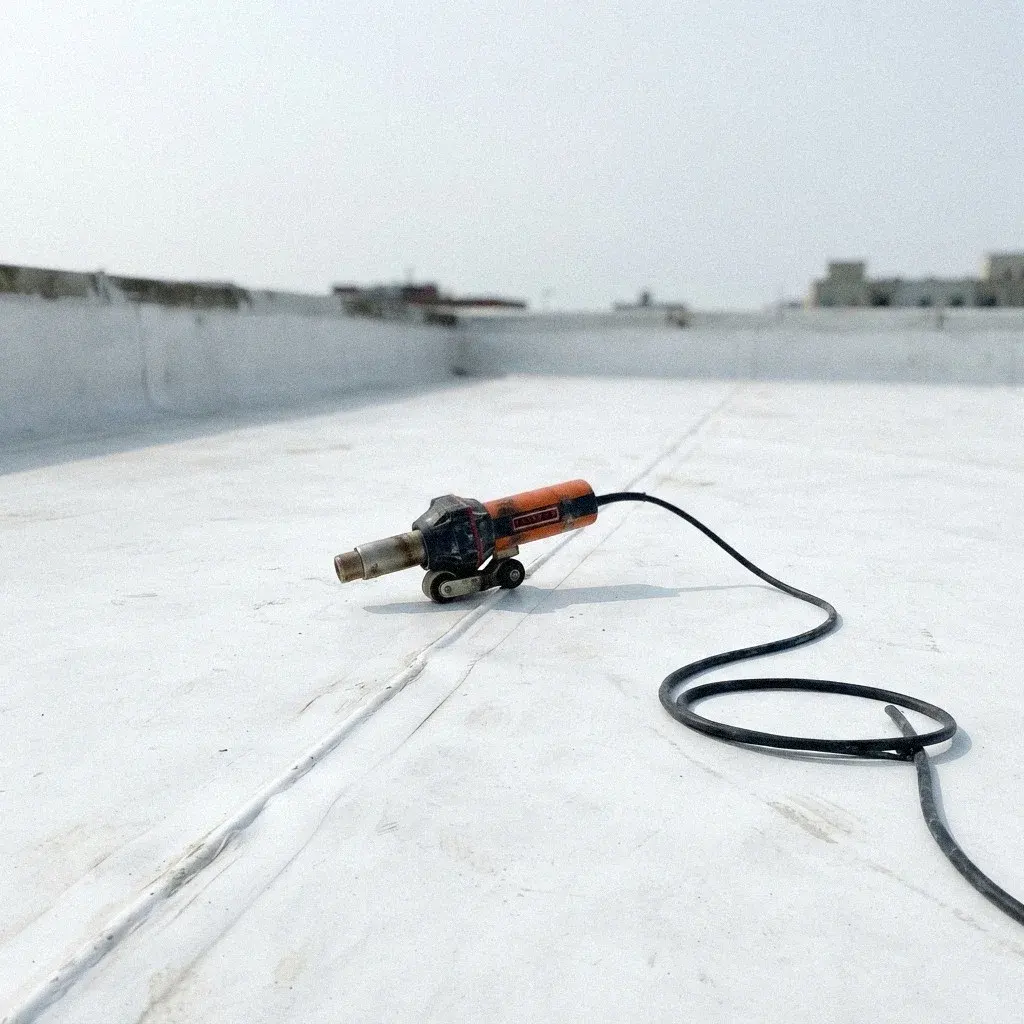
Low-slope membrane roofing built to drain through a Minnesota winter.
Learn about Flat & Low-Slope Roofing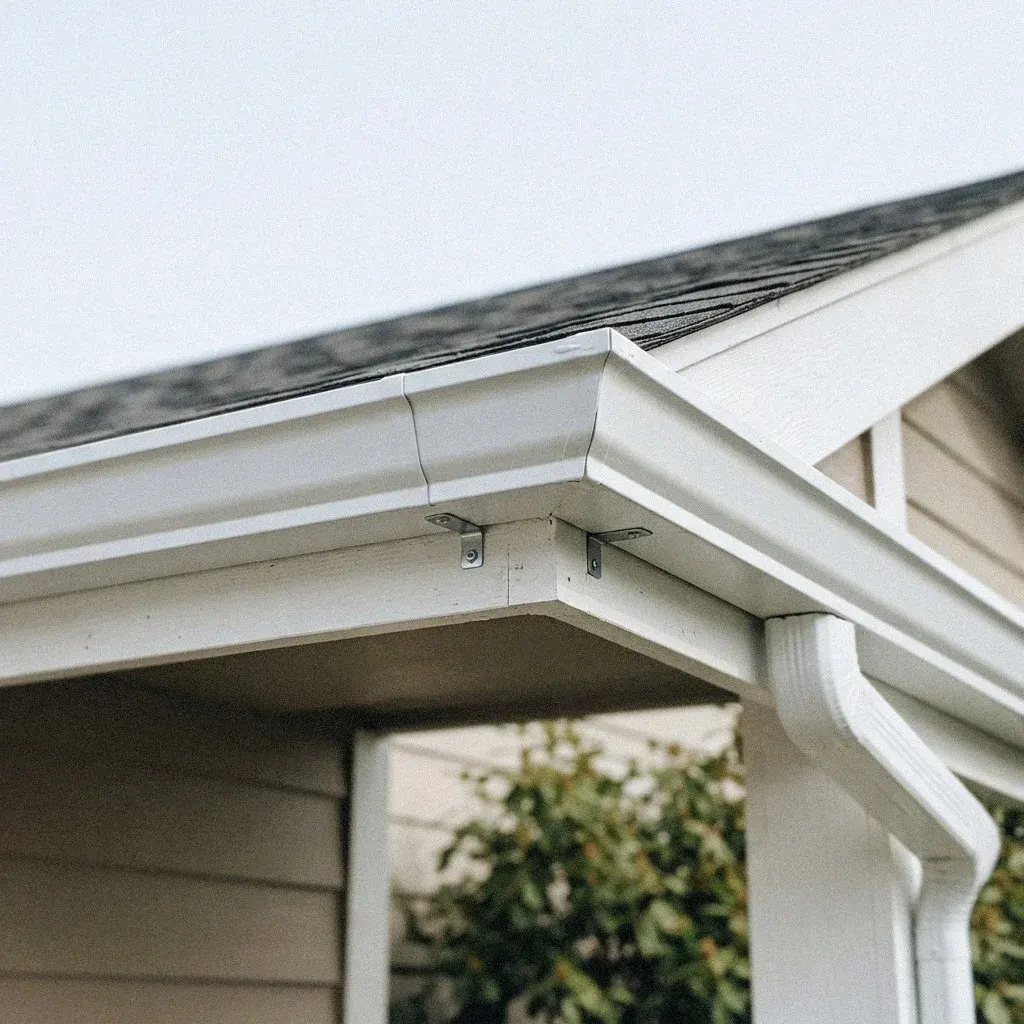
Straight talk on whether your gutters need fixing or full replacement.
Learn about Gutter Repair & ReplacementYes. Minneapolis requires a building permit for roofing work, and a flat or low-slope roof is no exception. It is filed before the work starts and closed with an inspection afterwards, which matters more than it sounds on a Downtown East building: an open permit stays attached to the property and turns up later during a sale or a refinance. The contractor normally pulls it. Fees and details are the city's to quote, so check with Minneapolis Development Review rather than taking a number from a bid.
Flat and low-slope membrane roofing dominates here, a product of the mid-rise and high-rise construction built mostly from the 2000s forward. That's a different roof type than the asphalt shingle pitched roofs on Minneapolis's older bungalow and foursquare neighborhoods, and it calls for different upkeep.
Without a slope to shed water, ponding and ice buildup sit directly on the membrane through Minnesota's freeze-thaw cycles, stressing seams over time. Summer hail from Twin Cities thunderstorms adds a second wear source that pitched shingle roofs elsewhere in the city handle differently.
It depends on the building, and Downtown East has both kinds. For a house, duplex, triplex or fourplex, anyone contracting directly with the owner has to hold a Minnesota residential roofer, residential building contractor or remodeler license from the Department of Labor and Industry. Larger commercial buildings and towers sit outside that residential definition and follow a different route. Ask which one applies to your building before comparing bids, because the two are not interchangeable.
Yes, differently than a house. Multi-story flat roofs need staging for equipment lifts rather than ladder access, and shared building access means coordinating with property management adds a step that a single-family service radius elsewhere in the city doesn't require.
If water is still spreading, a ceiling is sagging, or it has reached outlets or a panel, call now and it is handled as an emergency, day, night, weekend, or holiday. Downtown East is a short drive from Minneapolis, which keeps response times short. For a contained problem that has already stopped, a planned visit costs less for identical work.
Minneapolis roofs answer to the same winter, but not identically. A foursquare in Tangletown with tight attic ventilation ice-dams differently than a bungalow near Lake Nokomis with more roof exposed to open sky. Homes close to the Mississippi River gorge catch different wind than ones tucked into Fulton or Kingfield. Hail from a summer thunderstorm hits every neighborhood the same day, but the roof underneath it, its age, its pitch, its attic insulation, is never quite the same house to house.
Call (612) 493-0152