Small round bump felt under a shingle
A small round bump under a shingle, felt more than seen from a ladder, means a fastener has backed out of the decking below and is pushing the shingle up from underneath.
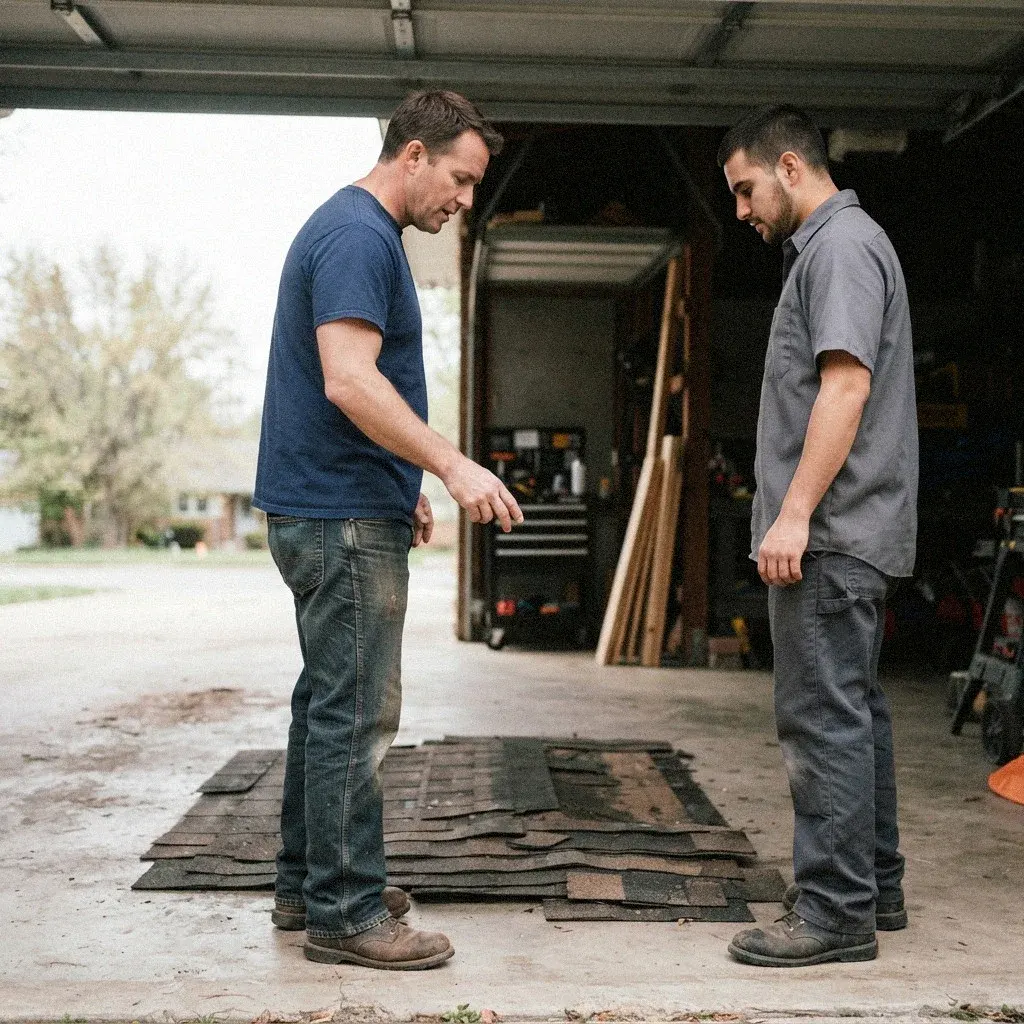
Late spring through fall is when nail-pop repair gets scheduled around Minneapolis, once the ground has thawed and roofs have dried out from the last snow load.
Nail pops from frost movement happen when fasteners work loose as decking swells and shrinks through Minneapolis freeze-thaw cycles, pushing shingle heads up in small round bumps you can feel on a ladder or spot as dimples from the attic side.
Attic ventilation does more work than most homeowners give it credit for. Without enough airflow, warm air pools under the roof deck, melts snow unevenly, and sets up the freeze-thaw cycle that pushes ice back under shingle edges.
A small round bump under a shingle, felt more than seen from a ladder, means a fastener has backed out of the decking below and is pushing the shingle up from underneath.
A straight line of bumps is the giveaway, because nails go in along a marked strip and nothing in the weather works in rows. It means the fasteners on that course have backed out together, usually because the decking beneath them has been swelling and shrinking as a unit. The whole row needs refastening, not the two bumps that show worst.
Pinpoint light or a shiny nail tip poking through the attic underside of the decking means the fastener drove in at a bad angle and frost movement is pulling it back out.
A bright nail tip below the deck means the fastener never caught a rafter and has been held by sheathing alone. Those are the first to back out, and the shine says it moved recently, since an old exposed tip rusts. Seeing several in one area points to a whole section fastened short, which is a re-nailing job rather than a spot repair.
Once the head is bare, the shingle above it has already split or worn through and the nail is taking weather directly. That is an open hole, and in this climate it fills with water that freezes and widens the crack every night. It is small enough to fix cheaply today and the sort of thing that becomes decking work if it waits a season.
Minneapolis winters push attic decking through repeated freeze-thaw cycles, and each swing loosens a fastener a little more, which is why nail pops show up on so many older bungalows and foursquares here.
Homes near Longfellow and Tangletown with steep-pitched roofs and less attic insulation than current code see faster decking movement, since heat escaping past the substrate speeds up the swelling and shrinking.
A roof rarely fails on the day of the storm. Damage from hail or wind shows up weeks later as a slow leak, a stained ceiling, or shingles missing after the next gust. Catching it early usually means a repair instead of a full reroof.
Nail pops get read as hail damage, because both leave small round marks scattered over a shingle field and both turn up on Minneapolis roofs in the same storm season. Check the pattern first. Nail pops line up along the shingle's nailing strip in rows; hail marks scatter with no order and often cluster where a roof faces the storm's direction that day.
Real repair means pulling the popped nail, setting a new fastener in solid decking nearby, and sealing the old hole so water can't use it as a path down through the underlayment.
Where a shingle has cracked around the raised head, the fix includes replacing that shingle rather than just resetting the nail, since a split tab won't reseal on its own.
A roof here works hardest in winter, not summer. Snow piles up, melts a little near the ridge, then refreezes at the eaves into an ice dam that backs water under the shingles. Attics with weak insulation make it worse. The licensed pros we connect you with check ventilation before they ever talk shingles.
| What you have | The sensible option |
|---|---|
| One failure in one place, found early | One visit |
| A repair that has already been done once and failed | Replacement rather than another repair |
| Water that has got past the underlayment | Replacement, because the structure is involved |
The useful homeowner check for this one happens indoors: a flashlight along the underside of the deck shows nail tips that missed framing without anyone going near the roof. Outside, look for dimpled rows in raking light. Pounding a popped nail back down splits the shingle and makes the hole worse, so the refastening is for the licensed pros we connect you with.
Nail pops rarely cause health problems on their own, but a hole left open at a cracked shingle lets moisture reach attic insulation near Kingfield and Fulton homes, and damp insulation can support mold over a season.
A guide figure for nail pops from frost movement locally is an estimated $400 to $2200, which is a band rather than a quote. Minneapolis winters kill off the insects that drive roofing costs elsewhere, so a licensed inspector isn't pricing carpenter ant or wood-boring damage here. What shows up instead near Longfellow or Kingfield bungalows is ice dam rot at the eaves and nail corrosion from decades of freeze-thaw. That's a moisture and age question, not a pest one, and it changes what actually gets quoted. pricing guide.
Roof Defects. Ponding is water sitting on a flat roof more than 48 hours after rain or snowmelt.
Eave Membrane Failure. Failed ice and water shield means the membrane installed under shingles at the eave has gapped, torn, or was laid wrong, letting backed-up meltwater reach the decking during a Minneapolis freeze-thaw cycle.
Roof Defects. Wind-lifted and missing shingles show up as bare gaps or flapping tabs on a roof slope, usually after a Minneapolis thunderstorm, with torn shingles sometimes landing in the yard below.
No. Nail pops come from decking expanding and shrinking through winter, not from a single storm. They show up as a straight row of bumps following the nailing strip, while hail or wind damage scatters randomly across a slope, often on the side that faced the weather.
Not right away. A raised nail head only leaks once the shingle cracks around it or the fastener backs out far enough to expose the hole underneath. Left through a few more Minneapolis freeze-thaw cycles, though, that gap widens and starts letting water reach the decking.
Hammering it flat again usually splits the shingle further and doesn't stop the same spot from popping back up next winter. A proper fix pulls the fastener, resets it in solid wood nearby, and patches the shingle, which holds through repeated freeze-thaw movement.
Left alone through enough Minneapolis winters, each popped nail becomes a small entry point for water, and a roof with dozens of them starts leaking in several spots at once rather than one obvious place, making the eventual repair bill larger.
Roof trouble in Minneapolis tends to build quietly first. A shingle edge curls, a valley loses granules, flashing around a stack pulls loose a little more each freeze-thaw cycle. None of that shows from the driveway. What finally gets noticed is a stain on a ceiling or ice piling up at the gutter line, and by then the damage underneath is older than the sign of it.
Call (612) 493-0152