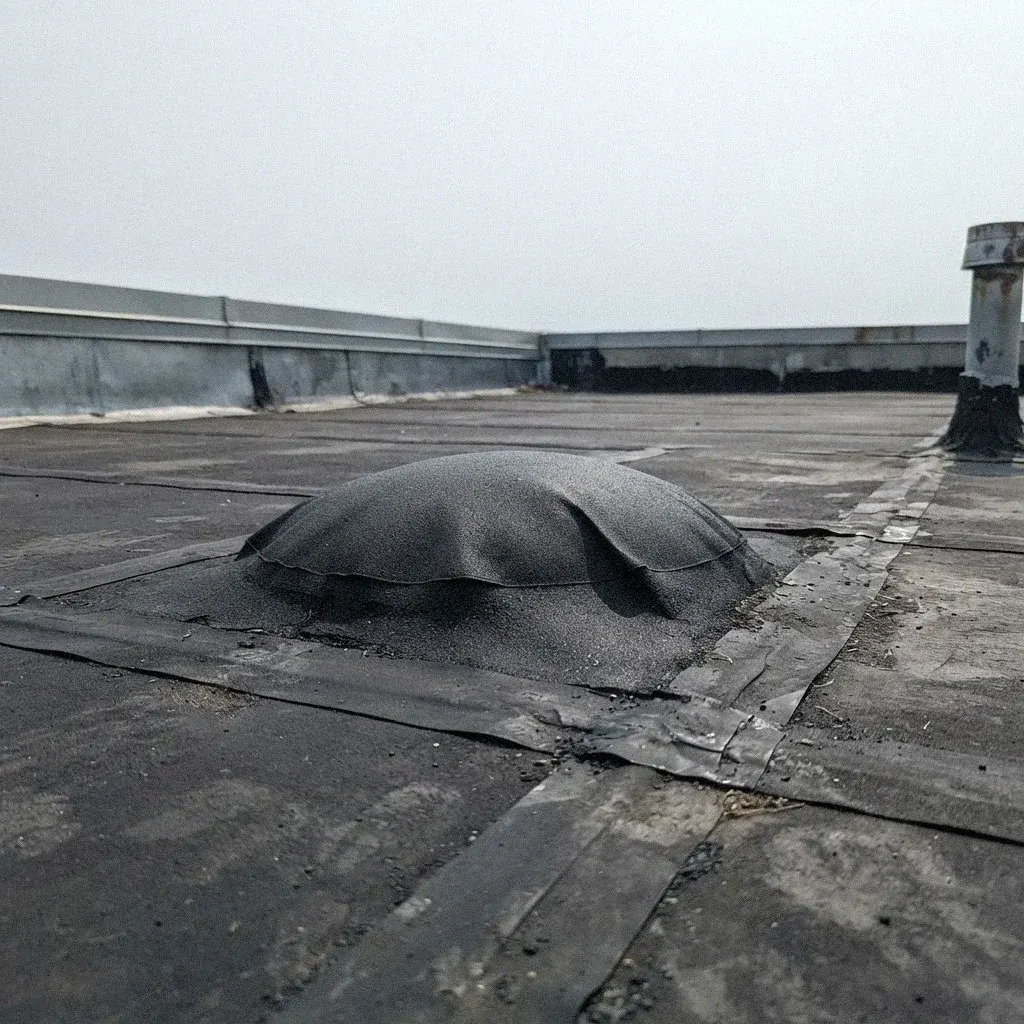
Choosing and Maintaining a Low-Slope Roof System in Minneapolis, MN
TPO, PVC, EPDM, modified bitumen, and coatings compared for flat-roofed additions and older Minneapolis buildings.
A low-slope roof system pairs a membrane like TPO, PVC, EPDM, or modified bitumen with proper insulation, drains, and terminations so water moves off the roof instead of pooling.
Membrane Types and Where They Fit
Low-slope roofs cover most commercial and multi-family buildings across Minneapolis, from Downtown West high-rises to flat-roofed additions on Kingfield foursquares, and the material choice here is different from a steep asphalt roof entirely. A membrane system has to shed water across a nearly flat plane while surviving 51 inches of average annual snowfall and swings from below-zero cold to summer heat. This page compares TPO, PVC, EPDM, modified bitumen, built-up roofing, and coatings on that basis, then covers attachment, insulation, drainage, and the details that decide whether a low-slope roof lasts.
Six systems dominate low-slope work in the Twin Cities metro: TPO membrane, PVC membrane, EPDM, modified bitumen, built-up roofing, and roof coatings applied over an existing surface. Each handles Minneapolis winters differently. TPO and PVC seams get hot-air welded into a continuous sheet, EPDM relies on adhesive or tape at seams, modified bitumen is torched or adhered in overlapping sheets, and built-up roofing layers asphalt and felt under gravel or a cap sheet. The right choice depends on the building, the roof's slope, and how it will be attached.
This guide treats a low-slope roof as one connected system rather than a stack of separate choices, because that is how these roofs actually fail. A membrane can be rated for decades and still leak in five years if the insulation beneath it holds water, the drains can't keep pace with a summer cloudburst, or a rooftop unit curb was flashed wrong. Buildings near Elliot Park and the Mill District carry the same low-slope roofs as warehouses in the North Loop, and the failure points repeat across all of them.
Insulation, Cover Board, and Taper
TPO membrane and PVC membrane are the two thermoplastic options seen most on newer low-slope roofs in Minneapolis, both welded at the seams with hot air rather than glued or taped. TPO is the more common of the two on commercial buildings around Downtown East and Elliot Park because it costs less installed, while PVC costs more but holds up better against grease and chemical exposure, which matters on restaurant roofs along Nicollet Mall. Both come in wide sheets that reduce the number of seams compared to older membrane types.
EPDM, a synthetic rubber membrane, has been used on Minneapolis low-slope roofs longer than TPO or PVC and still shows up on older commercial buildings and additions in neighborhoods like Longfellow and Seward. Its seams are taped or adhered rather than welded, which means seam quality depends heavily on installer care and on temperatures at time of install, since cold-weather adhesion is harder to get right during a Minnesota fall. EPDM handles UV exposure and temperature swings well once seams are sound, but a failed seam is the most common EPDM callback.
- TPO membrane is heat-welded at the seams and reflects summer sun, a plus on Minneapolis additions near Lake Harriet or Bde Maka Ska where attic and low-slope sections both run hot in July.
- PVC membrane welds the same way as TPO but resists grease and chemical exposure better, which matters on flat sections above kitchen vents in denser blocks like Eat Street or the Mill District.
- Cover board over tapered insulation protects the membrane from below while building slope toward drains, cutting ponding risk on Minneapolis low-slope roofs.
- Modified bitumen is torched, hot-mopped, or cold-applied in overlapping sheets, a familiar system on older additions in Marcy-Holmes or St. Anthony East built when built-up asphalt roofing was still standard.
- Built-up roofing layers asphalt and felt into a thick, heavy membrane, still found on some Near North and Camden garages, though it is rarely the choice for new low-slope work today.
- Roof coatings extend an aging membrane's life on a budget but do not replace a full system; they suit a low-slope garage roof in Webber-Camden or Victory that is sound but showing surface wear.
Seams, Terminations, and Flashing Details
Modified bitumen and built-up roofing are the older, layered systems still common on pre-1980s buildings, which describes a large share of Minneapolis's low-slope stock given how much of the city's housing and commercial building predates 1940. Built-up roofing layers asphalt-saturated felt with hot asphalt between plies, finished with gravel or a cap sheet, while modified bitumen uses fewer, thicker sheets reinforced with polymer for more flexibility in cold. Both rely on multiple plies for redundancy, so a single puncture rarely causes an immediate leak the way a membrane breach can.
Roof coatings are a maintenance and life-extension option rather than a standalone roofing system, applied over an existing membrane, modified bitumen, or metal roof that's still structurally sound but showing UV wear or minor surface cracking. A coating restores reflectivity and adds a sacrificial weather layer without the cost of tear-off, which appeals to building owners around Whittier or Lyn-Lake managing older commercial roofs on a budget. Coatings only work on a roof that's dry and free of trapped moisture, so a moisture survey has to come first.
- Tapered insulation builds slope into a flat deck so water reaches a drain instead of sitting, useful on additions in Cooper or Howe where the original framing left almost no pitch at all.
- Cover board sits between insulation and membrane, adding a stable, puncture-resistant surface, worth including on any low-slope job over a Minneapolis basement-heavy home where roof leaks and attic moisture are already connected.
- Roof drains and scuppers move water off a flat section fast; a drain sits mid-roof over a pipe, a scupper cuts through a parapet wall, both common on additions in Linden Hills or East Isles.
- Pitch pans seal roof penetrations like pipes and vents with a filled metal pan, while walkway pads protect the membrane where maintenance crews step near rooftop units on buildings around Downtown West or Elliot Park.
Comparing the Main Membrane Options
Attachment method is a separate decision from membrane choice, and Minneapolis roofs use three approaches: fully adhered, where the membrane is glued directly to the substrate; mechanically attached, where fasteners and plates hold the membrane at intervals under the seams; and ballasted systems, where loose stone or pavers hold the membrane down by weight alone. Ballasted systems are less common on buildings near Downtown West given wind considerations at height, while fully adhered and mechanically attached systems dominate on lower commercial roofs across the Twin Cities metro.
Insulation beneath the membrane does two jobs: it insulates against Minneapolis winters and it can be tapered to create slope where the roof deck itself is flat. Tapered insulation, cut in graduated thicknesses, directs water toward drains instead of letting it sit and can correct a roof that was built without enough pitch to begin with. A cover board sits on top of the insulation and under the membrane, adding puncture resistance and a smoother surface, which matters on roofs that see foot traffic from rooftop mechanical work.
| Membrane Type | Attachment | Typical Lifespan |
|---|---|---|
| Wind uplift resistance | Depends on ballast weight, not fasteners | Relies on adhesive bond strength |
| Roof deck penetrations | None from membrane attachment | None from membrane attachment |
| Added structural load | Significant, from stone or pavers | Minimal, membrane weight only |
| Common on | Large open commercial decks | Additions over occupied space |
| Typical seam or repair method | Hot-air welded seam, mechanically fused | Adhesive-taped or liquid-flashed seam |
Recover Versus Full Tear-Off
Roof drains and scupters need clear paths, and pitch pans around pipe penetrations deserve a look every year. Pitch pans fill with a pourable sealant that shrinks and cracks over time, especially after a Minneapolis winter of freeze-thaw cycles. Walkway pads near rooftop units protect the membrane where techs actually step. On buildings near Nicollet Mall or the Mississippi River, wind-driven debris collects at these low points, so clearing them each fall matters as much as the welds themselves.
Drainage on a low-slope roof runs through roof drains, scuppers, or a combination of both, and undersized or poorly placed drainage is a frequent cause of ponding after a heavy Minneapolis thunderstorm. Roof drains sit within the field of the roof and connect to interior plumbing, while scuppers are openings through a parapet wall that let water exit at the roof edge, often paired with an overflow scupper set slightly higher as a backup. Given the multi-inch cloudburst events the Twin Cities metro has seen, overflow provisions aren't optional extras.
Curbs, Pitch Pans, and Rooftop Penetrations
Pitch pans, small metal boxes filled with sealant around pipes and conduits that penetrate the roof, are one of the highest-maintenance details on any low-slope system because the sealant inside them dries and cracks faster than the membrane around it. Walkway pads, laid in a path from the roof hatch to rooftop equipment, protect the membrane from foot traffic and dropped tools during HVAC service calls. Curbs supporting rooftop units need their own flashing tie-in to the membrane, separate from the unit's own weatherproofing.
Recover versus tear-off is the core decision when an existing low-slope roof is failing. Recovering means installing a new membrane over the old one, which costs less but only works if the existing roof is dry, structurally sound, and code allows another layer. Tear-off removes everything down to the deck and starts over, which costs more but resets service life and lets a contractor fix insulation, drainage, or deck problems hidden under the old roof. Buildings with a history of leaks or standing water usually need tear-off rather than another layer on top.
Recover Versus Tear-Off Basics
- TPO and PVC membranes are heat-welded, single-ply systems most common on new low-slope additions across Minneapolis, chosen for seam strength through repeated winter freeze-thaw cycling.
- EPDM rubber membrane can be fully adhered, mechanically attached, or ballasted, and remains a durable option on wide flat sections over garages and additions.
- Recover adds a new membrane over sound existing roofing; tear-off removes it first, needed once insulation is wet or decking has failed.
- Tapered insulation and cover board work together under any membrane, building slope toward drains and giving a stable surface that resists punctures from foot traffic or hail.
- Roof drains, scuppers, and overflow outlets move water off a flat section before it ponds, a real concern given Minneapolis cloudburst-style summer storms and heavy snowmelt.
- Recover works over a dry, sound existing roof; tear-off is needed once insulation is wet or the deck is damaged, a distinction that affects both cost and service life.
Frequently Asked Questions
Which membrane holds up best against ice and snow?
It depends on the system and how well it was maintained. Built-up roofing and modified bitumen often run 20 to 30 years with regular upkeep. EPDM commonly reaches 20 to 25 years if seams stay sound. TPO and PVC membranes are typically rated for similar ranges, though real-world life depends on seam welding quality, foot traffic, and how well drains and pitch pans were maintained through Minneapolis winters and summer storms.
How do I know if I need a tear-off or a recover?
TPO and PVC are the most common low-slope membranes on Minneapolis flat-roofed additions and garages, welded with hot air at seams rather than glued, which holds up better through freeze-thaw cycles than adhesive-only systems on homes near Powderhorn Park or Longfellow.
What causes a pitch pan to fail?
EPDM is a black rubber membrane, either fully adhered, mechanically attached, or ballasted with stone. It has a long track record on Minneapolis low-slope sections but its darker surface absorbs more summer heat than TPO or PVC, worth weighing on additions around Kingfield or Tangletown.
How long should a commercial flat roof actually last?
Why do roof drains back up in heavy rain?
Recover means adding a new membrane over sound existing roofing; tear-off strips everything down to deck. A recover only works if the old roof is dry and flat enough, which matters on older Prospect Park or Cedar-Riverside buildings where moisture in the insulation is common.
Ready to Compare Low-Slope Roof Options?
Ask the licensed pros we connect you with to evaluate your membrane, drainage, and insulation before the next Minneapolis winter.
Call (612) 493-0152