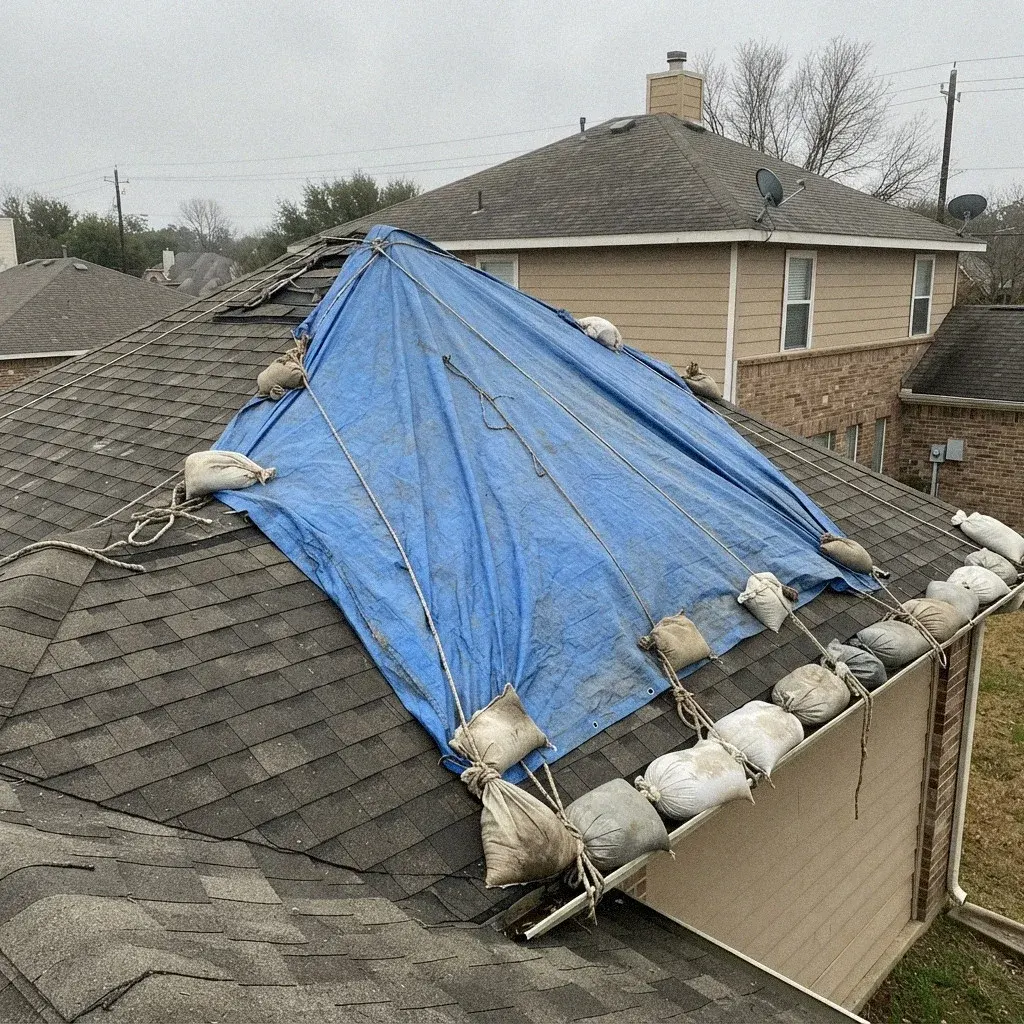
Emergency Roof Tarping
An open roof covered and anchored today, before the next rain finds it.
Learn about Emergency Roof TarpingHigh-rise condo towers and flat commercial roofs along Nicollet Mall.
Downtown West is Minneapolis's core business and residential district, built up around Nicollet Mall and the blocks running toward Loring Park, where older office towers and newer high-rise condos share the same street grid without a single housing era running through it.
Freeze-thaw cycles, heavy snow load, and ice dams stress a roof more than any single storm, year over year.
Roofs in Downtown West are judged on their attics as much as their shingles. Warm air escaping into a cold attic melts snow on the upper slope, and it refreezes at the eave where there is no heat underneath. That ridge of ice is what pushes water back up under the courses.
Proximity to Mississippi River and Loring Pond means the exterior takes more punishment. Swollen fascia, failed caulk at the trim, and rot in the sill ends of a soffit all open up paths for water, and none of them start on the roof itself.
Flat downtown rooflines collect standing water and ice differently than pitched residential roofs, and wind funneling between the taller towers near Nicollet Mall adds load to roof-mounted equipment and membrane seams during Minnesota winters. Basements complicate how homeowners read roof damage here. A leak at the roofline can take days to show as a stain two floors down, so by the time it's visible inside, the water has usually been moving for a while.
With Target in the area, a good share of the Downtown West work is commercial - and a commercial roof is a different job. Low-slope membrane, roof access booked in advance, and work staged around the tenants below.
Local pricing, openly published. The written estimate for your own property always comes before any work is booked.
| Service | Estimated cost |
|---|---|
| Emergency Roof Tarping | an estimated $350–$1400 |
| Flashing & Chimney Repair | an estimated $350–$1900 |
| Flat & Low-Slope Roofing | an estimated $9000–$26000 |
| Gutter Repair & Replacement | an estimated $1200–$4800 |
Loring Park sits at Downtown West's southern edge, and the older buildings ringing it mix flat commercial roofs with a few pitched residential rooflines, giving this stretch a wider mix of roof types than the high-rise core closer to Nicollet Mall.
Gold Medal Park sits near the Mississippi River at Downtown West's eastern frontage, where converted mill buildings and newer condo towers back onto the riverbank, putting their low-slope roofs closer to river flooding and drainage concerns than blocks farther inland.
Foshay Tower marks the older end of Downtown West's skyline, and buildings of its build era carry flat roofing systems that have gone through multiple membrane replacements over the decades rather than a single original roof surface.
An open roof covered and anchored today, before the next rain finds it.
Learn about Emergency Roof Tarping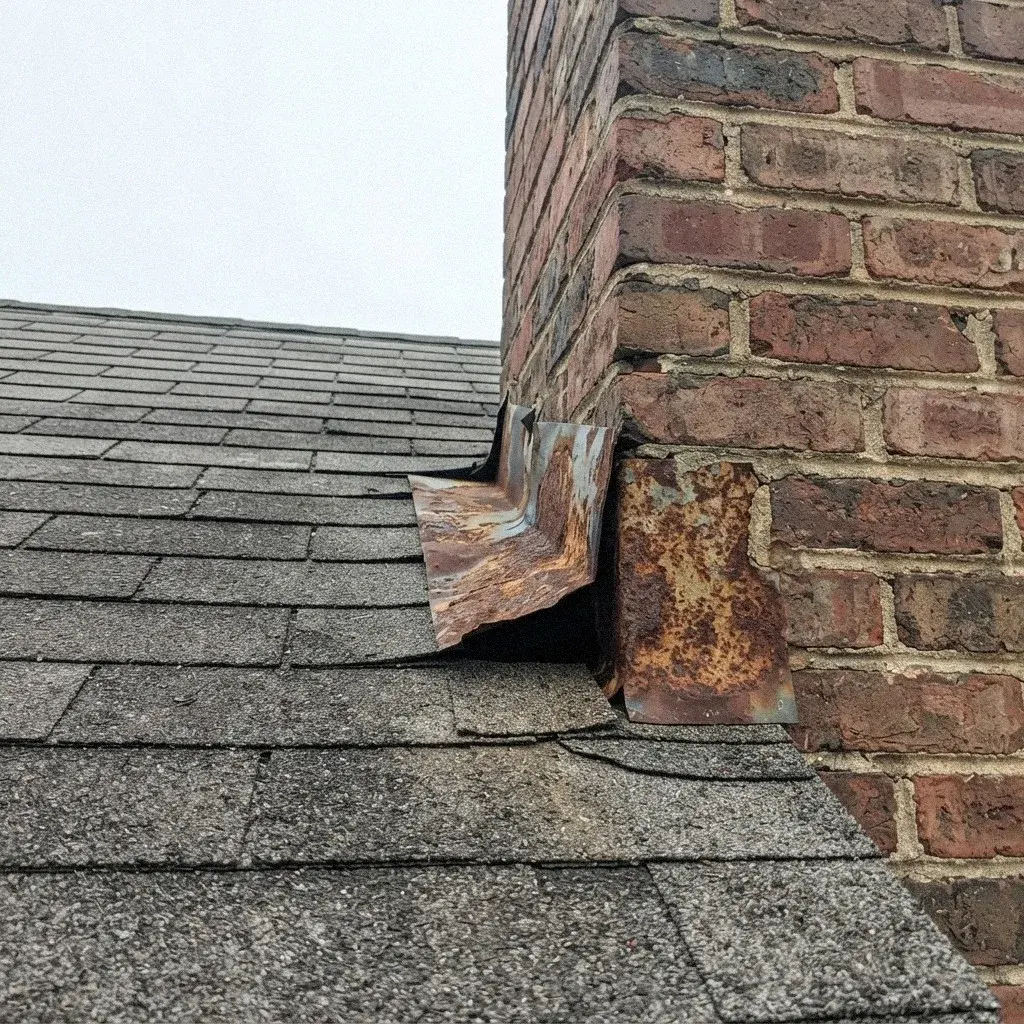
Repairing the metal seals at your chimney, valleys, and walls.
Learn about Flashing & Chimney Repair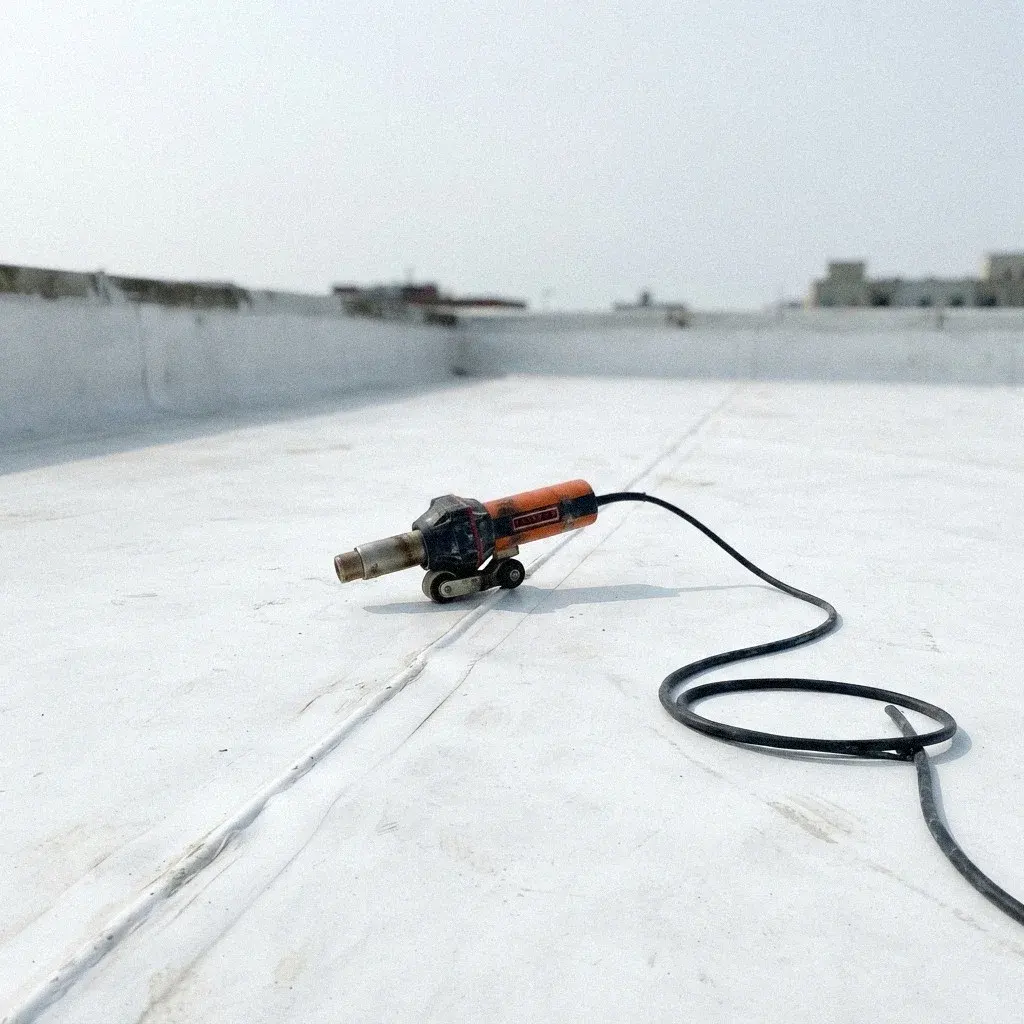
Low-slope membrane roofing built to drain through a Minnesota winter.
Learn about Flat & Low-Slope Roofing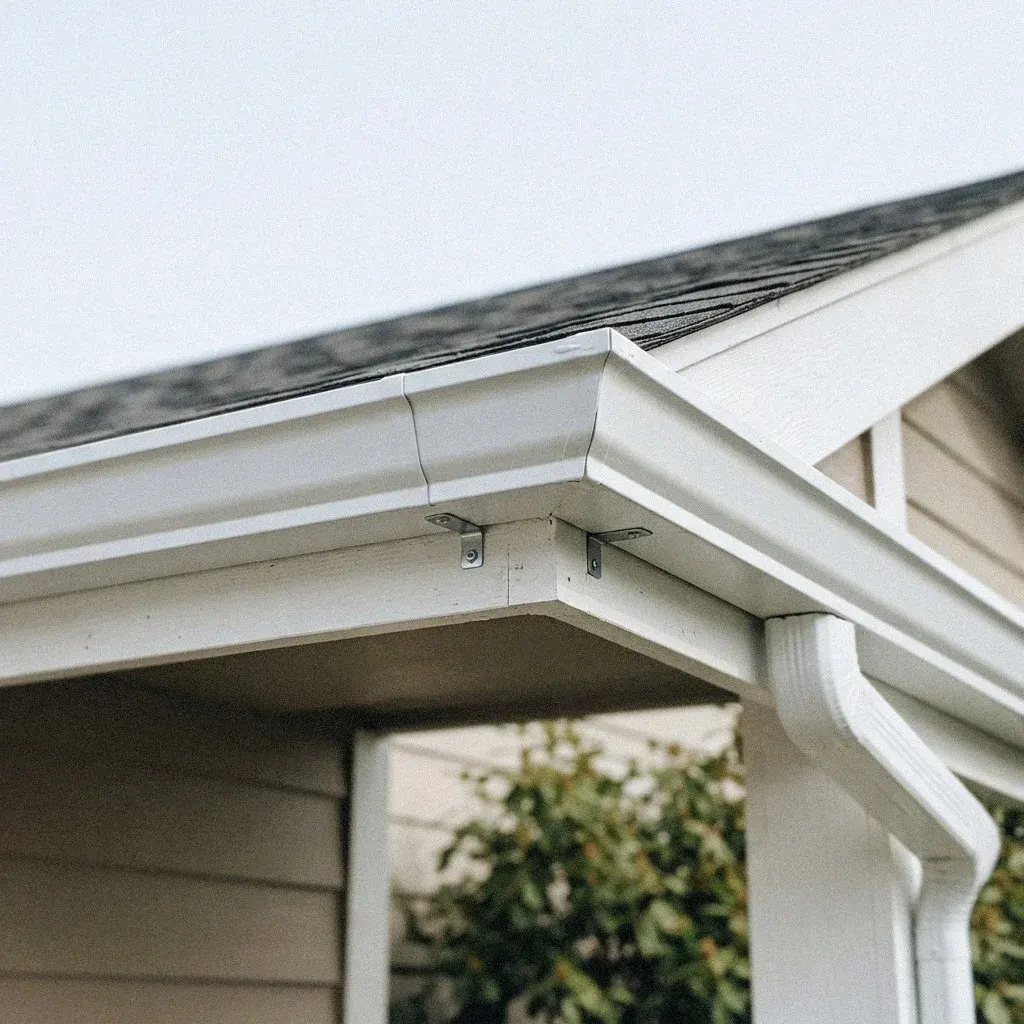
Straight talk on whether your gutters need fixing or full replacement.
Learn about Gutter Repair & ReplacementGolden Valley · Downtown East · Loring Park · Linden Hills · Fulton · Kingfield · Longfellow · Edina
Yes. Downtown West sits fully inside Minneapolis city limits, not a separate suburb or unincorporated area, and it shares the same permit process and school district boundaries as the rest of the city rather than any adjacent municipality like St. Paul across the river.
Downtown West's building stock is dominated by flat and low-slope commercial and condo roofs, which age differently than pitched residential shingles. Membrane seams, drains, and rooftop equipment mounts near Nicollet Mall wear from ponding water and freeze-thaw cycling rather than typical shingle deterioration.
Yes. Commercial and multifamily high-rise roofing in Downtown West goes through Minneapolis's standard building permit process, the same one covering any reroof in the city, though flat-roof and membrane work is inspected differently than a residential shingle tear-off in a nearby neighborhood.
Flat and low-slope membrane roofing covers most Downtown West towers and commercial blocks, with a few older converted buildings carrying built-up roofing under rooftop mechanical decks. This is a different roofing vocabulary than the asphalt shingle bungalows found in Minneapolis's residential neighborhoods.
Start with the state register rather than the truck. Minnesota licenses residential roofers through the Department of Labor and Industry, and the status can be looked up by name or number before you sign anything. Ask for the number in writing on the estimate. Downtown adds a second question: high-rise and mid-rise work needs somebody who can coordinate roof access, a lift or hoist, and a building manager's schedule, which is a different job from pulling up to a driveway.
There is a round-the-clock emergency line covering Downtown West, so a call at 2am reaches a person rather than a voicemail. Being a short drive from Minneapolis, most standard bookings still land the same day or the next. You get an honest arrival window when you book instead of a vague promise.
Minneapolis roofs answer to the same winter, but not identically. A foursquare in Tangletown with tight attic ventilation ice-dams differently than a bungalow near Lake Nokomis with more roof exposed to open sky. Homes close to the Mississippi River gorge catch different wind than ones tucked into Fulton or Kingfield. Hail from a summer thunderstorm hits every neighborhood the same day, but the roof underneath it, its age, its pitch, its attic insulation, is never quite the same house to house.
Call (612) 493-0152