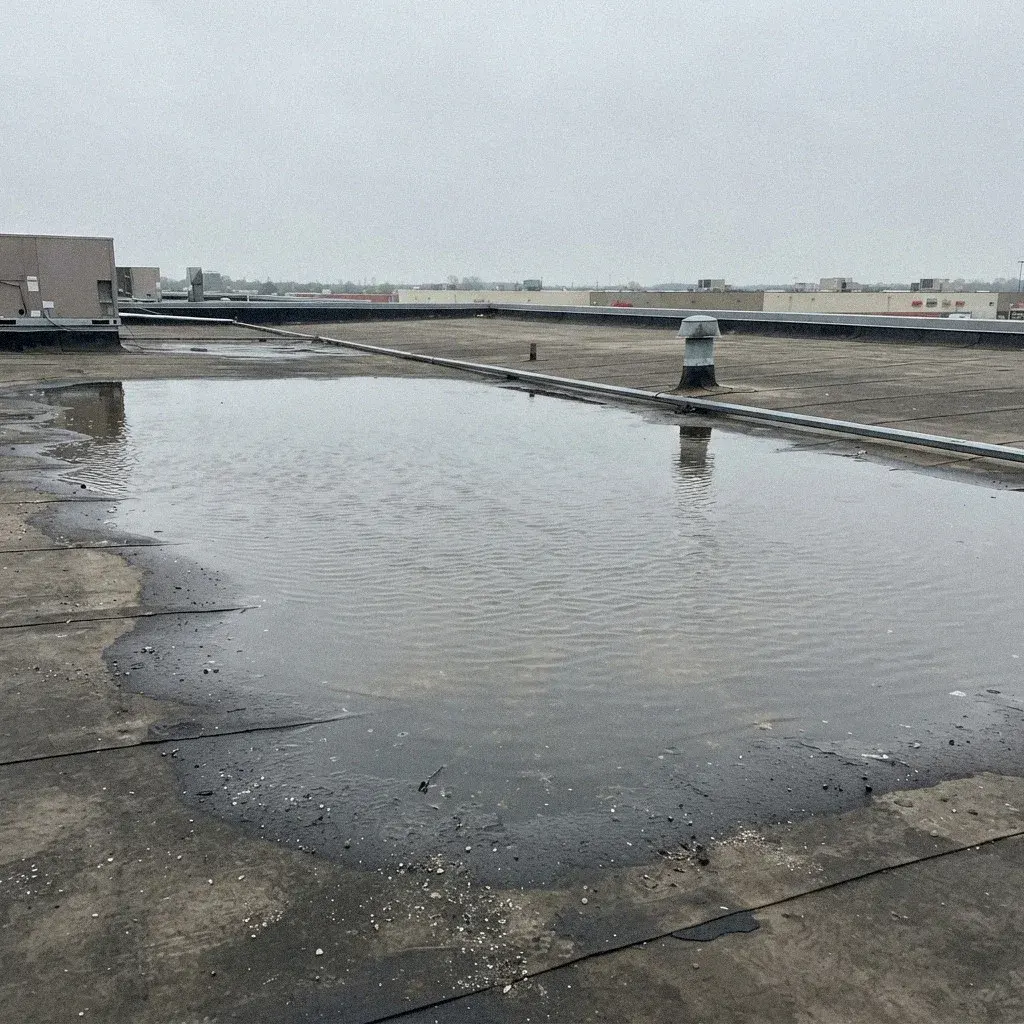
What That Stain or Sag Means in Minneapolis
A ceiling stain in a Longfellow bungalow near the Mississippi River isn't the same problem as granules collecting in a gutter in Fulton. One usually traces to a leak already inside the attic. The other points to shingles wearing thin from years of freeze-thaw cycles in Minneapolis winters.
Most people cannot say what failed up there, only what they noticed from below. A ring spreading on a ceiling, grit collecting in a downspout, a row of shingles missing after a storm. This page starts from what you saw and points at the likely cause, so you read about the right thing instead of guessing.
A sagging rafter line in a Tangletown foursquare, daylight showing through attic boards in Kingfield, or a dark streak on a north-facing slope near Lake Nokomis each point somewhere different. Snow load, ice dams, and plain old age don't leave the same marks, so the fix depends on which one you're actually looking at.
Signs that need dealing with now
Either the water spreads fast, there is a contamination or structural risk, or acting late costs a great deal more.
| What you noticed | What it usually means | How soon it matters | Read more |
|---|---|---|---|
| Shingles Missing After a Windstorm | A shingle in the yard or a bare, darker patch on the roofline after a windstorm means wind got under the shingle's edge and tore it loose. The exposed decking underneath has no protection, so the next rain in Minneapolis goes straight into the plywood, not just the surface. | This one does not wait. Bare decking has no protection at all, so the next rain or snowmelt goes straight into the sheathing, and wind that took one shingle will work on its neighbors. A tarp the same day is reasonable if the repair cannot happen immediately. | Ask on the call |
| Daylight Visible Through the Roof Deck | Light coming through the roof deck from inside the attic means the wood sheathing itself has rotted or punched through, not just the shingles. Rain and melting snow now reach the attic directly. In a Kingfield or Tangletown bungalow with a shallow attic, this points to a structural repair, not a patch. | daylight through the deck means the roof has failed at that spot, not just worn out. Water, cold air, and pests in Longfellow or Tangletown attics get a direct path inside, and the deck itself may already be soft. See our roof deck damage page. | Ask on the call |
Signs worth booking an inspection for
Not an emergency, and not something to leave until next season either.
| What you noticed | What it usually means | How soon it matters | Read more |
|---|---|---|---|
| Water Stain on an Upstairs Ceiling | A ring on a Kingfield or Tangletown bungalow ceiling means water is already tracking along the attic decking or a rafter above and finding the shortest path down through the drywall. It often starts with an ice dam backing meltwater under the shingles, though a cracked flashing near a chimney or vent can do the same thing. | a water stain on an upstairs ceiling in a Minneapolis bungalow or foursquare usually means water is already past the shingles and decking. It can stay a slow drip for a while, but every rain or spring melt near Bde Maka Ska and the Chain of Lakes area adds to it, and paint or plaster will eventually give way. | Ask on the call |
| Ice Ridge Built Up at the Roof Edge | That thick ridge of ice piling up at the eave means heat from inside is climbing into the roof deck and turning snow to water before it refreezes at the cold overhang. The water backs up under shingles and can reach ceiling drywall or wall cavities. Watch for staining once it starts finding a way in — see Ice Dams. | every warm afternoon and cold night adds another layer to that ridge, and the water pooling behind it is looking for a way under the shingles. It usually is not pouring through your ceiling yet, but treat this as a short countdown, not a wait-and-see. | Ask on the call |
| Damp or Frosty Attic Sheathing | That gray fuzz or frost on the boards is moisture with nowhere to go — warm indoor air escaping past can lights, a bath fan, or an attic hatch, then condensing on cold roof sheathing above Minneapolis attics. It rots wood over a winter or two and points to poor attic ventilation or an air-sealing gap. Soon. | It won't flood your Tangletown or Fulton bungalow tonight, but every freeze-thaw cycle through a Minneapolis winter adds more moisture to that wood, and rot spreads quietly until the deck itself gets soft and needs replacing. | Ask on the call |
| Granules Collecting in the Downspout | That grit is asphalt granule loss, and a downspout catching handfuls means the shingles above are wearing thin, not just shedding a little. Bare patches age faster and let sun and ice reach the mat underneath. Watch it for now, but a Minneapolis roof shedding granules this fast is heading toward leaks within a few winters. urgency: soon | because bare spots widen with every freeze-thaw cycle and every hailstorm that rolls through the Twin Cities, and a shingle stripped of granules has no real defense left against sun and ice, so the loss tends to accelerate rather than level off once it starts showing up in the gutter. | Ask on the call |
| Cold Draft Coming From the Ceiling | That draft usually means attic insulation has thinned or shifted below the ceiling, letting warmed indoor air push past drywall and framing on its way out. On a Minneapolis bungalow this often pairs with ice dam trouble along the eaves, since the same escaping heat melts snow unevenly above. | Nothing is leaking, so this is not an emergency, but it wants dealing with before winter rather than during it. The same warm air escaping past the ceiling is what melts snow on the deck above and starts an ice dam at the eave. | Ask on the call |
| Gutter Sagging Away From the Fascia | A gutter pulling away from the fascia usually means the spikes or hangers holding it have rusted out or the wood fascia behind it has gone soft from years of overflow and freeze thaw cycles. In older Minneapolis bungalows this is common near the roofline; the gap lets water run behind the gutter instead of down the downspout, soaking the fascia and eventually the roof deck. See our fascia and gutter attachment problems page. | A gutter pulling free from the fascia is usually soon: the fasteners have loosened, often from ice dam weight or waterlogged leaves, and every heavy Minneapolis rain now spills water down the fascia instead of away from it. If you see rot starting underneath, or the section is fully detached and dumping water at the foundation, treat it as now instead. | Ask on the call |
| Peeling Paint on Soffit or Fascia | Paint flaking off the soffit or fascia usually means moisture is getting into that wood from behind, often from a roof leak, a clogged gutter overflowing onto the trim, or warm attic air escaping through poor ventilation. On a Minneapolis bungalow, that trapped moisture rots fascia boards over a few seasons if the source isn't found. | paint doesn't peel from soffit or fascia boards without a reason, and the reason is usually moisture, whether that's a slow roof leak, condensation trapped in the attic, or just an old paint job giving out after enough Minneapolis freeze-thaw cycles; ignore it and the wood underneath starts to rot | Ask on the call |
| Musty Smell When the Attic Opens | A musty smell when the attic hatch opens usually means moisture is trapped up there with nowhere to go — often damp insulation, condensation from poor attic ventilation, or a slow roof leak feeding it. In Minneapolis homes, especially older bungalows, this often pairs with ice dam history. It threatens rot and mold if the source isn't found. | A smell means moisture has been up there long enough for mold to establish, so this is worth a look within weeks rather than months. It also does not say what is feeding it. Condensation and a slow leak smell identical from the hatch and need different work. | Ask on the call |
Signs to keep an eye on
Not damaging yet. Worth understanding before you spend money on it.
| What you noticed | What it usually means | How soon it matters | Read more |
|---|---|---|---|
| Icicles Hanging Along the Gutter Line | Icicles along the gutter line mean melting snow is refreezing at the roof edge, often the start of an ice dam backing water up under the shingles. In Longfellow and Tangletown bungalows with tight attic insulation, that trapped water can reach the decking before anyone sees a stain inside. See Ice Dams. | Icicles on their own are a symptom rather than damage, so this is one to keep an eye on rather than act on today. What turns it urgent is a ridge of ice building behind them at the eave, or a stain appearing on a ceiling below an exterior wall. | Ask on the call |
| Dents in Gutters and Roof Vents | Small dents in a gutter or a roof vent cap usually mean hail hit the roof at some point, especially after a summer thunderstorm rolled through Minneapolis. It's a cosmetic bruise on soft metal, but it's worth checking nearby shingles too, since hail hard enough to dent aluminum can also bruise or crack them. | dents alone are cosmetic and won't leak, but they're a record of hail or a ladder mishap; if a Fulton or Kingfield roof shows dented vents and gutters, check nearby shingles for bruising too, since one usually travels with the other. | Ask on the call |
Frequently Asked Questions
What does it mean if I see water stain on an upstairs ceiling?
A ring on a Kingfield or Tangletown bungalow ceiling means water is already tracking along the attic decking or a rafter above and finding the shortest path down through the drywall. It often starts with an ice dam backing meltwater under the shingles, though a cracked flashing near a chimney or vent can do the same thing.
What does it mean if I see icicles hanging along the gutter line?
Icicles along the gutter line mean melting snow is refreezing at the roof edge, often the start of an ice dam backing water up under the shingles. In Longfellow and Tangletown bungalows with tight attic insulation, that trapped water can reach the decking before anyone sees a stain inside. See Ice Dams.
What does it mean if I see ice ridge built up at the roof edge?
That thick ridge of ice piling up at the eave means heat from inside is climbing into the roof deck and turning snow to water before it refreezes at the cold overhang. The water backs up under shingles and can reach ceiling drywall or wall cavities. Watch for staining once it starts finding a way in — see Ice Dams.
What does it mean if I see damp or frosty attic sheathing?
That gray fuzz or frost on the boards is moisture with nowhere to go — warm indoor air escaping past can lights, a bath fan, or an attic hatch, then condensing on cold roof sheathing above Minneapolis attics. It rots wood over a winter or two and points to poor attic ventilation or an air-sealing gap. Soon.
What does it mean if I see granules collecting in the downspout?
That grit is asphalt granule loss, and a downspout catching handfuls means the shingles above are wearing thin, not just shedding a little. Bare patches age faster and let sun and ice reach the mat underneath. Watch it for now, but a Minneapolis roof shedding granules this fast is heading toward leaks within a few winters. urgency: soon
What does it mean if I see shingles missing after a windstorm?
A shingle in the yard or a bare, darker patch on the roofline after a windstorm means wind got under the shingle's edge and tore it loose. The exposed decking underneath has no protection, so the next rain in Minneapolis goes straight into the plywood, not just the surface.
What does it mean if I see dents in gutters and roof vents?
Small dents in a gutter or a roof vent cap usually mean hail hit the roof at some point, especially after a summer thunderstorm rolled through Minneapolis. It's a cosmetic bruise on soft metal, but it's worth checking nearby shingles too, since hail hard enough to dent aluminum can also bruise or crack them.
What does it mean if I see cold draft coming from the ceiling?
That draft usually means attic insulation has thinned or shifted below the ceiling, letting warmed indoor air push past drywall and framing on its way out. On a Minneapolis bungalow this often pairs with ice dam trouble along the eaves, since the same escaping heat melts snow unevenly above.
What does it mean if I see gutter sagging away from the fascia?
A gutter pulling away from the fascia usually means the spikes or hangers holding it have rusted out or the wood fascia behind it has gone soft from years of overflow and freeze thaw cycles. In older Minneapolis bungalows this is common near the roofline; the gap lets water run behind the gutter instead of down the downspout, soaking the fascia and eventually the roof deck. See our fascia and gutter attachment problems page.
What does it mean if I see peeling paint on soffit or fascia?
Paint flaking off the soffit or fascia usually means moisture is getting into that wood from behind, often from a roof leak, a clogged gutter overflowing onto the trim, or warm attic air escaping through poor ventilation. On a Minneapolis bungalow, that trapped moisture rots fascia boards over a few seasons if the source isn't found.
Figure Out What's Wrong
A symptom is a starting point, not a diagnosis, and in this climate the same sign can mean two very different things. A January ceiling stain with no rain outside is almost always an ice dam. The same stain in July is almost never one. Where the water enters is usually feet away from where it appears, and on a Minneapolis roof the entry point is often under snow. Describe what you are seeing and the licensed pros we connect you with will work back to the cause.
Call (612) 493-0152