Materials & Types
Living With A Cedar Shake Roof in Minneapolis, MN
Cedar shake ages by its own rules in Minneapolis. What cupping, splitting, and checking actually mean, and when individual repair stops being enough.
Read article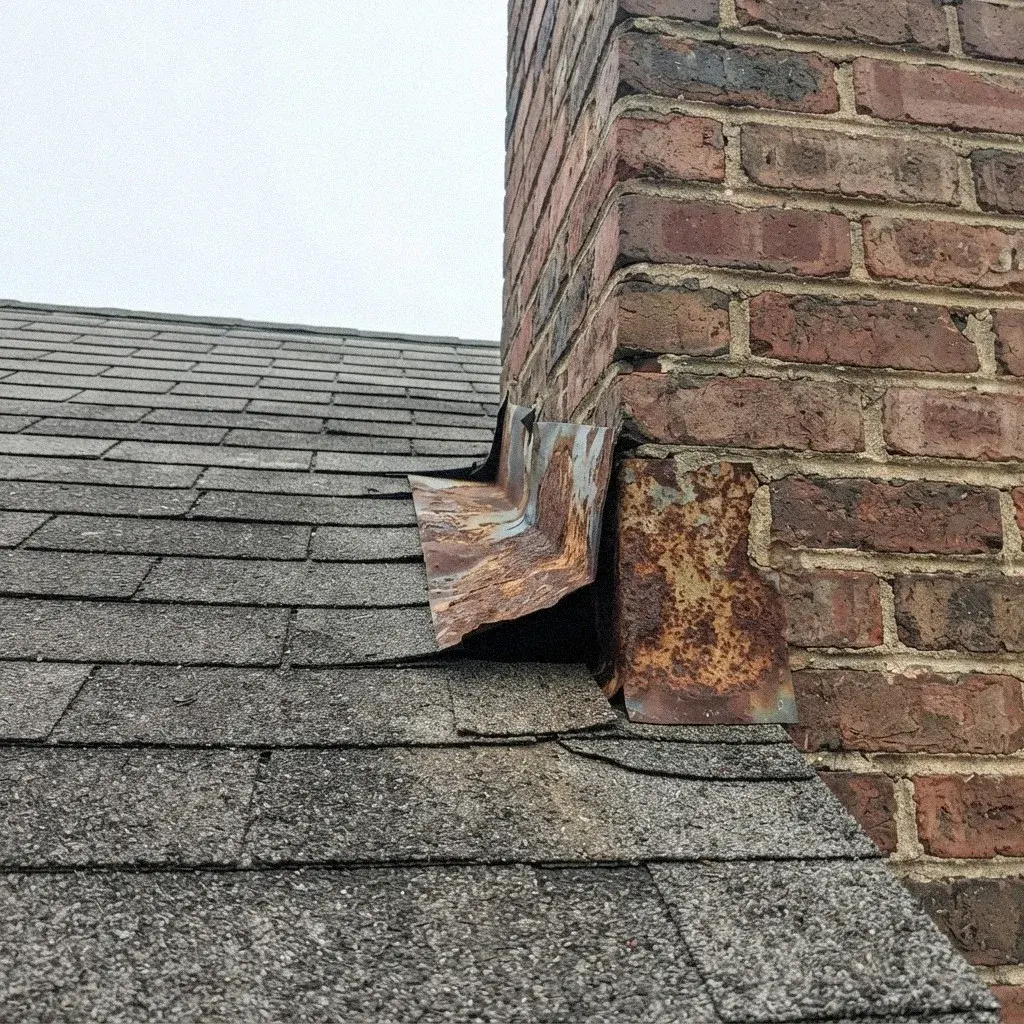
Local licensed pros reseal and replace the metal at your chimney, valleys, and walls before winter finds the gap.
Chimney flashing repair Minneapolis, MN means a local licensed pro replaces or reseals the metal where your chimney meets the roof. It covers chimney and flashing repair at valleys, sidewalls, and vents too.
The licensed pros we connect you with handle chimney flashing repair the right way, with new lapped metal instead of a bead of caulk. Don't wait for the next freeze-thaw cycle, call (612) 493-0152.
Chimney flashing is the metal that seals the joint where your chimney meets the roof, and it fails because metal moves. It expands in July sun and contracts in a January cold snap.
Over enough of those cycles, fasteners work loose, laps open, and sealant pulls away from the masonry. That is why a roof leak often traces back to the flashing instead of the shingles.
Flashing repair means resealing or replacing the metal at chimneys, valleys, sidewalls, pipe boots, and vents.
Sound metal that only lost its sealant can be resealed. Corroded, lifted, or short metal needs to come out.
Home flashing repair that lasts means new metal set in the order water travels, not sealant smeared over bad metal. Base flashing laps under the shingles, and step flashing rises course by course along the wall.
Counterflashing gets set into a fresh reglet cut in sound mortar. Everything laps downhill so the joint sheds water on its own.
Roofing around a chimney usually disturbs the counterflashing, so it is often reset during a reroof. Reusing old metal risks a marginal joint failing again within a season or two.
If the counterflashing is sound and set well into the mortar, the pros we connect you with may leave it. If it is corroded or pulling loose, replacing it now avoids reopening that joint later.
Flashing replacement is the right call when the metal is rusted, lifted, short at the laps, or never set into the mortar properly. Repair is enough only when the metal is sound and just the sealant failed.
In this climate, replacement is the more common finding. Check the pricing guide for typical costs, then call (612) 493-0152 and book before the next freeze.
Rust streaking down the brick or block below the roofline means the counterflashing in the mortar joints is corroding. Water is tracking down the masonry instead of shedding onto the shingles.
Check the bead where a wall meets the roof. If it has shrunk, cracked, or pulled from the metal, that joint needs attention, and caulk alone will not hold once the metal has moved.
A water stain near an interior chimney, or on a wall under a valley, usually points to flashing rather than worn shingles.
The rubber collar around a bathroom vent dries out faster than the shingles around it. Once it splits, water runs down the pipe.
Every wall junction, both sides of the chimney, the counterflashing line, valleys, pipe boots, skylight curbs, and the kick-out at the gutter get checked. The attic is checked too, since a wet path there names the joint fast.
Resealing fits sound metal that only lost its sealant. Corroded, lifted, or short metal gets replaced, because a reseal over bad metal is a season of quiet, then the same leak.
New base and step flashing go in the order water travels. Counterflashing is set into a fresh reglet cut in sound mortar.
Water is run over the repaired joint while the attic below is watched, so the fix is tested, not just declared. Photos go on file and the ground is swept for fasteners and offcuts.
Minneapolis bungalows and foursquares from the early 1900s through the 1940s carry decades-old chimney and valley flashing that outlasts several roof coverings. Freeze-thaw cycles and ice dams loosen that metal long before the shingles look worn, and a slow leak often shows up as staining before anyone climbs a ladder.
Metal expands in July sun and contracts in a January cold snap, which loosens fasteners, opens laps, and pulls sealant from masonry. Galvanized metal also loses its coating at the cut edges first, so rust shows at a seam long before the sheet is gone. A chimney reglet that was caulked instead of cut into sound mortar rarely lasts.
Many Minneapolis bungalows, foursquares, and Colonial Revival homes built between 1900 and the 1940s have masonry chimneys set into original mortar joints. Their flashing details were not built to today's standards, and decades of frost heave and freeze-thaw cycling have loosened the counterflashing.
These are the figures quoted most often for flashing & chimney repair. The size of the roof, its pitch, and how easy it is to get a ladder to move the number.
| DLI License | Insurance Proof | Payment Terms |
|---|---|---|
| Paying the roofing contractor in full doesn't automatically clear a homeowner if a supplier who delivered shingles to the property, whether in Kingfield or Tangletown, never got paid. A supplier or subcontractor left unpaid can still file a lien against the house. | Flashing resealed around chimney and vents, shingles left alone | an estimated $245–$1805 |
| A lien waiver from the contractor, and from any supplier who delivered material to the address, is the document that closes that risk. Ask for them at final payment rather than a month afterwards, when the crew has moved on to the next job and the paperwork is somebody else's problem. | Tear-off plus soffit vents added, no insulation added above attic | an estimated $350–$2470 |
| Minneapolis requires a permit for roofing work, and it is normally pulled in the contractor's name and closed out with an inspection. That record stays attached to the property rather than to whoever lived there, so an open permit has a habit of surfacing years later during a sale. | Full tear-off, deck replaced where rotted, ice barrier along all eaves | an estimated $455–$3420 |
| The paperwork behind a Minneapolis reroof, lien releases, permits where they apply, warranty terms in writing, isn't the interesting part of the job. Skipping it is how a roof that looks finished from the street turns into a dispute months later. | Foursquare-scale tear-off, permit filed with the city, haul-away included | an estimated $630–$4940 |
A bid that leaves out a permit isn't a discount, it's unfinished work. Unpermitted roofing can go uninspected, which becomes your problem later, whether at resale or when something underneath the shingles turns out wrong.
Shingles and flashing are two different systems. Shingles shed water down an open slope, while flashing handles every spot where the slope stops, like a wall, chimney, valley, or vent. Metal expands and contracts through Minneapolis seasons until fasteners loosen and laps open, so the joints can fail years before the shingles do.
Resealing lays fresh sealant over an existing joint, and it only works where the metal is still sound. Reflashing removes the old step flashing, counterflashing, or valley metal and sets in new pieces lapped correctly under the shingles. If the metal has rusted through or pulled from the mortar, reflashing is the only real fix.
Often, yes, but it is a separate decision based on the condition of the metal. If the counterflashing is sound and set well into the mortar, it may stay. If it is corroded or pulling loose, replacing it during the reroof avoids reopening the joint later.
It is usually the pipe boot, the rubber collar where the pipe passes through the roof. Rubber goes brittle in the cold and cracks, and water then runs down the pipe into the attic. The repair is a new boot, not sealant over the crack, since sealant on brittle rubber lasts about one winter.
Kick-out flashing is a small angled piece of metal where a roof edge ends against a wall above a gutter. It kicks water running down the wall line out into the gutter instead of behind the siding. When it is missing, peeling paint or rot on the siding below that spot is the tell.
Every roof is different, so the only accurate number comes from somebody going up and looking. That said, most flashing & chimney repair jobs in Minneapolis run an estimated $350–$1900 per job, depending on the size of the roof and how steep it is. The figure is confirmed in writing before anything is ordered.
A roof in Minneapolis rarely gives out from one storm. It gives out from a winter that packed snow into an ice dam, then a spring thaw that found the gap that dam opened. Each freeze cycle after that widens the same weak spot until a ceiling stain finally makes the case plain.
Cedar shake ages by its own rules in Minneapolis. What cupping, splitting, and checking actually mean, and when individual repair stops being enough.
Read article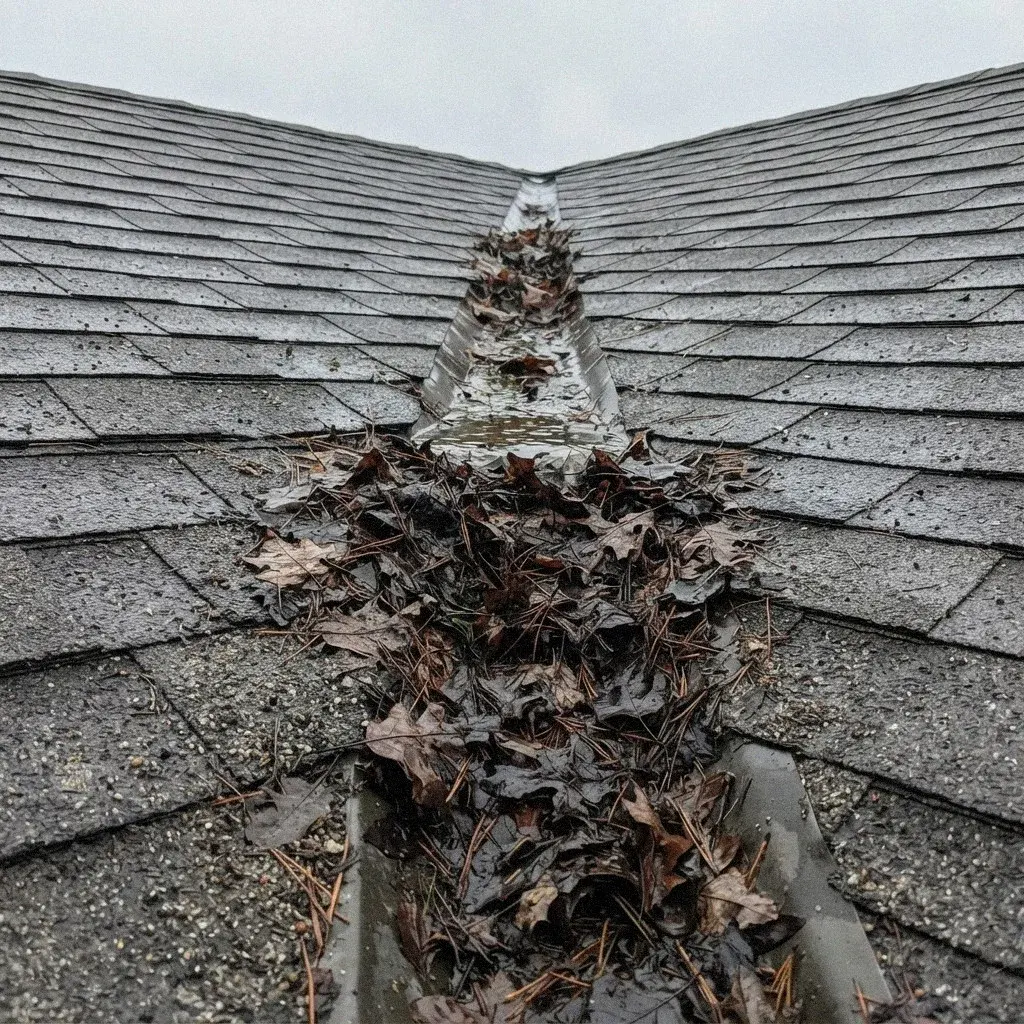
Leaf and needle litter piles up in valleys and behind chimneys on Minneapolis roofs, holding moisture long after a storm passes. Here's where it collects, what it does to shingles, and how to clear it safely.
Read article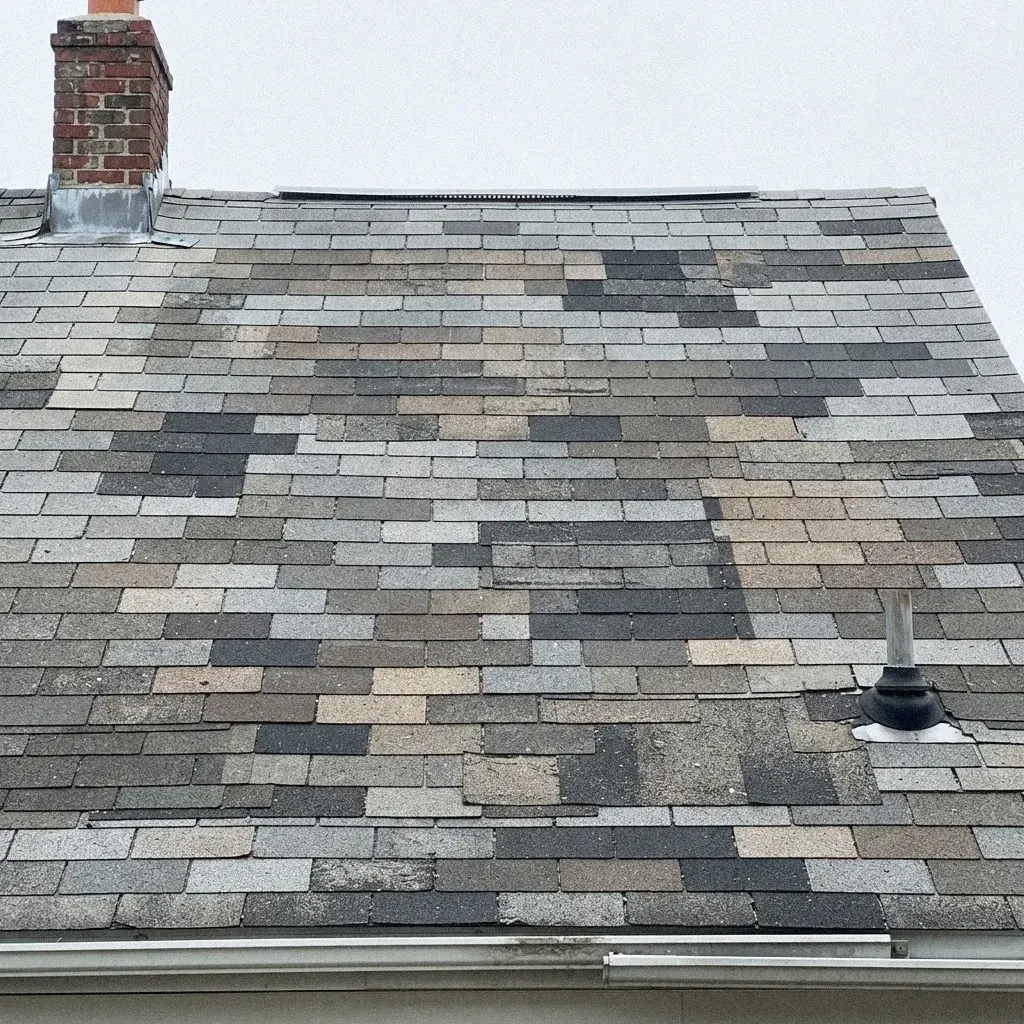
A spring walkaround shows what a Minneapolis winter left behind: missing shingles, loose flashing, ice dam staining in the attic, and a punch list worth building before storm season.
Read articleThis page explains what the work generally involves, but no two Minneapolis roofs age the same. A bungalow near Linden Hills with decades of shingle layers behaves differently than a roof replaced after wind damage near Prospect Park. Attic ventilation, pitch, and how much ice dam trouble a house has seen all change what this service means for your address. The licensed pros we connect you with can tell you how it applies to your roof specifically.
Call (612) 493-0152