Roof Problems
A Ceiling Stain in January
A stain spreads across an upstairs ceiling with no rain in sight. Here's what's really happening above it, and what to do before anyone touches a ladder.
Read article
Ice dams form the same way on a Fulton bungalow and a Longfellow foursquare, but nobody explains why until the ceiling stain shows up. These guides walk through what actually happens to a Minneapolis roof between a January cold spell and a July hailstorm, using the housing stock here, not a national checklist.
These guides help Minneapolis homeowners size up a roof problem before calling anyone. An ice dam on a Kingfield bungalow reads differently than hail damage near Powderhorn Park, and knowing which is which helps you talk straight with the licensed pros we connect you with.
Nothing here is a pitch for a specific job. It's the reasoning a contractor would walk you through anyway — why frost heave near a Seward basement wall matters to the roofline above it, why 51 inches of average snow changes attic ventilation math, and what that means before you sign anything.
A stain spreads across an upstairs ceiling with no rain in sight. Here's what's really happening above it, and what to do before anyone touches a ladder.
Read articleAfter a Minneapolis hailstorm, most of the real damage is on the roof, not the ground. Here is what a homeowner can check from the yard, and why the camera matters more today than it will in a week.
Read article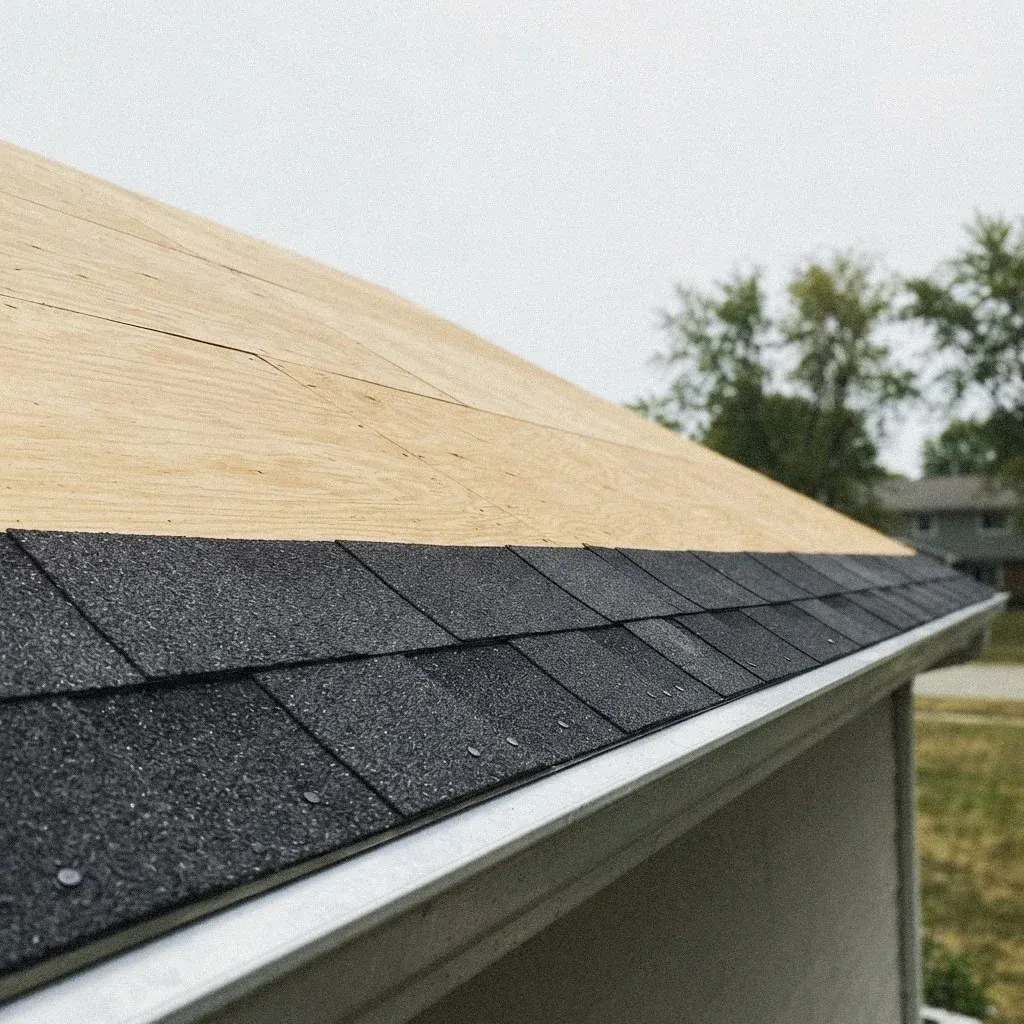
Architectural and three-tab shingles look different for a reason: one is a single flat layer, the other is laminated. Here's what that extra layer changes.
Read article
Cedar shake ages by its own rules in Minneapolis. What cupping, splitting, and checking actually mean, and when individual repair stops being enough.
Read article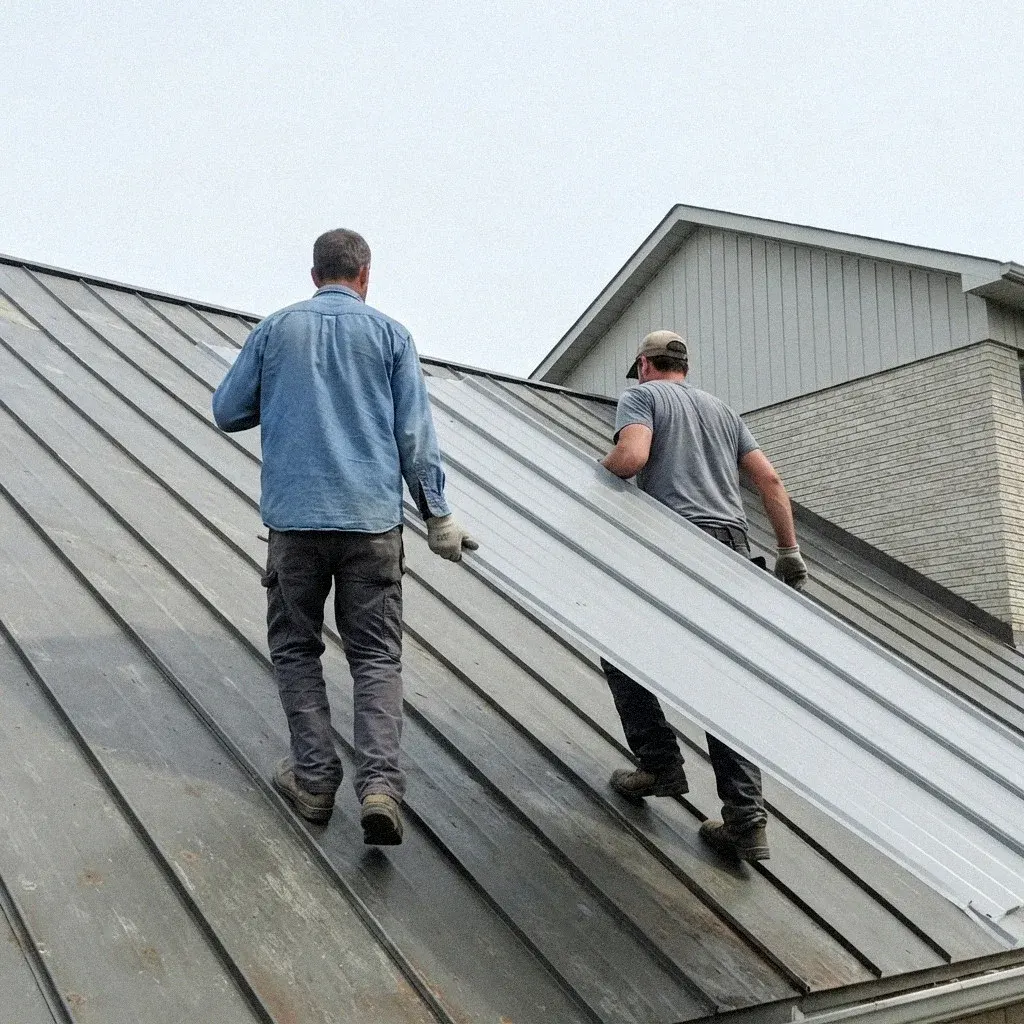
Standing seam and exposed-fastener metal panels can both cover a Minneapolis roof, but they move, fasten, and age in different ways. Here's how to tell them apart on sight.
Read article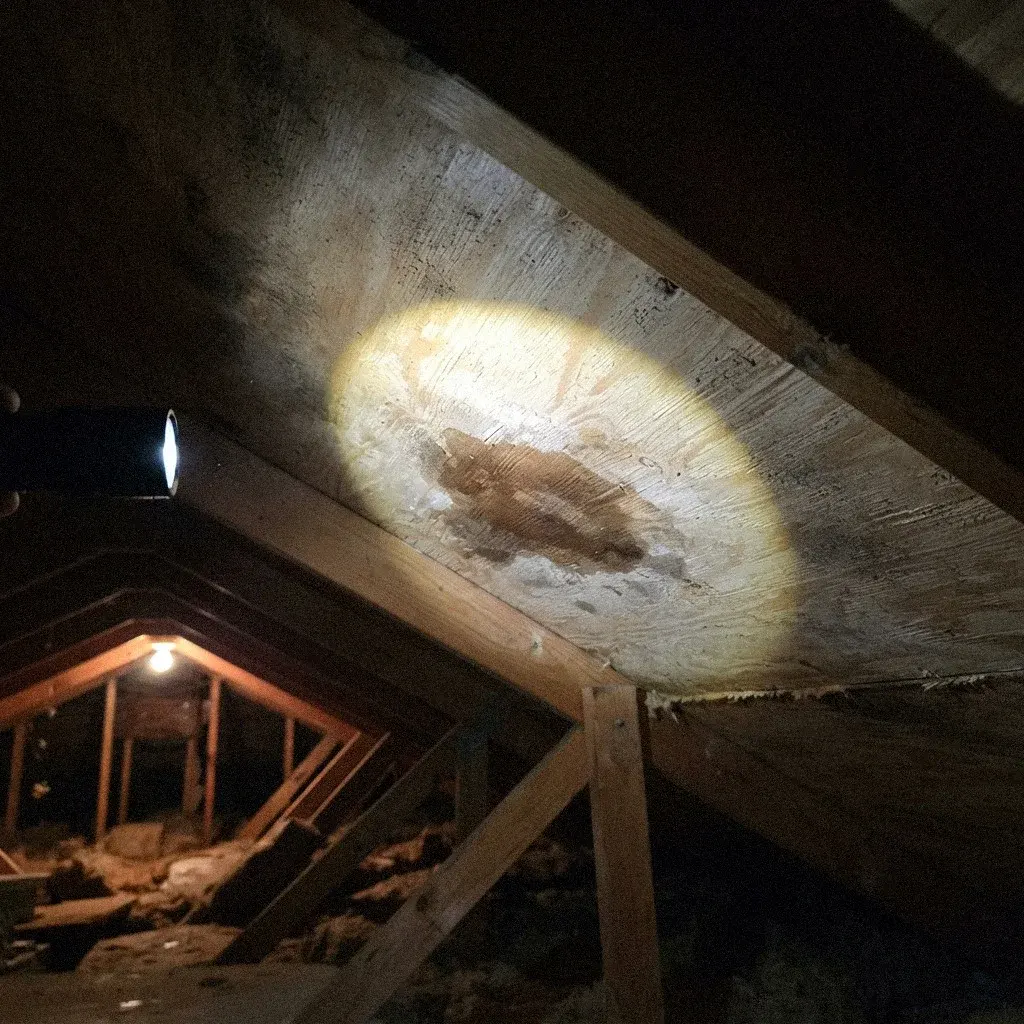
Shade, trapped debris, weak flashing, and stale attic air all wear down a Minneapolis roof faster than age alone. Here is how each one actually works.
Read article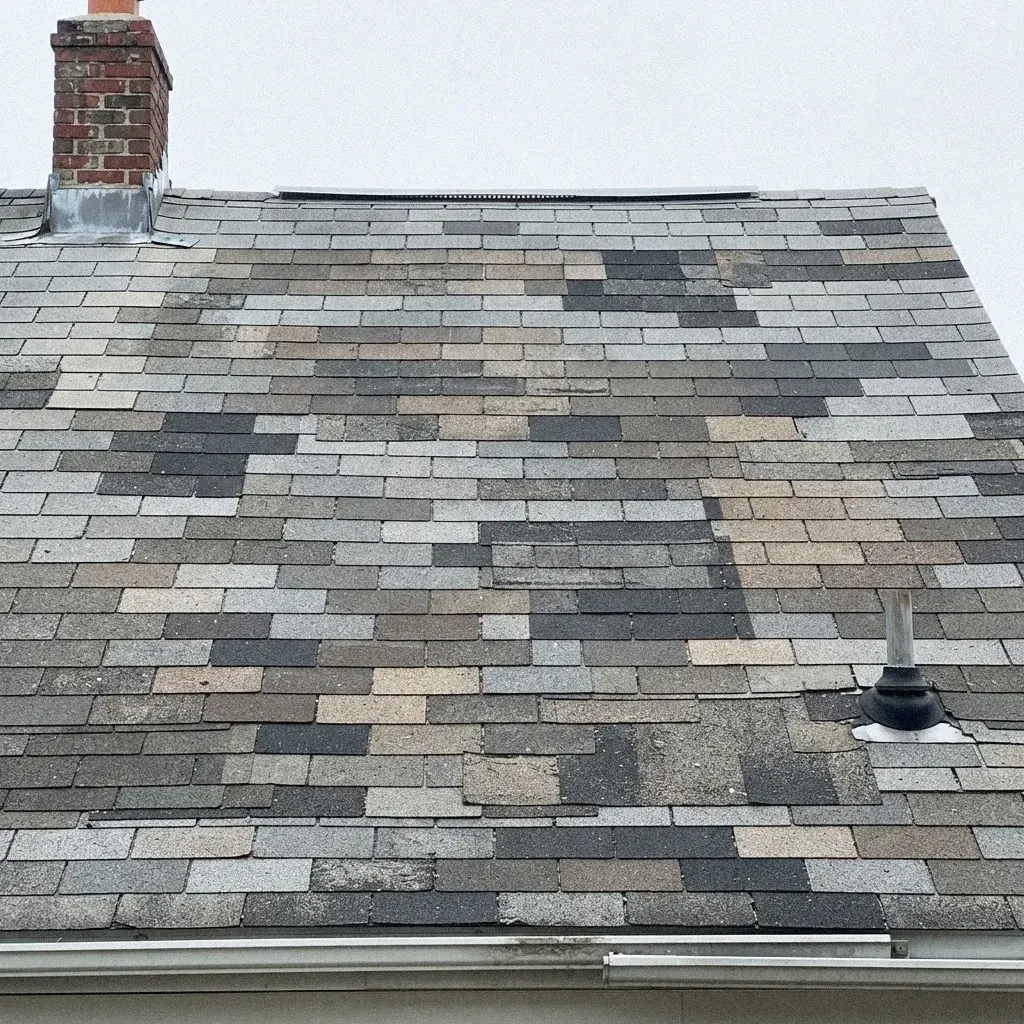
A spring walkaround shows what a Minneapolis winter left behind: missing shingles, loose flashing, ice dam staining in the attic, and a punch list worth building before storm season.
Read article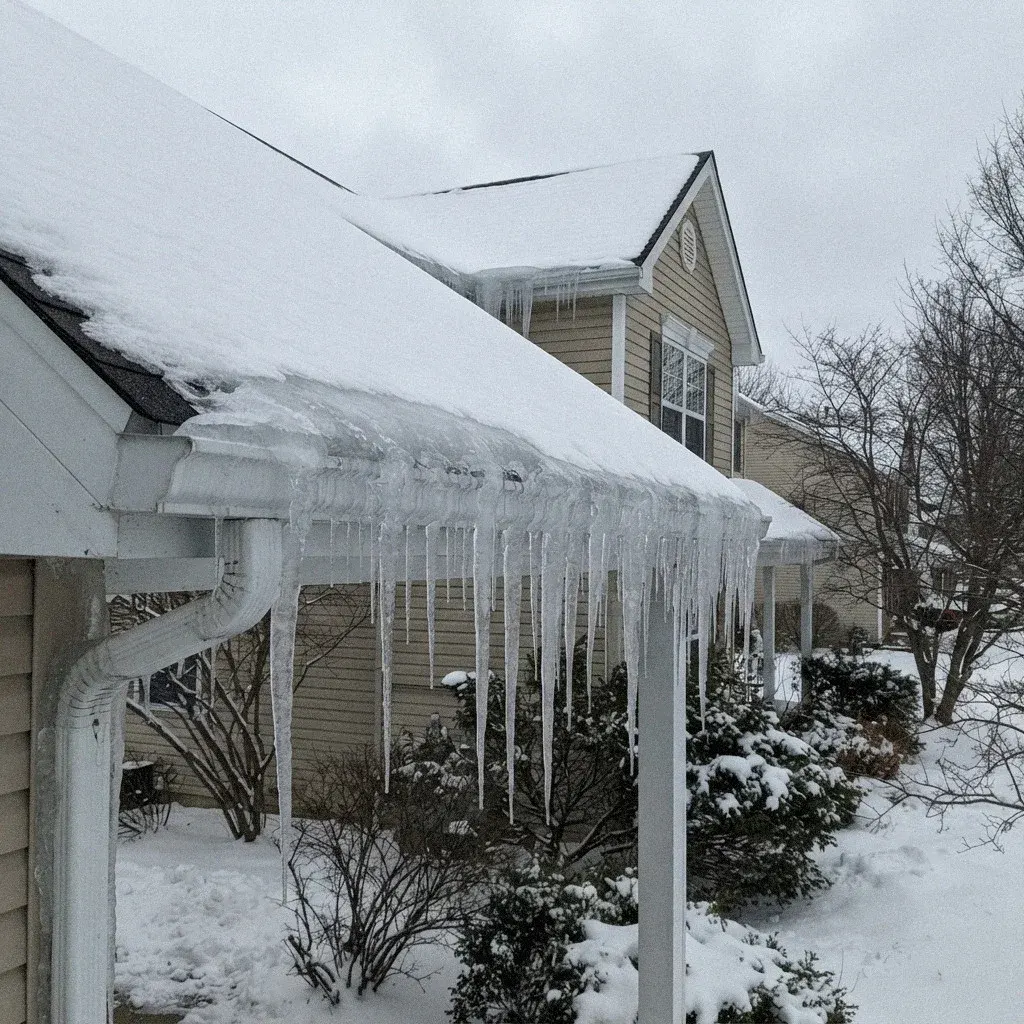
A hard freeze does more to a Minneapolis roof than the cold alone suggests. Shingles stiffen, sealant cracks, gutters lock with ice, and the roof itself becomes something nobody should walk on.
Read article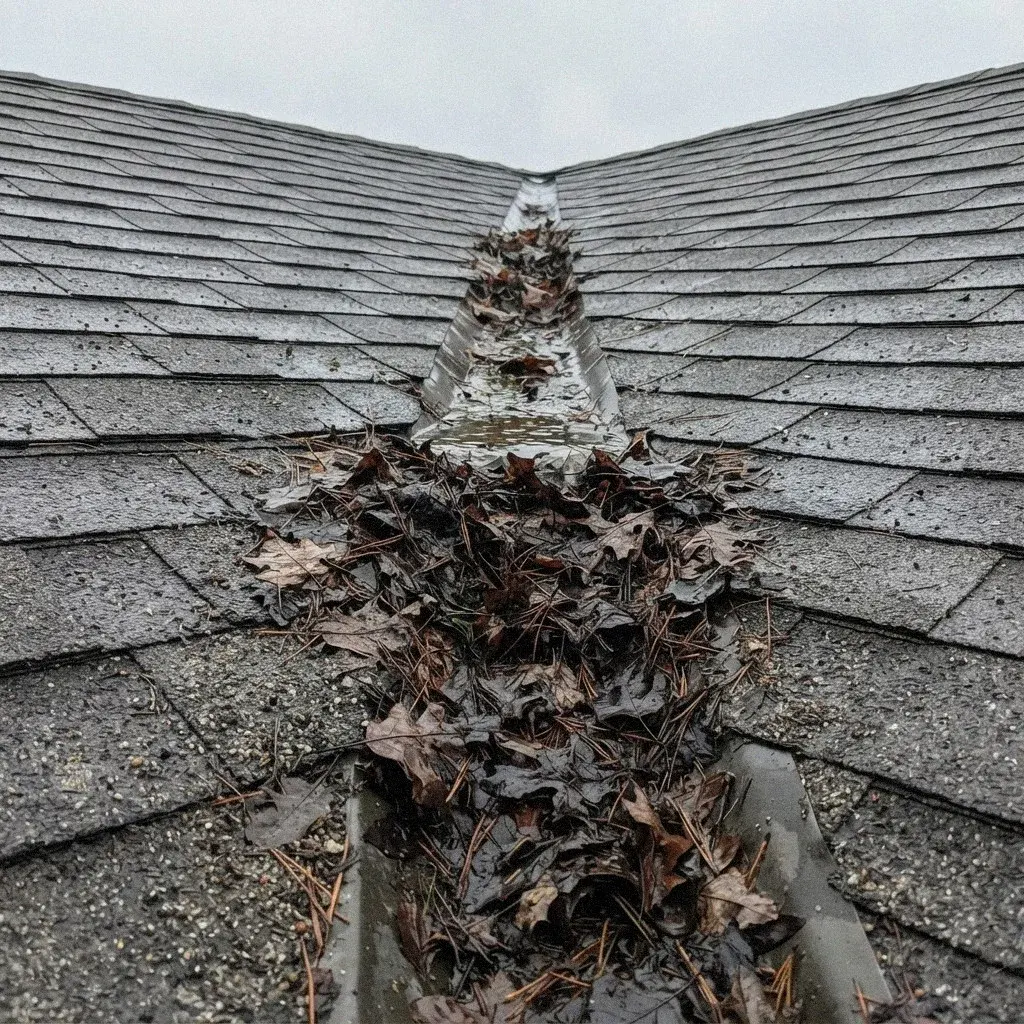
Leaf and needle litter piles up in valleys and behind chimneys on Minneapolis roofs, holding moisture long after a storm passes. Here's where it collects, what it does to shingles, and how to clear it safely.
Read article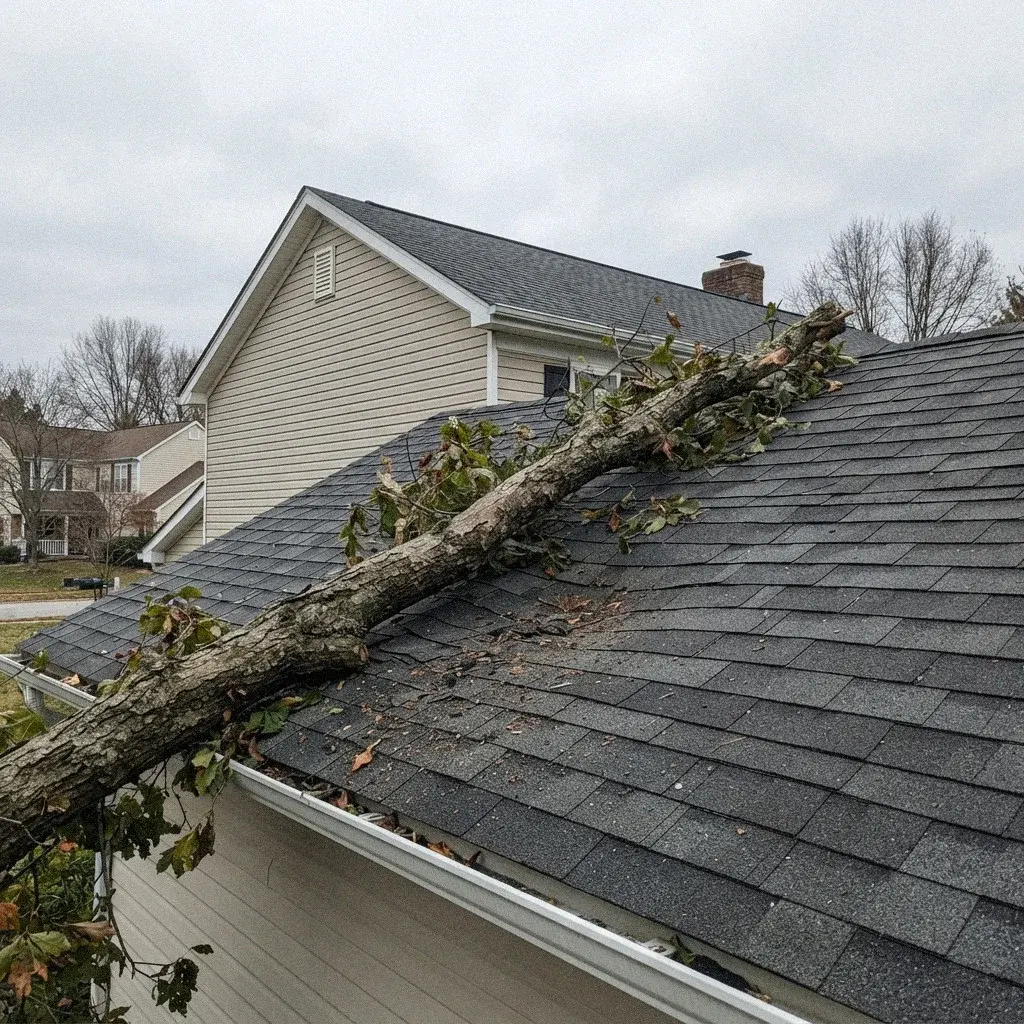
A fall storm over Minneapolis rarely announces itself as roof damage until the wind dies down. Here's what a gust, driven rain, and a full gutter actually do up there.
Read article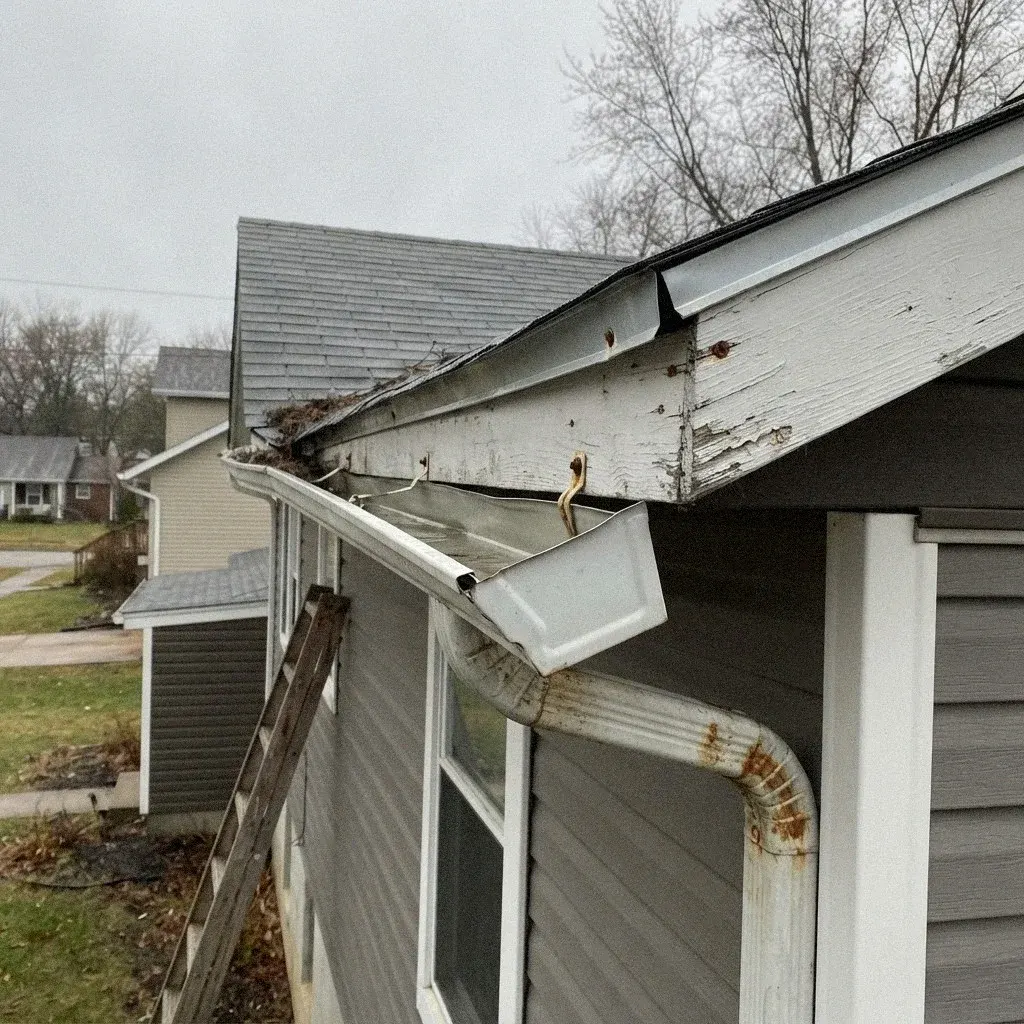
Spring storms move fast off the Mississippi River valley, and a Minneapolis roof either handles that first heavy rain or it doesn't. Here's the walkaround order that gets a roof ready before the rain settles in.
Read article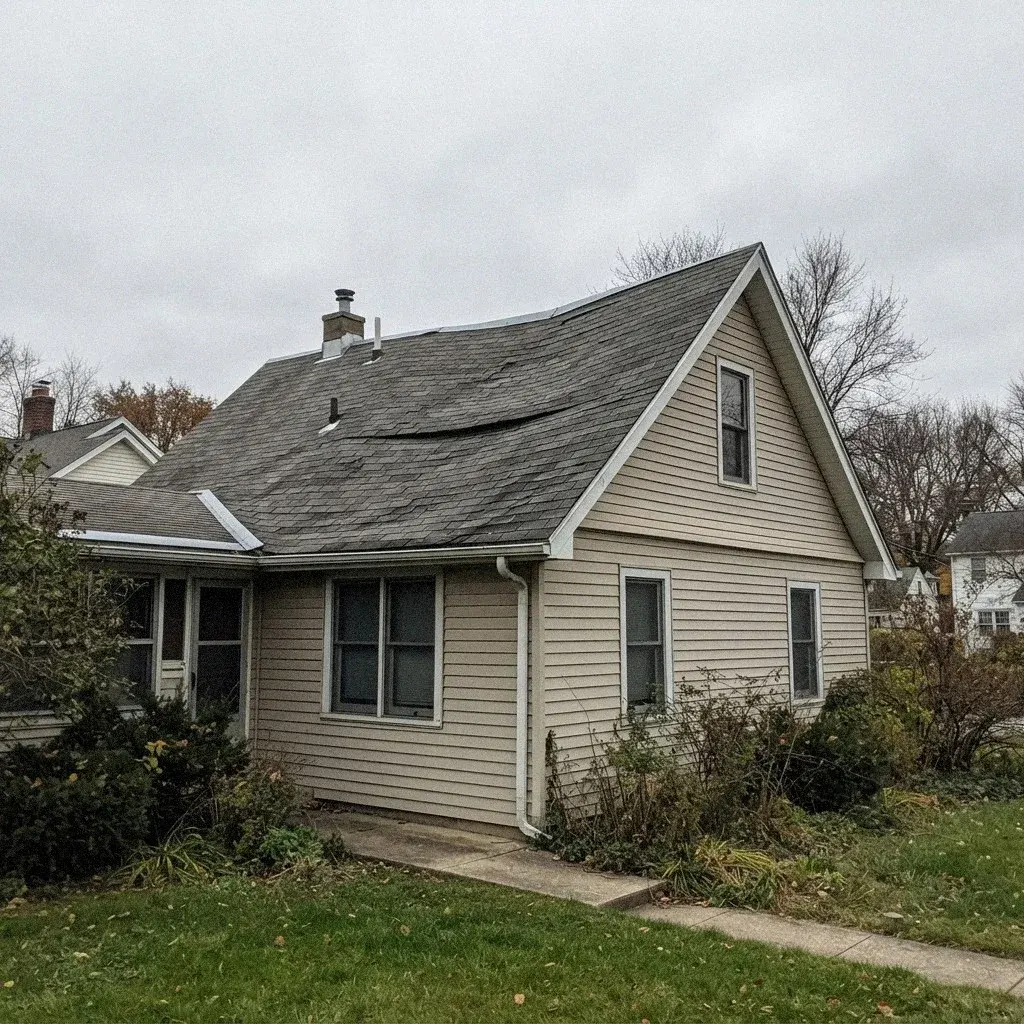
A ridge dip, a sunken patch in one plane, or a whole roof gone wavy each point somewhere different underneath. Here is how to read the shape from the street.
Read article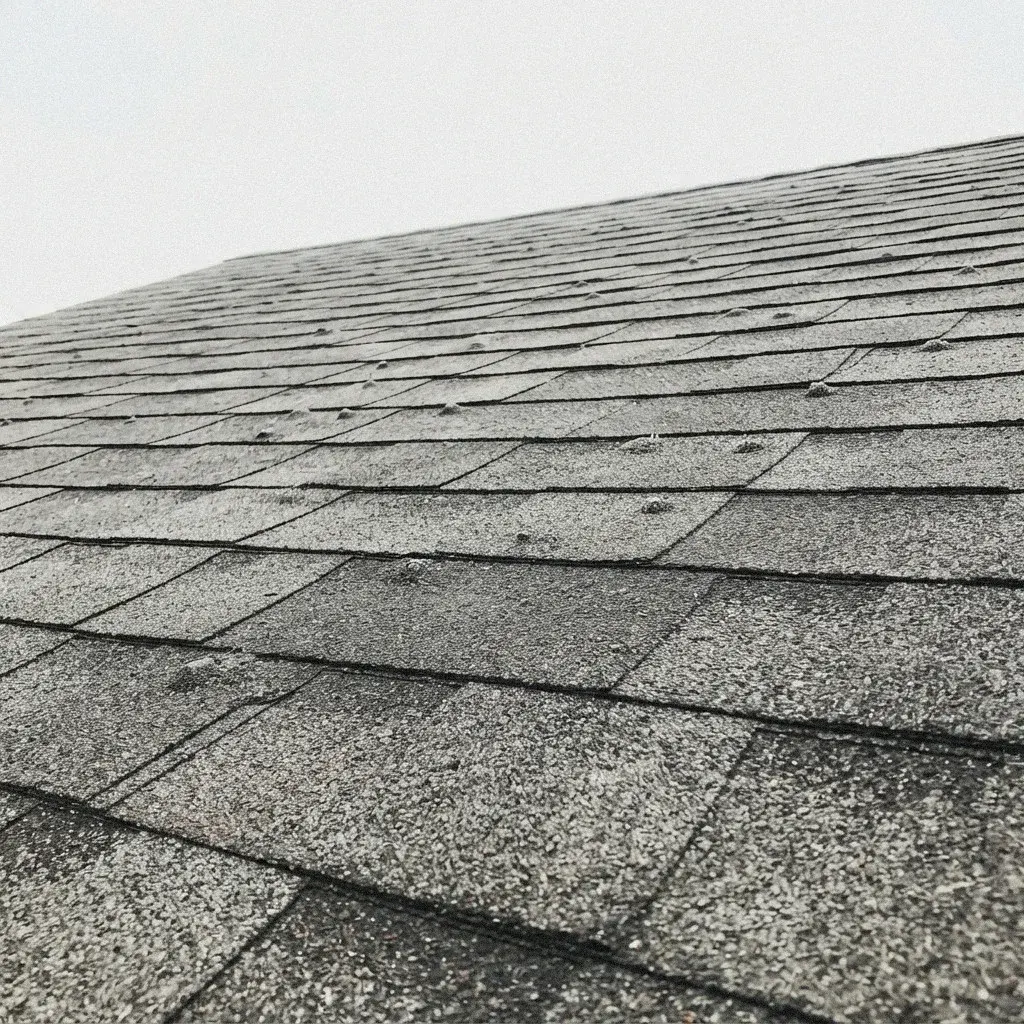
Those small round bumps in a shingle course are fasteners backing out of the deck below. They line up in rows, they are easy to miss from the ground, and each one is a pinhole waiting for the right winter. Here is what causes them and when they turn into a leak.
Read article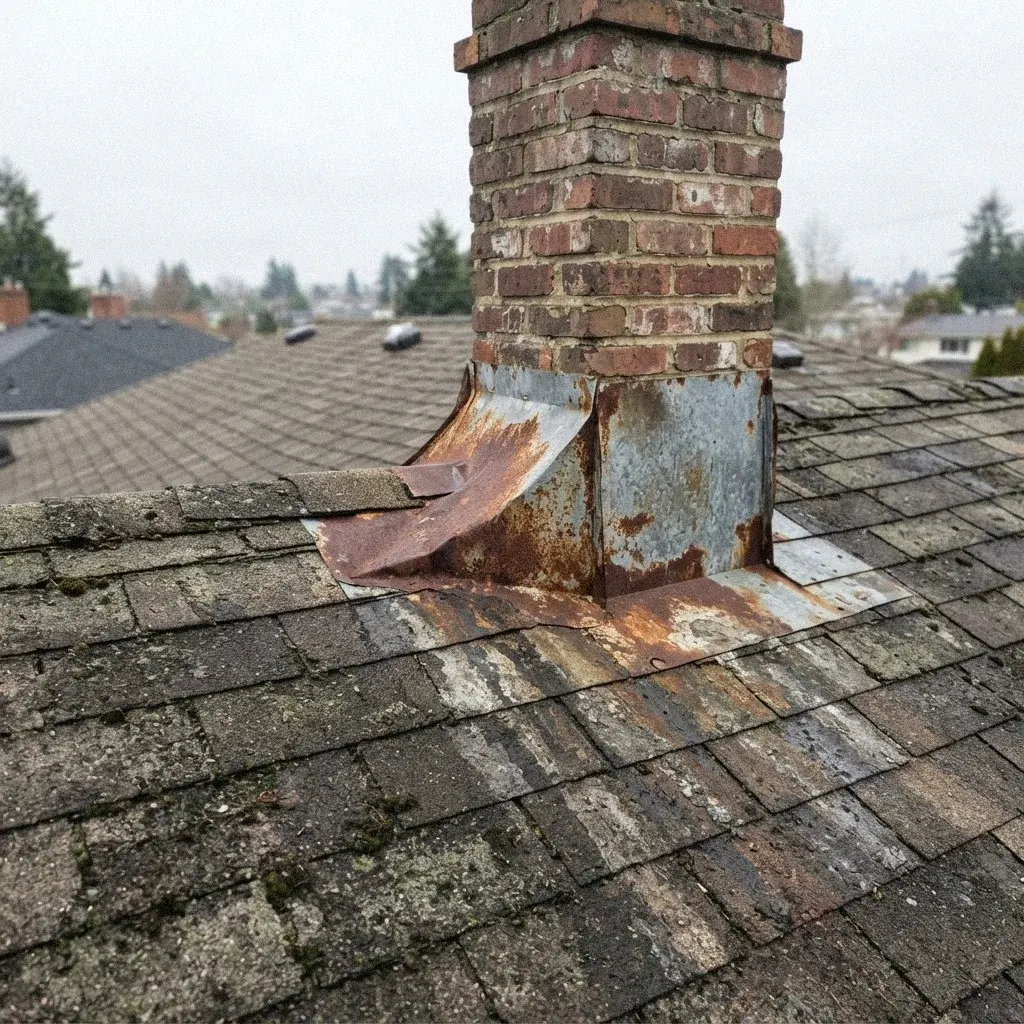
A Minneapolis roof leak rarely comes from worn-out shingles. It comes from a specific joint, valley, or flashing detail. Here's a ranked look at where these leaks actually begin, from pipe boots to drip edge.
Read article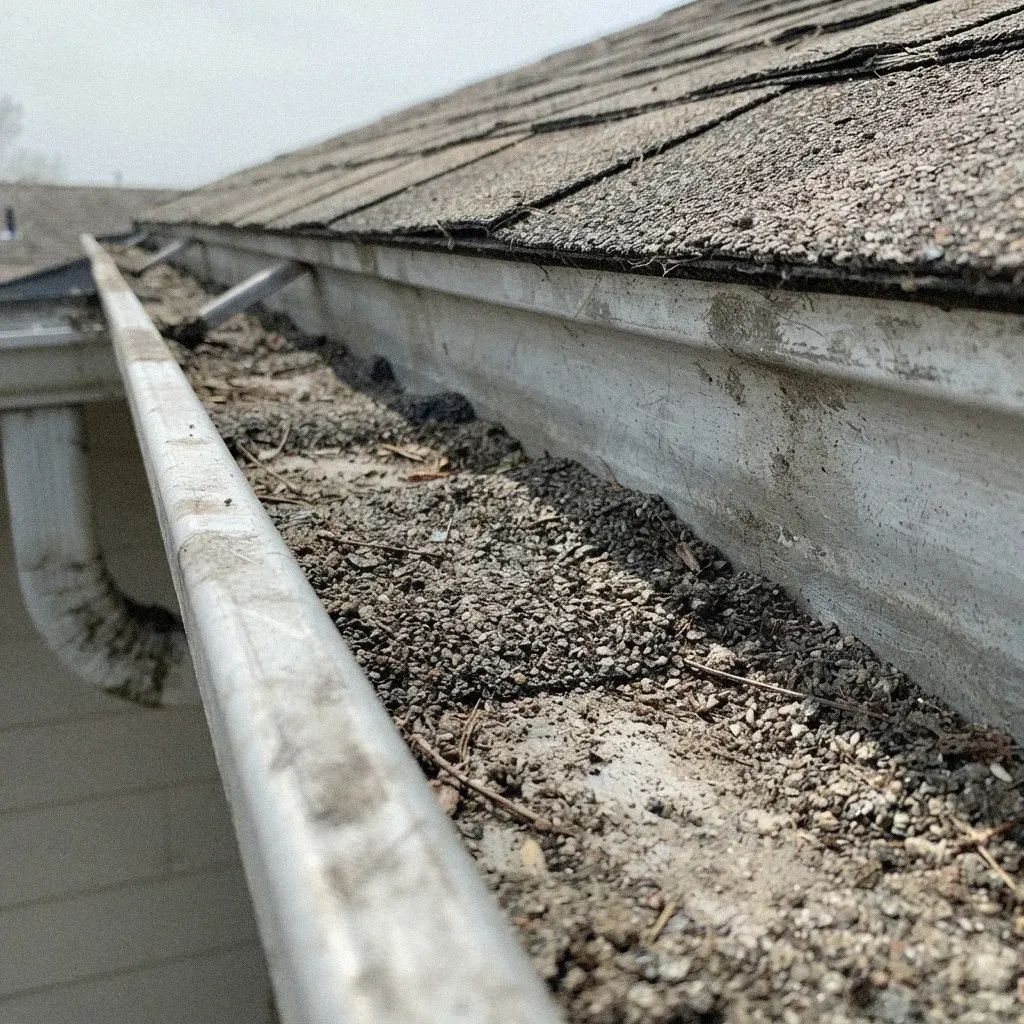
A handful of ceramic granules at a Minneapolis downspout or splash block usually means nothing. This piece breaks down how to separate normal break-in shedding from bald spots and real wear, and what an uneven pattern by roof slope is actually telling you.
Read article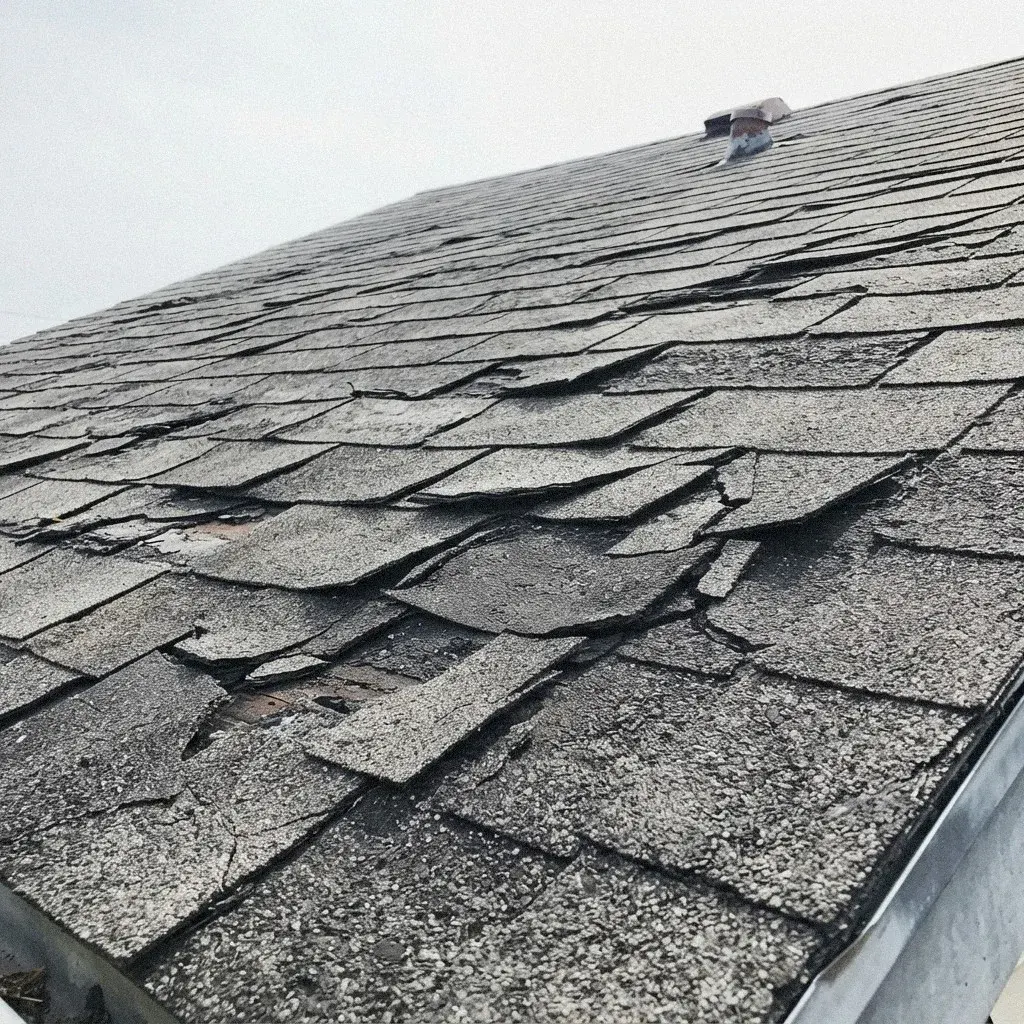
A shingle can bow up at the corners or claw open at the seams, and those are separate stories. Here's what each curl shape means before you decide anything.
Read article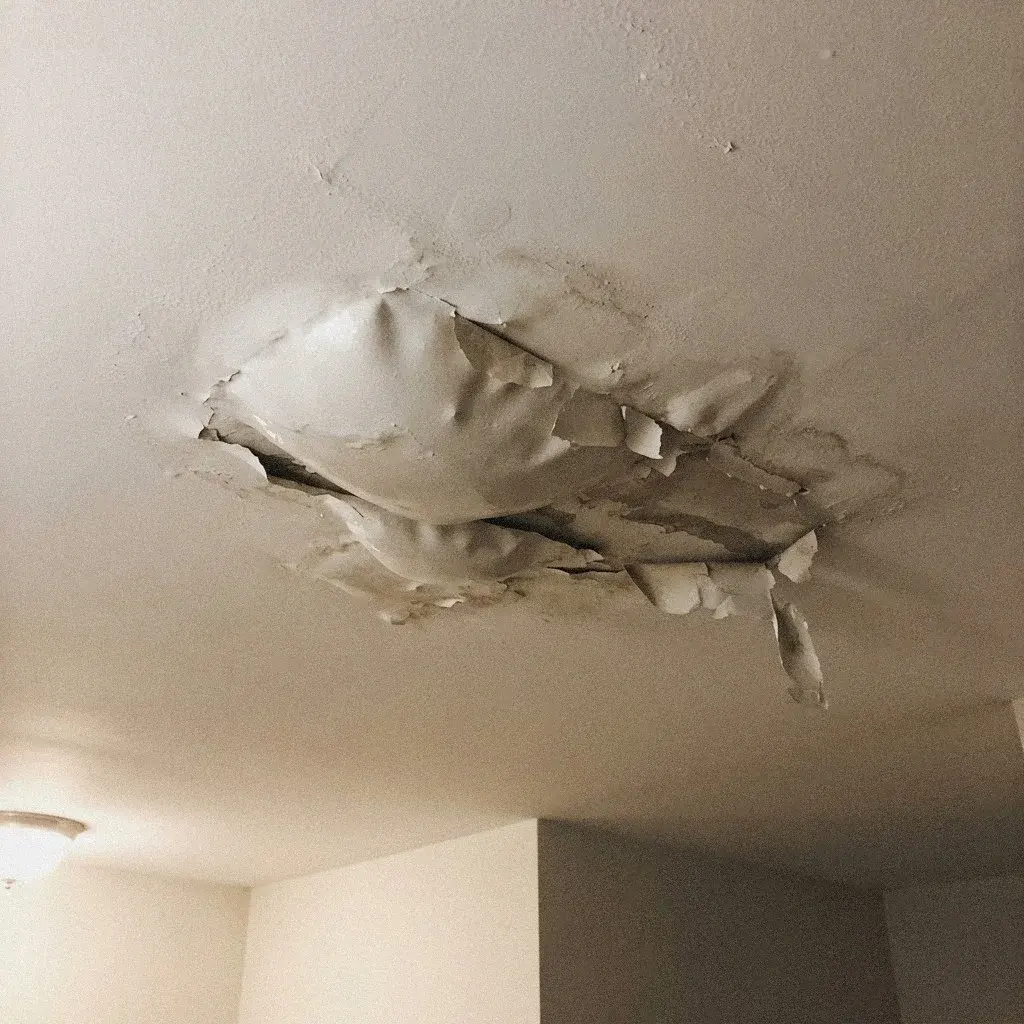
A brown ring on a ceiling is the last step in a chain, not the first. Where it sits, what shape it is, and when it appears all point back up through the attic to a different cause. Here is how to read one before calling anybody.
Read articleNo ladder needed to start. Shadow lines, a wavy ridge, and debris piling at the downspout outlet tell a Minneapolis homeowner most of what's going on up top.
Read articleSpecific to Minneapolis. The guides talk about ice dams forming on bungalow roofs in Kingfield and Longfellow with shallow attic insulation, hail damage from summer thunderstorms near the Chain of Lakes, and how frost heave in the clay-heavy soil around Tangletown can shift flashing on older foursquares. None of it is swapped-in national copy.
No set calendar. They get another pass after a heavy snowfall winter that left ice dams behind in neighborhoods like Seward or Prospect Park, after a hailstorm rolls through the metro, or when something in Minnesota licensing or building code changes. Between those events the guides mostly stay as written.
The service pages list what work gets quoted; the guides explain why. Things like why a foursquare near Lake Harriet with a low-pitched dormer collects ice differently than a Colonial Revival in Linden Hills, or why a basement-heavy house built to Minnesota's frost-depth footing rule still leaks at the roofline. Worth reading before you're comparing bids.
These posts work through problems that actually show up on Minneapolis roofs: ice dams backing up under thin attic insulation in older bungalows, granule loss after a hailstorm rolls through, flashing that failed around a chimney in a Colonial Revival near Kenwood. None of it is generic advice written for a milder climate. It reflects a city with basements dug to frost depth, glacial clay soil underneath, and roughly 51 inches of snow most winters.
Call (612) 493-0152