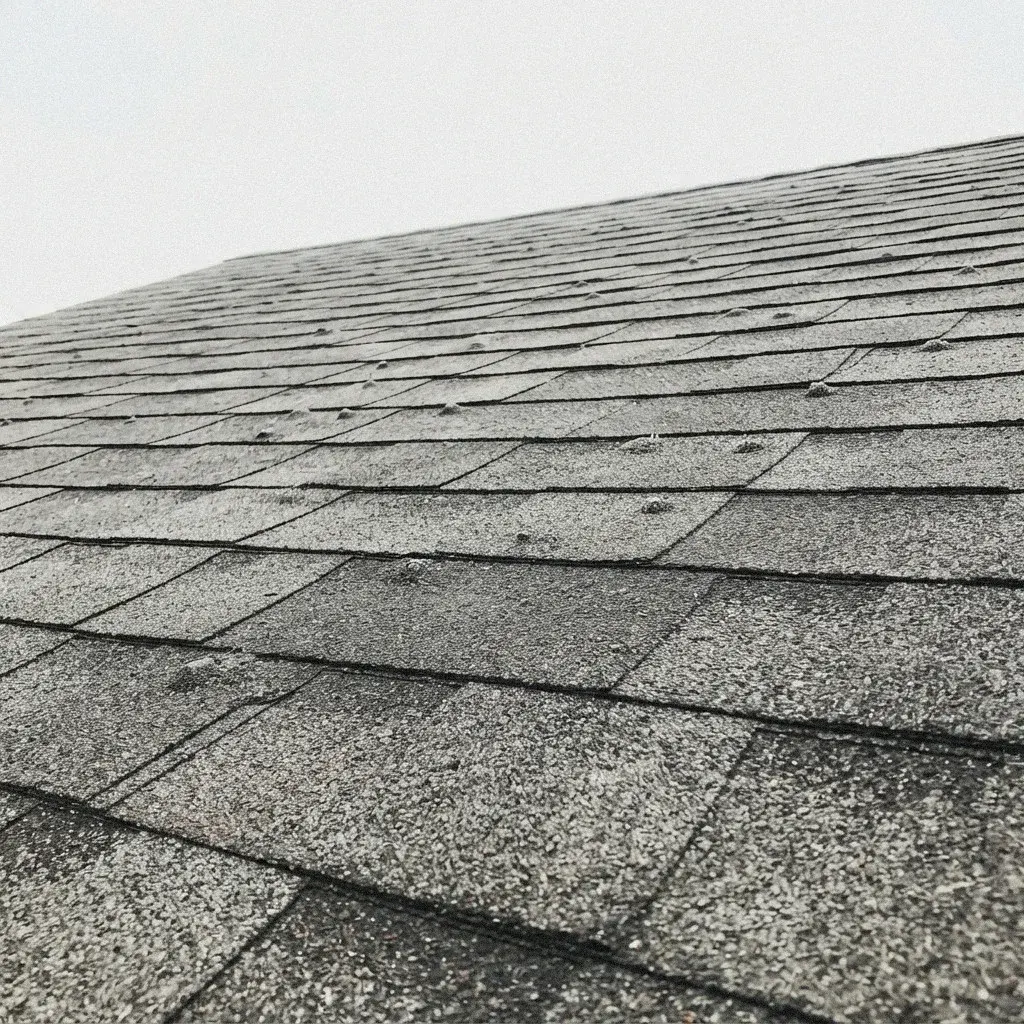
A nail pop is a small round bump in a shingle where the fastener underneath has backed out and pushed the shingle up from below. On a Minneapolis roof they usually come in rows, because nails go in along a marked strip on each shingle and nothing in the weather works in straight lines. Most homeowners notice them from the driveway on a low-sun evening, when the raking light throws a shadow off each bump. They are small, they are common, and they are the kind of thing that stays harmless for a while and then quietly stops being harmless. What follows is why they happen here, what the bump actually means, and when a bump becomes a leak.
Spotting The Raised Bump
Stand back from the house, maybe near the sidewalk or across the street, and look along a shingle course when the sun is low, early morning or evening. A nail pop breaks the flat line as a small hump or shadow, sometimes with a whitish or gray dab of sealant marking where someone already tried to hold it down. In neighborhoods like Fulton or Tangletown, where a lot of the housing stock is older, these bumps tend to show up in rows that follow the nailing pattern.
Why Fasteners Work Loose
Wood sheathing swells when it takes on moisture and shrinks as it dries out, and that cycle repeats every year through a Minneapolis winter and summer. A roofing nail is metal driven into wood, and the two materials do not move the same amount or at the same rate. Each cycle of swelling and shrinking loosens the nail's grip a little more, until the shank starts to slide back out instead of staying seated the way it was driven.
The Role Of Deck Movement
Minneapolis decks go through real swings, from summer heat that can push attic temperatures well past 100 degrees to winter stretches well below zero, and the wood sheathing expands and contracts with every swing. A nail driven true in July can end up sitting proud by January as the deck around it moves. Roofing nails don't stretch with the wood, so repeated seasonal shifting is often what starts a fastener backing out in the first place.
The Nailing Line Explained
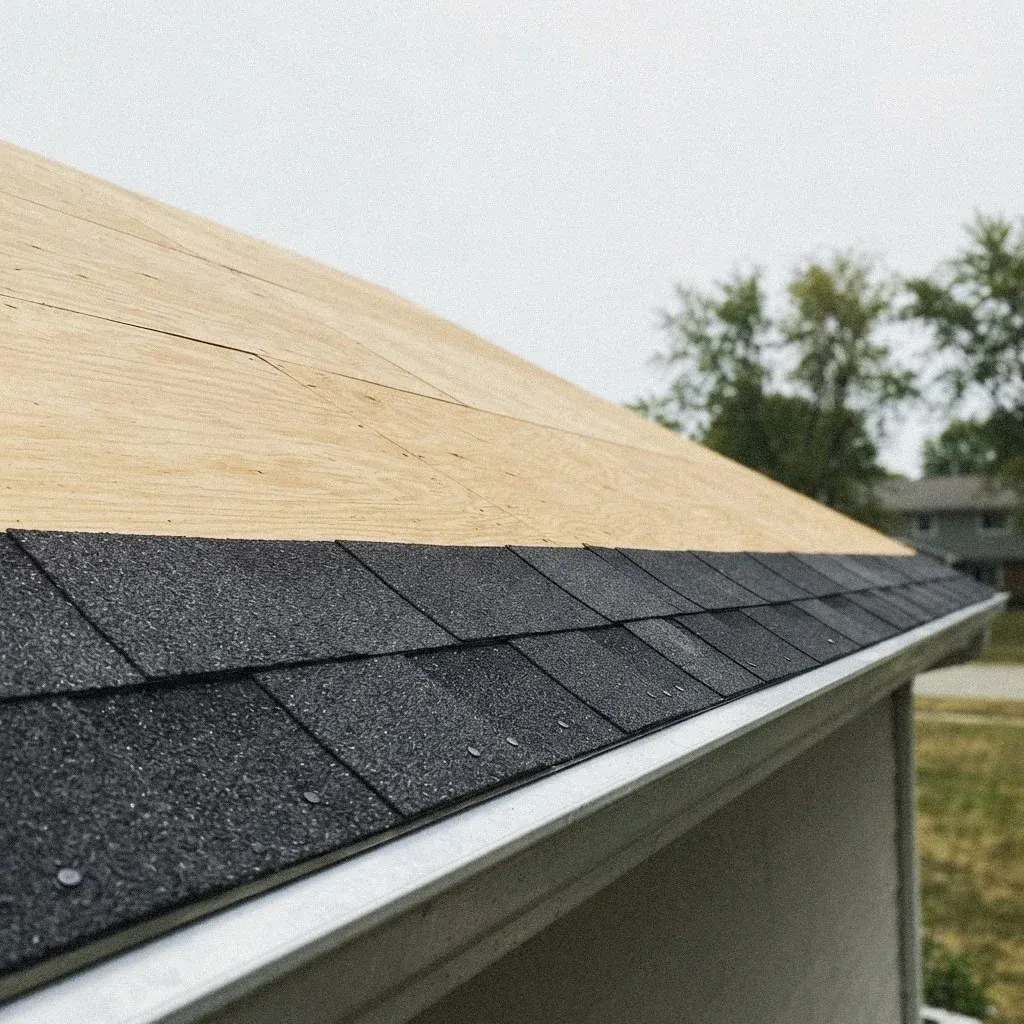
Every asphalt shingle has a narrow band across it, usually marked by the manufacturer, where the nails are supposed to go. Get it right and each nail sits under the shingle above, covered and dry, holding two courses at once. Get it high and the nail lands above the overlap, exposed to weather from the day it goes in. Get it low and it misses the course beneath, so the shingle is held at one point instead of two. This is why nail pops line up: everything on that band moves together as the deck below it swells and shrinks. It also explains why a row of pops on one course and nothing on the next often means the crew drifted off the line for a stretch.
Why The Exposed Head Matters
Once a nail head rises above the shingle surface, it breaks the water path at the one spot the shingle above was supposed to cover. Rain driven sideways during a summer thunderstorm, or meltwater running down the roof during a January thaw, can find that exposed head and work its way in around the shank. What started as a cosmetic bump becomes a pinhole leak, a tiny opening that lets water in well before anyone notices a stain inside.
How A Pinhole Leak Travels
The hole a popped nail leaves is tiny, which is exactly what makes it slow to find. It does not pour; it wicks. Water follows the shank down through the sheathing, spreads a little along the underside of the deck, and drops onto whatever framing or insulation is below. In an unheated Minneapolis attic that water sometimes never drips at all in winter, because it freezes on the cold underside of the deck and waits for the first mild afternoon. So the sequence is often a dry-looking roof, then a frost ring in January, then a stain on a bedroom ceiling in March that has no rain to explain it.
Shade, Slope, And Frequency
Roof sections that stay shaded longer, or sit at a shallower slope, tend to hold moisture in the sheathing longer after a storm or a snowmelt. That extra time wet means more cycles of swelling and drying for the wood underneath, and more nail pops over the life of the roof. A north-facing slope near a tree canopy in Linden Hills or along a lot backing up to Minnehaha Creek often shows more of these bumps than a sunnier, steeper section of the same roof.
A Single Pop Versus A Pattern
One raised bump in a single shingle course, sitting by itself, is a small thing and usually stays that way. It's a different story when several fasteners along the same line are backing out together, or when the pattern repeats across multiple courses in roughly the same spot. That kind of spread points to something happening underneath the shingles themselves, not just one nail that missed its mark on installation day.
What A Bump Does Not Prove
Finding a bump doesn't mean the sheathing below has failed or that the whole roof is in trouble. Most of the time it's a fastener issue sitting on top of sound decking, tied to seasonal movement rather than any structural problem. It's worth a closer look mainly because a raised nail head left alone stays exposed to weather, and that's what eventually turns a cosmetic bump into an actual leak point.
Checking It From The Ground
A phone camera zoomed in, or a pair of binoculars, can often show from the sidewalk whether the bumps on a roof are scattered here and there or lined up in a repeating pattern. That distinction is hard to see standing directly under the roof, but it is usually clear from across the street in good light. Homes near Lake Harriet or Lake Nokomis, with mature tree cover overhead, are worth checking after any season with heavy leaf drop or ice buildup.
Why Timing Changes The Fix
A nail pop caught early, while the sealant dab is intact and the shingle around it hasn't cracked, is a small and contained repair. Left through another Minneapolis winter of freeze and thaw, the shingle around the head can split further, and the pinhole leak underneath gets more chances to reach the sheathing. Timing is what separates a fastener issue a roofer resets in minutes from one that has already let water into the deck.
Dealing with this in your home?
Minneapolis roofs carry the weight of two seasons pulling in opposite directions. Bungalows near Kingfield and Longfellow trap heat in poorly vented attics, melting snow that refreezes at the eaves into ice dams. Come summer, hail off a Hennepin County thunderstorm can strip granules city-wide, no matter the neighborhood.