Now taking calls — fast callback for urgent roof damage · (612) 493-0152
Roof Leak Repair in Minneapolis, MN
Minneapolis, MN

Finding a Roof Leak's Real Source in Minneapolis, MN

Tracking a Minneapolis leak back to its actual entry point.

Whether you're in Linden Hills, Fulton, Kingfield, or elsewhere around Minneapolis, roof leak repair is arranged around the conditions on the ground in and around Minneapolis, so the plan fits the building rather than a template.

Nearly all of this work is residential: residential roofing covers the approach for houses, while commercial and multi-unit buildings are handled under commercial roofing.

Warning Signs

Signs You May Need Roof Leak Repair

Ceiling Stains Far From the Leak

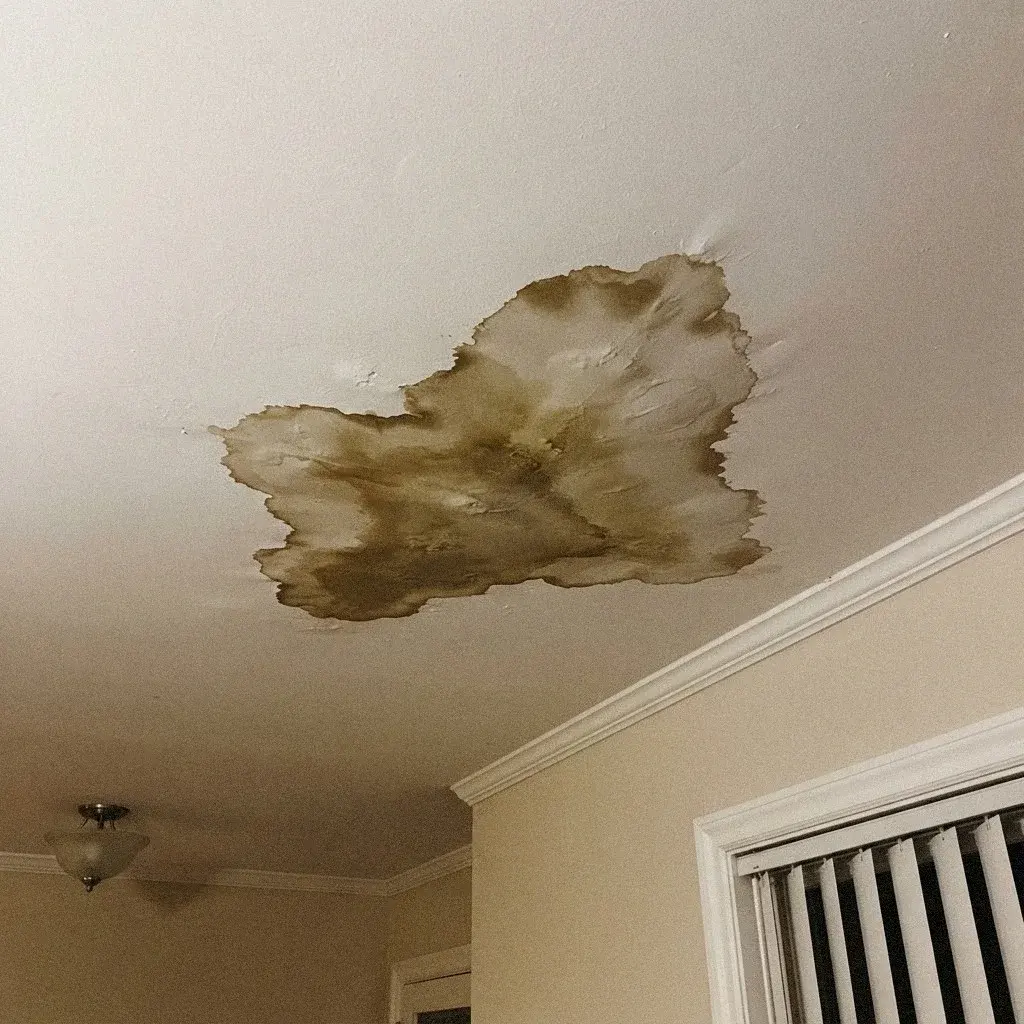
A ceiling stain in a Minneapolis bungalow rarely sits above the actual leak source. Water tracks along a rafter or the roof deck itself, sometimes for several feet, before it finds a low point in the framing and drips into insulation or drywall. That is why a stain over a bedroom in Longfellow or Kingfield can trace back to an entry point closer to the ridge or a side wall, not straight above it.

Wet Insulation in the Attic

Insulation that has gone flat and dark in one spot is holding water, and it will keep holding it long after the leak above has dried. Batt insulation soaked once loses most of its value permanently, and blown-in cellulose packs down and stays damp against the joists. In an unheated Minneapolis attic that dampness does not evaporate off in a day, so what starts as a small stain on the sheathing spreads into the ceiling below over weeks. Finding it means pulling the wet material out, not just closing the hole overhead.

Trouble at Pipe Boots and Step Flashing

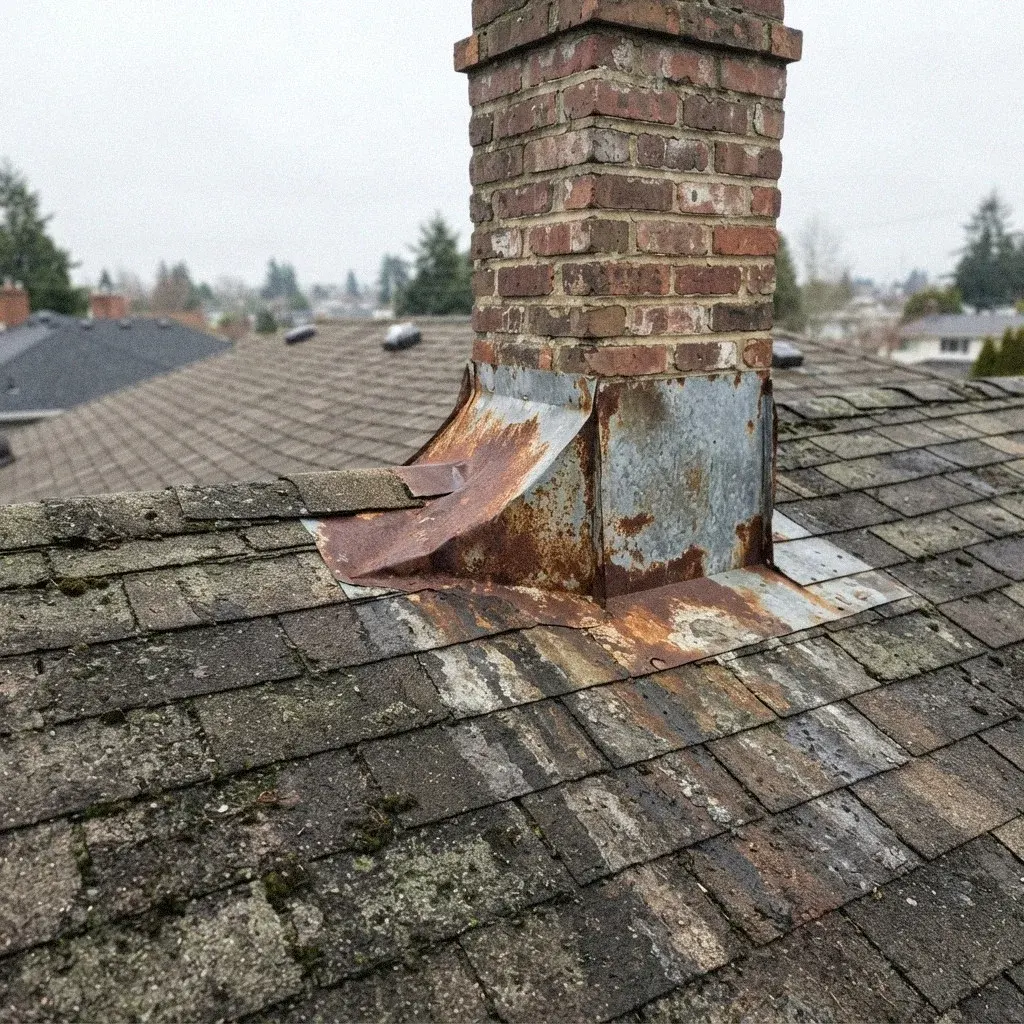
Most roof leaks are not in the middle of a slope; they are at something that interrupts it. A pipe boot is a rubber collar that gets brittle in the cold and eventually splits at the top, and once it does, water runs straight down the outside of the pipe into the attic. Step flashing is the metal that steps up a wall course by course, and it fails where somebody sealed it with caulk instead of lapping it properly. Both leave the shingles looking perfectly fine, which is why a homeowner searching the field of the roof finds nothing.

How It Works

Our Roof Leak Repair Process

Roof and Attic Inspection in Minneapolis

Both halves, in that order of importance. The attic comes first because the wet track on the underside of the sheathing points at where the water actually entered, which is often several feet uphill of the ceiling stain. Then the roof above that spot gets worked over: the flashing, the penetrations, the valley, the courses. Guessing from the stain alone is how leaks get patched twice.

Water Testing to Confirm the Entry Point

When the surface and attic check don't pin it down, sections of the roof get wetted with a hose one at a time so the entry point can be watched and confirmed from inside the attic.

Repairing the Confirmed Leak Point

Once the entry point is confirmed rather than suspected, the repair opens that area up: shingles lifted, old flashing or a split boot removed, any soft decking cut out, and the layers rebuilt in the order they shed water. Sealant goes on as a finish detail, never as the waterproofing, because caulk over a bad joint lasts about one Minneapolis winter.

Follow-Up Check After the Repair

The repair gets tested rather than assumed. Water is run on the roof above the fixed area while somebody watches the attic underneath, and the ceiling below is checked again after the next real rain or thaw. If a second entry point was hiding behind the first, this is when it shows itself, and finding it now costs a return visit rather than a whole new call.

Why this matters

Older Minneapolis homes, especially bungalows built with less attic insulation and ventilation than current code calls for, run warmer at the roofline in winter. That warmth melts snow that refreezes at the colder eaves, and the resulting ice dam forces water back under the shingles. A leak found early is a patch repair; left through another freeze-thaw cycle, it can mean wet insulation and sheathing damage that costs more to fix.

Licensing & Local Standards

Code-Compliant Roof Leak Repair in Minnesota

Shingle, Slate, and Metal Repairs Differ

Most Minneapolis roofs are asphalt shingle, with slate or standing-seam metal on some older homes near Kenwood or Lowry Hill, so a leak repair usually means pulling and replacing a section of shingle and checking the underlayment beneath it rather than working with tile or a different material system entirely.

Ice Dams and Summer Hail, Two Leak Seasons

Minneapolis leaks split into two seasons. Winter ice dams back water up under shingles at the eaves, while summer brings hail and straight-line wind that can crack a shingle or lift a flashing edge outright. A roof that handled one Minnesota winter without a problem can still develop a leak the next season once a seal has quietly failed.

Budget

What You Would Pay for Roof Leak Repair

Most roof leak repair jobs in Minneapolis fall inside these ranges. The inspection costs nothing and the exact figure is written down before any work starts.

Roof Leak Repair — estimated ranges, per job
Deck ConditionInsulation DepthCrew Schedule
A crew that only handles roofs, not gutters, siding, and everything else, catches problems the others miss. Ice dam damage, valley flashing that failed years ago, decking gone soft under old shingles — these show up fast to someone who checks roofs every day and nothing else. Storm-damaged shingles swapped in place, no full section reroofed an estimated $315–$2280
Reroofing is not a side job for the pros connected through this site. It is the only job. That focus means fewer guesses mid-tear-off, because the failure points on an aging roof tend to repeat, and someone who sees them constantly stops treating each one as a surprise. Tear-off over Longfellow-era decking, new felt, deck untouched if solid an estimated $450–$3120
A bid built around speed alone tends to skip the parts that matter after the first winter: proper attic ventilation, correct flashing at valleys and chimneys, adequate ice barrier. Those gaps do not show on the invoice. They show up as a leak once the weather turns. Bungalow-scale reroof, ridge vent cut in, gutters left as found an estimated $585–$4320
Older homes carry roofing quirks that take repetition to spot quickly: undersized downspouts, gutters rusted from decades of freeze-thaw, shingles lifted where moisture crept underneath. A crew doing this work constantly recognizes the pattern before it becomes a bigger repair. Reroof plus attic insulation upgrade, no interior drywall repair done an estimated $810–$6240

Ask for the bid broken down into materials, labor, and disposal, not one flat total. A written breakdown is what lets you compare two contractors fairly and shows whether either price actually covers the full scope of the work.

Questions & Answers

Frequently Asked Questions

Why is the ceiling stain not right above the leak?

The pros we connect you with trace the leak from the stain outward, following the rafters and sheathing back toward the roofline rather than assuming the entry point sits directly above the mark. They check pipe boots, step flashing, and valleys first, since those are the spots on Minneapolis roofs most likely to fail before the field of the shingle does.

Can a roof leak be patched without full shingle replacement?

Yes, often. A single failed pipe boot, a lifted piece of step flashing, or a few shingles damaged by ice or hail can usually be patch repaired without touching the rest of the roof, as long as the surrounding shingles and underlayment are still in reasonable shape.

Does an old ceiling stain mean the leak is still active?

Not always. Some stains in Minneapolis attics are left over from an ice dam earlier in the winter that has since been resolved, or from a hard thunderstorm months back. An attic inspection can usually tell the difference by checking whether the wood and insulation around the stain are still damp or have dried out.

Could this ceiling stain be from an old, already-fixed leak?

Not necessarily. Some ceiling stains in Minneapolis homes are leftover marks from a leak repaired seasons ago, especially after a hard winter with heavy ice damming along the eaves. The only way to know is to check whether the wood underneath is still damp or if the insulation has dried out. The licensed pros we connect you with can tell active moisture from an old, dry stain.

Will you need to go into the attic to find the leak?

Almost always, and it is the part that makes the difference. Water does not enter and exit in the same place; it runs along the underside of the sheathing, down a rafter, across a joist, and drops where the framing stops it. So the ceiling stain is often several feet from the actual hole. From inside, a flashlight picks up the wet track, the frost ring at a pipe, or the daylight at a gap, and that points at the spot on the roof to open up. Diagnosing from above alone means guessing, and guessing on a roof leak means patching twice.

What if the first repair doesn't stop the leak?

It happens, and it usually means the roof had two problems rather than one. A wall junction and a nearby chimney can both be leaking into the same ceiling spot, so closing one leaves the stain looking untouched. The honest response is to go back, look again, and this time run water on the roof in sections while somebody watches from the attic, which finds what a dry inspection missed. Ask before the first repair what happens if it does not hold, and get the answer in writing. A company that stands behind its own workmanship treats a return visit as part of the job.

How much does roof leak repair cost in Minneapolis?

A roof recover or replacement can sometimes skip a permit if the job stays under a set size or scope, but Minneapolis still reviews the work against Minnesota Rules governing residential construction. Push past that threshold, or touch the decking underneath, and inspection becomes part of the job.

Learn More

Roof Leak Repair: Further Reading

Attic heat loss is what turns ordinary snow into an ice dam. A roof that sheds warmth unevenly melts snow near the ridge, which refreezes at the eaves and backs water under the shingles. The fix usually starts in the attic, not on the roof deck itself.

Where Minneapolis Roof Leaks Usually Start
Roof Problems

Common Roof Leak Entry Points in Minneapolis

A Minneapolis roof leak rarely comes from worn-out shingles. It comes from a specific joint, valley, or flashing detail. Here's a ranked look at where these leaks actually begin, from pipe boots to drip edge.

Read article
Checking Storm Damage After Hail | Minneapolis
Local & Seasonal

Checking Storm Damage Without a Ladder in Minneapolis, MN

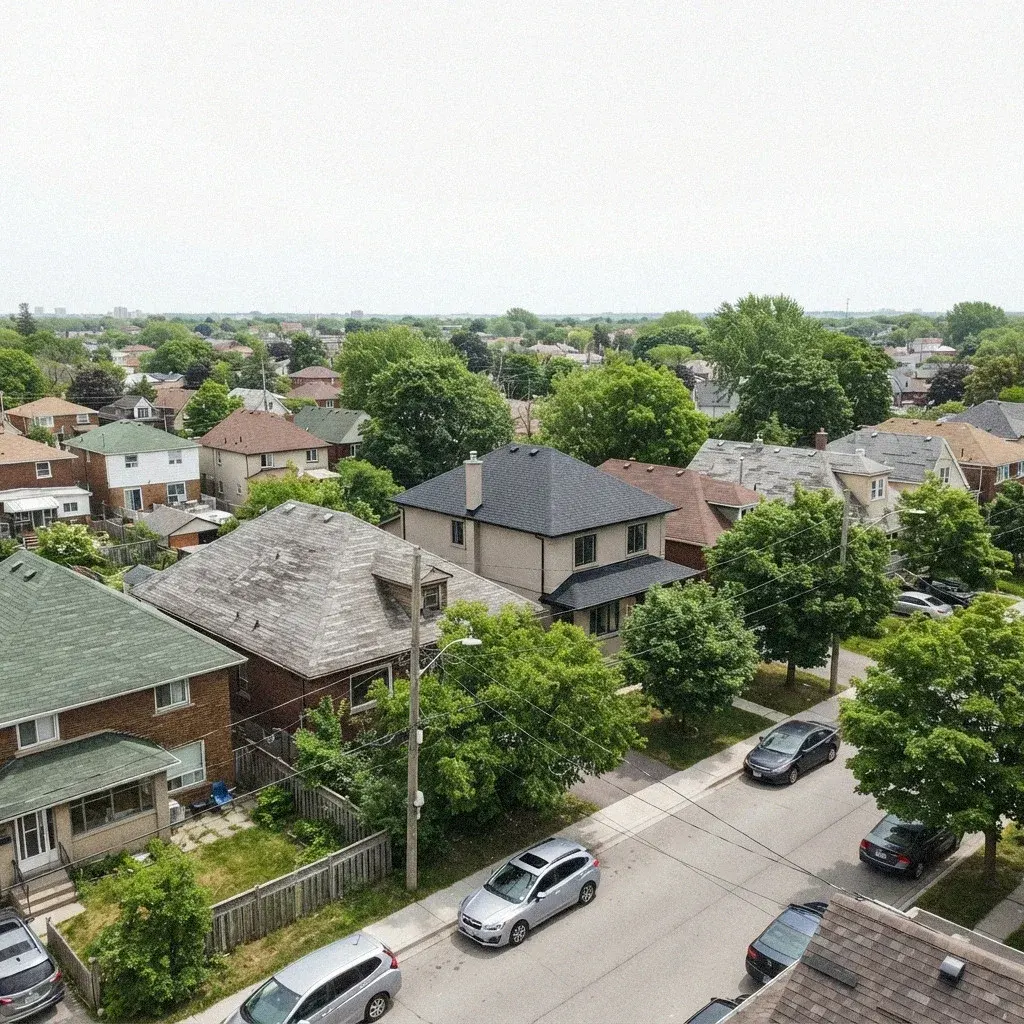
After a Minneapolis hailstorm, most of the real damage is on the roof, not the ground. Here is what a homeowner can check from the yard, and why the camera matters more today than it will in a week.

Read article
Signs Your Roof Is Failing in Minneapolis
Roof Problems

What Your Roof Shows From the Sidewalk in Minneapolis, MN

No ladder needed to start. Shadow lines, a wavy ridge, and debris piling at the downspout outlet tell a Minneapolis homeowner most of what's going on up top.

Read article
Get Started Today

Take The Next Step

This page explains what the work generally involves, but no two Minneapolis roofs age the same. A bungalow near Linden Hills with decades of shingle layers behaves differently than a roof replaced after wind damage near Prospect Park. Attic ventilation, pitch, and how much ice dam trouble a house has seen all change what this service means for your address. The licensed pros we connect you with can tell you how it applies to your roof specifically.

Call (612) 493-0152
Free inspections & same-day service available
Call (612) 493-0152 Schedule Online