How Roofing Permits and Code Actually Work in Minneapolis, MN
Why a permit exists, who pulls it, and what inspectors check before a roof is signed off.
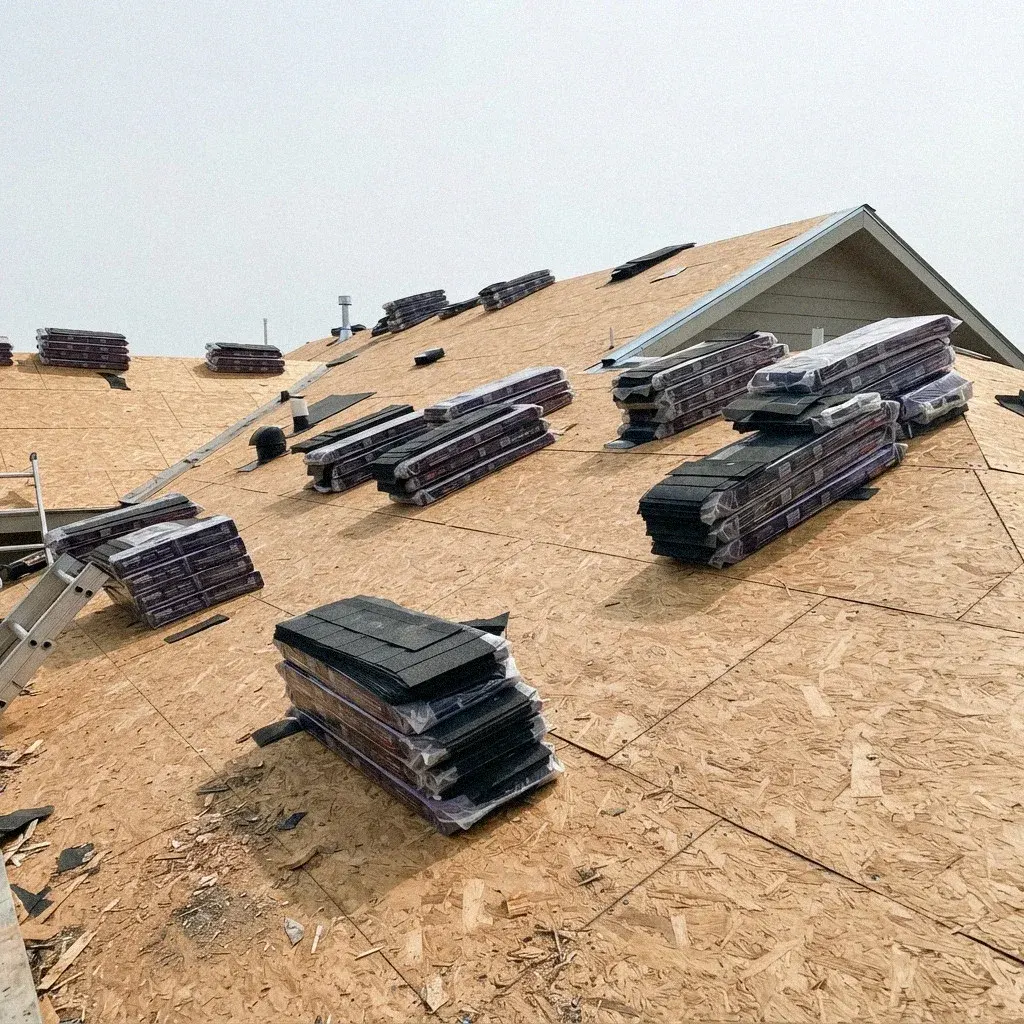
A roofing permit is generally required for replacement and most repairs, with inspections at rough and final stages checking deck, flashing, and ventilation against code before the job can close.
When a Roofing Permit Gets Triggered
Minneapolis requires a building permit for roofing and roof repair work, full stop, and that applies whether the licensed pros we connect you with are doing the job or a homeowner is working on their own house. The permit trigger is not tied to a dollar threshold or a percentage of roof area the way some cities structure it; the city's own roofing requirements page for one- and two-family dwellings states the permit obligation directly, without carving out small jobs or owner-occupied exceptions.
The permit holder of record is usually the contractor pulling under their own state license, though a homeowner in Minneapolis can pull owner permits for work on their own house. Either way, the name on the permit is the party the city holds accountable for passing inspection. A contractor working under a homeowner's owner-pulled permit, rather than their own, is a red flag worth asking about before signing anything for a foursquare in Kingfield or a bungalow near Lake Nokomis.
Plan review comes before the permit issues on anything beyond a straightforward like-for-like reroof, and Minneapolis Development Review checks the application against the Minnesota State Building Code before work starts. Most single-family reroofs move through this stage quickly since the scope is well understood. Where it slows down is additions, structural changes to the roof deck, or work on a home inside one of the city's historic districts, where a different layer of review applies before the permit is final.
Plan Review and the Permit Holder of Record
HOA architectural approval, where it applies, is a separate track from the city permit and neither substitutes for the other. A townhome association in a newer development might require sign-off on shingle color or style before work starts, but that approval carries no weight with Minneapolis Development Review, and a city permit carries no weight with the association. Homeowners in Linden Hills or Tangletown with an association covering their block should expect to clear both, not one instead of the other.
Skipping the permit shows up years later, usually at closing. Hennepin County property records and city permit history are both things a Minneapolis buyer's agent or appraiser can pull, and a roof replacement with no matching permit is a flag they know how to spot. It can stall financing or force a seller into a repair credit. On an older Kingfield or Tangletown bungalow, an unpermitted reroof also means no inspection record ever confirmed the ventilation or flashing work was done right.
- The permit application is where the scope gets written down: how many layers come off, what goes back on, and who is responsible for the job. Minneapolis requires one for roofing work regardless of who is doing it, so this step is not optional on a homeowner project either.
- The fastener schedule sets nail type, length, and count per shingle, since underdriven or misplaced nails are a common cause of blow-offs in high wind. Inspectors check this at the rough stage, not just at final walk-through.
- Underlayment requirements set what goes between deck and shingle, a layer that matters most where ice can back up under shingles and find a seam. Inspectors look for full coverage, not gaps, at valleys and eaves.
- Ventilation requirements balance intake at the eaves against exhaust near the ridge, since a roof that can't breathe traps heat and moisture against the deck from below. Older bungalows and foursquares built before modern code often fall short here.
- Flashing requirements cover the metal at chimneys, walls, valleys, and any roof-to-wall junction, since these transitions are where leaks start far more often than in the open field of shingles. Inspectors check flashing tie-in at both rough and final stages.
- A certificate of completion, or the closed inspection card, is the paper trail proving the work passed final inspection under an open permit. Without it, the job stays open in city records indefinitely, which matters later at resale.
Inspection Stages From Tear-Off to Final
Inspections happen at defined stages, not just at the end. A rough inspection typically checks the work before it is covered up or finished, catching underlayment, flashing, and fastening while they are still visible, and a final inspection confirms the completed roof meets code before the permit closes out. The inspection card, whether physical or tracked digitally through the city's permitting system, is the running record of which stages have passed and which are still open.
Layer limits are a code-driven ceiling on how many roofing layers a house can carry before a full tear-off is required rather than another layover, and fastener schedules set how shingles or other roofing material must be nailed down to hold under Minnesota wind and snow load. These are not decisions a contractor makes on judgment alone; they are baseline requirements under the Minnesota State Building Code that apply the same way on a bungalow in Fulton as on a foursquare in Prospect Park.
- HOA architectural approval, where a property has one, sits entirely apart from the city permit process and asks a different question: does the new roof match community standards for color or material. Getting a city permit does not satisfy an HOA review, and skipping the HOA step can bring its own penalty even with a valid permit on file.
- Historic district review adds a layer for homes inside a designated district, checking whether roofing material and appearance fit the district's guidelines before work starts. This review can run separately from, and sometimes ahead of, the standard building permit application.
- Inspection stages come in a set order, and skipping one can mean uncovering finished work later. The deck gets looked at after tear-off while it is still visible, and the final walk happens once the roof is complete, which is what closes the permit.
- The permit holder of record carries responsibility for scheduling inspections and closing out the job, whether that's the homeowner or the contractor who applied. Confirming who holds that role before work starts avoids confusion if an inspection gets missed.
Comparing Repair Permits And Full Tear-Off Permits
Ventilation requirements and underlayment requirements both exist because of how Minneapolis winters actually behave, not as paperwork for its own sake. Proper attic ventilation keeps roof deck temperature more even, which matters directly for ice dam formation on homes with the shallower attic insulation common in older bungalow-era construction. Underlayment requirements set what has to go down before shingles, protecting the deck during the window between tear-off and final covering and adding a layer of defense against wind-driven moisture.
Flashing requirements cover every place a roof plane meets something that is not more roof: chimneys, sidewalls, valleys, plumbing vents. These are code-driven details because flashing failure is one of the most common sources of a leak that shows up nowhere near where the water actually got in, and a Minneapolis basement is usually the first place that kind of leak becomes obvious, days or weeks after a storm passed over Powderhorn Park or the Chain of Lakes.
| Stage | Who's Involved | What Gets Checked |
|---|---|---|
| Issued by | Local building department | Homeowners association board |
| What it checks | Code compliance, safety, fastening | Color, material, appearance |
| Legal weight | Required by law | Required by private contract |
| Good fit for this option | Before work starts | Often before permit is pulled |
| Consequence if skipped | Stop-work order, resale trouble | Tied to inspection stage completed |
Unpermitted Work and Resale Trouble
A certificate of completion, or the equivalent sign-off in the city's system, closes the permit once the final inspection passes. Until that happens, the permit is technically still open, and an open permit is something a buyer's inspector or a title company can flag during a sale. Homeowners planning to sell within a year or two of a reroof have a real reason to make sure the paperwork actually closed, not just that the crew finished the physical work.
Flashing seals the seams a shingle field can't cover on its own: chimneys, skylights, sidewalls, and the valleys where two roof planes meet near a dormer. Minneapolis foursquares and bungalows often have this metalwork reworked when a roof is replaced, since old step flashing corrodes or was never installed correctly the first time. An inspector checks that these transitions are mechanically sound and properly lapped, not just caulked over, before signing off on the work.
Where Unpermitted Work Catches Up With You
A buyer's lender or insurer may also ask about unpermitted work once it is flagged, since it affects what they are underwriting. Resolving it after the fact usually means applying for a retroactive permit and opening the roof back up for inspection where the work cannot otherwise be verified, which costs more in time and money than doing it right the first time around.
None of this is legal advice about a specific property, permit, or violation, and code administration details can shift, so the city's own current guidance is the source that governs any actual project. What holds steady is the shape of the process: a permit gets pulled, plan review happens where the scope calls for it, inspections check the work at defined stages, and the certificate of completion is what actually closes the file, whether the address is in Cedar-Riverside or out past Theodore Wirth Park.
What an Inspector Actually Checks
- A rough inspection happens once decking, underlayment, and flashing are in place but before shingles cover them, giving the inspector a direct look at work that becomes invisible later. Skipping ahead to shingles before this inspection is a common permit mistake.
- A final inspection happens once the roof is fully installed, checking finished flashing, ventilation components, and general workmanship against the approved plan. Passing final is what allows the permit to close.
- The inspection card is the physical or digital record tracking which inspections have passed on a given permit. An incomplete card is exactly what shows up as an open, unresolved permit years later.
- The layer limit exists because piling new shingles over old ones hides a deck that might already have rot or damage underneath, and it adds weight the framing wasn't necessarily designed to carry twice over.
- A permit trigger is whatever specific scope of work requires the application in the first place, whether that's a full replacement, a partial repair past a certain size, or new decking. Minor patching may fall outside it depending on scope.
- Unpermitted work becomes a real problem at resale, when a title company, appraiser, or buyer's inspector notices a roof with no permit history for a job that clearly needed one. Sorting it out then is slower and more expensive than doing it upfront.
Frequently Asked Questions
Does a homeowner in Minneapolis need a permit for repairs?
In Minneapolis, yes. The city requires a permit for roofing and roof repair work on one- and two-family dwellings, including when a homeowner does the work themselves rather than hiring it out. There is no small-job or owner-occupied exception stated on the city's own requirements page, so the trigger applies to the work itself, not to who is doing it or how much of the roof is involved.
What happens if a roof gets replaced without a permit?
A homeowner or the licensed pros they hire can pull the roofing permit, but whoever applies is on record as responsible for getting it inspected. If a contractor applies, ask for the permit number and keep it with your paperwork, since Minneapolis ties inspection scheduling to that name.
What happens during a roofing inspection visit?
Plan review checks the application against code before work starts: pitch, layer count, and any structural notes get a look before a permit issues. On a straightforward tear-off and reshingle, review is usually fast, but additions like new decking or a dormer can slow it down.
Does a homeowners association approval replace a building permit?
Inspectors generally check the roof at two points: a rough stage looking at deck condition, underlayment, and flashing before shingles go down, and a final walk once the roof is complete. Missing either stage can stall the inspection card and delay closing out the permit.
What happens if a roof was replaced without a permit?
Skipping a permit risks a stop-work order mid-project and can surface later as unpermitted work during a home sale, when a buyer's inspector flags it. Fixing it after the fact often means opening up finished work for a late inspection, which costs more than pulling the permit up front.
Ready To Get This Roof Squared Away?
Confirm permit status and inspection stage before paying a final invoice on any roofing job.
Call (612) 493-0152