Ring stain right at the skylight frame edge
A ring of moisture or a dark stain on the drywall right at the skylight frame's edge points to the frame itself, not a random roof leak elsewhere on the slope above it.
Condensation shows up hardest in January and February, when indoor humidity meets frigid skylight glass, while flashing leaks tend to surface during spring melt when ice dams near the eave push meltwater back toward the curb.
Skylight leaks and winter condensation both show as moisture or staining around the skylight frame, but leaks come from failed flashing or sealant while condensation forms when warm indoor air meets cold glass, most visible during Minneapolis's coldest months.
Attic ventilation does more work than most homeowners give it credit for. Without enough airflow, warm air pools under the roof deck, melts snow unevenly, and sets up the freeze-thaw cycle that pushes ice back under shingle edges.
A ring of moisture or a dark stain on the drywall right at the skylight frame's edge points to the frame itself, not a random roof leak elsewhere on the slope above it.
Water appearing only on cold, clear mornings with no rain overnight points to condensation, since a true flashing leak would need precipitation or melting snow above the skylight curb to produce moisture.
When the mark travels down the light shaft instead of staying at the glass, the water is getting in above the skylight rather than condensing on it. Condensation collects at the lowest cold point and stops there; a leak keeps running. Once the stain reaches drywall the flashing has been open for a while, and the shaft lining usually has to come out with it.
Frost or ice buildup on the inside of the glass during a cold stretch confirms warm indoor air is meeting cold glass, which is condensation forming, not water working its way in through the roof deck above.
Discoloration or a musty smell around the skylight shaft in a finished attic room means moisture has been trapped in the framing long enough to affect the insulation and drywall, which needs attention before the wood softens further.
Minneapolis winters push indoor humidity against skylight glass that sits well below freezing outside, and older bungalows in Fulton and Tangletown, built long before modern insulated skylight shafts, condense heavily along that frame every cold stretch.
Skylights sit lower on the roof slope than a ridge vent or chimney, so ice and meltwater from a roof-edge ice dam near the eave can back up against the curb, adding a second moisture source besides condensation alone.
A roof problem usually shows up long after the moment that caused it, which makes timing the fix confusing. The licensed pros we connect you with can inspect what a storm, age, or a hard winter actually did, then lay out repair versus replacement in plain terms before any work starts.
Homeowners often confuse this with general roof-deck leaks near a valley or penetration, since both leave a ceiling stain that grows after rain or snowmelt. The test is location and timing: skylight trouble stays centered on the frame and often worsens specifically during cold snaps, not just wet weather. Check when the stain appears. A flashing or deck leak elsewhere on the roof tracks with rainfall regardless of temperature. Skylight condensation shows up on clear, frigid mornings with no rain at all. A licensed pro can pull the interior trim to see which one is actually happening.
A real fix addresses whichever source is actually active: reflashing the skylight curb and counterflashing if it's a leak, or adding insulation and a vapor barrier around the shaft if it's condensation, since treating the wrong one wastes the work.
Where ice damming near Kingfield and Diamond Lake homes contributes moisture at the eave below the skylight, the pro also checks attic ventilation and insulation depth, since a warm attic feeding an ice dam will keep recreating the problem.
A roof here works hardest in winter, not summer. Snow piles up, melts a little near the ridge, then refreezes at the eaves into an ice dam that backs water under the shingles. Attics with weak insulation make it worse. The licensed pros we connect you with check ventilation before they ever talk shingles.
| Your situation | What normally fits |
|---|---|
| One failure in one place, found early | One visit |
| A repair that has already been done once and failed | Replacement rather than another repair |
| Water that has got past the underlayment | Replacement, because the structure is involved |
From the ground or an upstairs window, note whether moisture appears during rain or only on cold, dry mornings, and photograph the stain's shape for the contractor. Do not climb onto the roof or pry at the skylight curb yourself; flashing and seal work needs a licensed pro on the deck.
Left alone, trapped moisture around the shaft keeps softening the drywall and framing every cold season, and mold can start inside the wall cavity long before a stain ever reaches the visible ceiling surface near the fixture.
Putting right skylight leaks and winter condensation usually runs an estimated $350 to $1900. That is a budgeting figure, not a price. Minneapolis winters kill off the insects that drive roofing costs elsewhere, so a licensed inspector isn't pricing carpenter ant or wood-boring damage here. What shows up instead near Longfellow or Kingfield bungalows is ice dam rot at the eaves and nail corrosion from decades of freeze-thaw. That's a moisture and age question, not a pest one, and it changes what actually gets quoted. pricing guide.
Eave Membrane Failure. Failed ice and water shield means the membrane installed under shingles at the eave has gapped, torn, or was laid wrong, letting backed-up meltwater reach the decking during a Minneapolis freeze-thaw cycle.
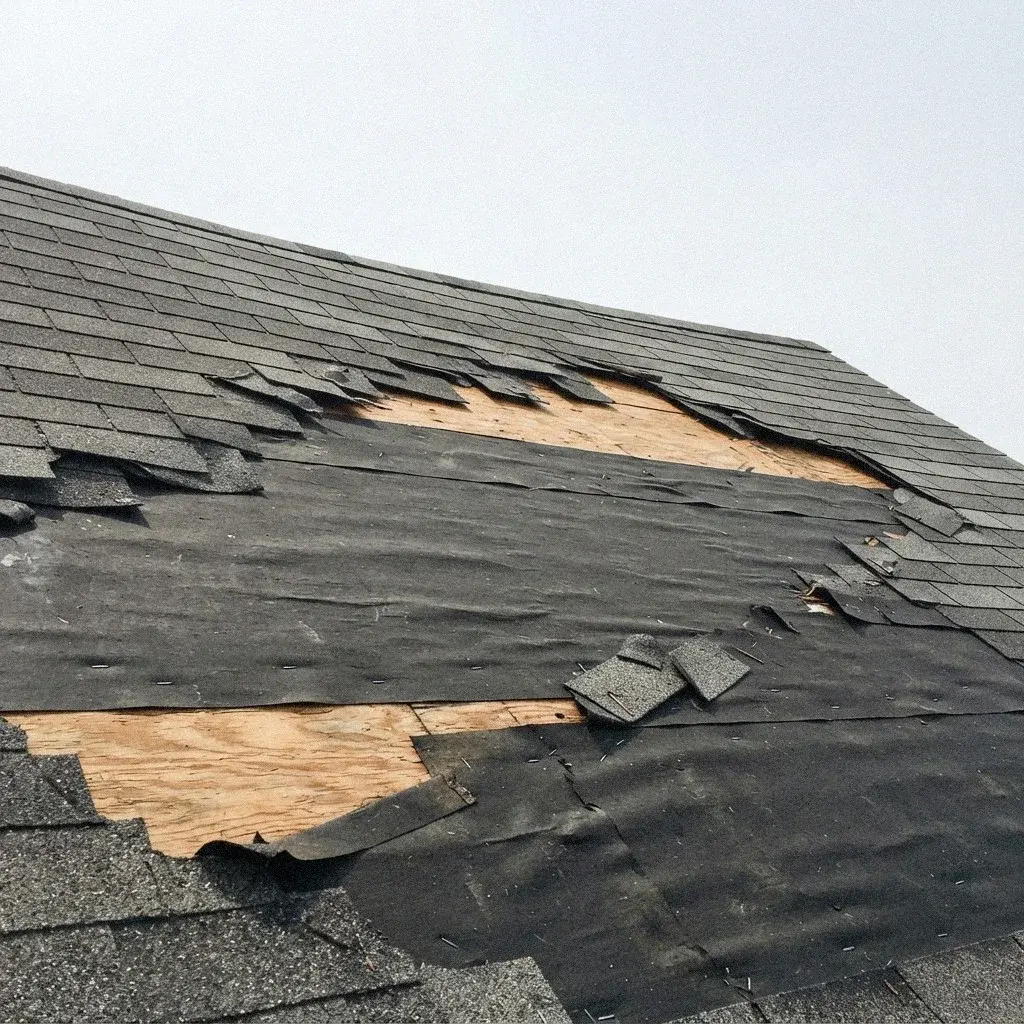
Roof Defects. Wind-lifted and missing shingles show up as bare gaps or flapping tabs on a roof slope, usually after a Minneapolis thunderstorm, with torn shingles sometimes landing in the yard below.
Shingle Defect. Cracked and curling shingles are asphalt shingles that have lost their flexibility.
Sometimes, but the safer default is calling it in. A leak at the frame usually means flashing or sealant failure, not glass failure, and a homeowner can't reseal counterflashing correctly from a ladder. In Linden Hills and Fulton bungalows with older skylight wells, a licensed pro should check the flashing before anyone reseals anything.
Yes, and it's the more common of the two in Minneapolis. Warm, moist indoor air hits a cold skylight frame in January and beads up, then drips onto the sill exactly like a leak would. The fix is ventilation and insulation around the shaft, not roofing repair, though a pro should confirm which one is happening first.
Not the flashing repair itself, but you can manage condensation somewhat. Running a bathroom fan, cracking a window near the Chain of Lakes on dry days, or adding a dehumidifier reduces indoor moisture. Actual flashing or seal replacement on the roof deck needs a licensed pro, since it involves removing shingle courses around the skylight curb.
No. Wiping condensation or caulking the interior trim hides the moisture without stopping it, and trapped water behind drywall near Powderhorn Park and Seward homes can rot the shaft framing unseen. Lasting resolution means fixing the flashing, sealant, or insulation at the source, confirmed by someone who can see the skylight curb from the roof.
Roof trouble in Minneapolis tends to build quietly first. A shingle edge curls, a valley loses granules, flashing around a stack pulls loose a little more each freeze-thaw cycle. None of that shows from the driveway. What finally gets noticed is a stain on a ceiling or ice piling up at the gutter line, and by then the damage underneath is older than the sign of it.
Call (612) 493-0152