Now taking calls — fast callback for urgent roof damage · (612) 493-0152
Storm & Wind Damage Roof Repair in Minneapolis, MN
Minneapolis, MN

Roof Repair After Minneapolis Storms Hit

Fast inspection and repair after high wind or falling limbs.

Whether you're in Longfellow, Edina, Bloomington, or elsewhere around Minneapolis, storm & wind damage roof repair is arranged around the conditions on the ground in and around Minneapolis, so the plan fits the building rather than a template.

Nearly all of this work is residential: residential roofing covers the approach for houses, while commercial and multi-unit buildings are handled under commercial roofing.

Warning Signs

Signs You May Need Storm & Wind Damage Roof Repair

How Wind Damages a Roof

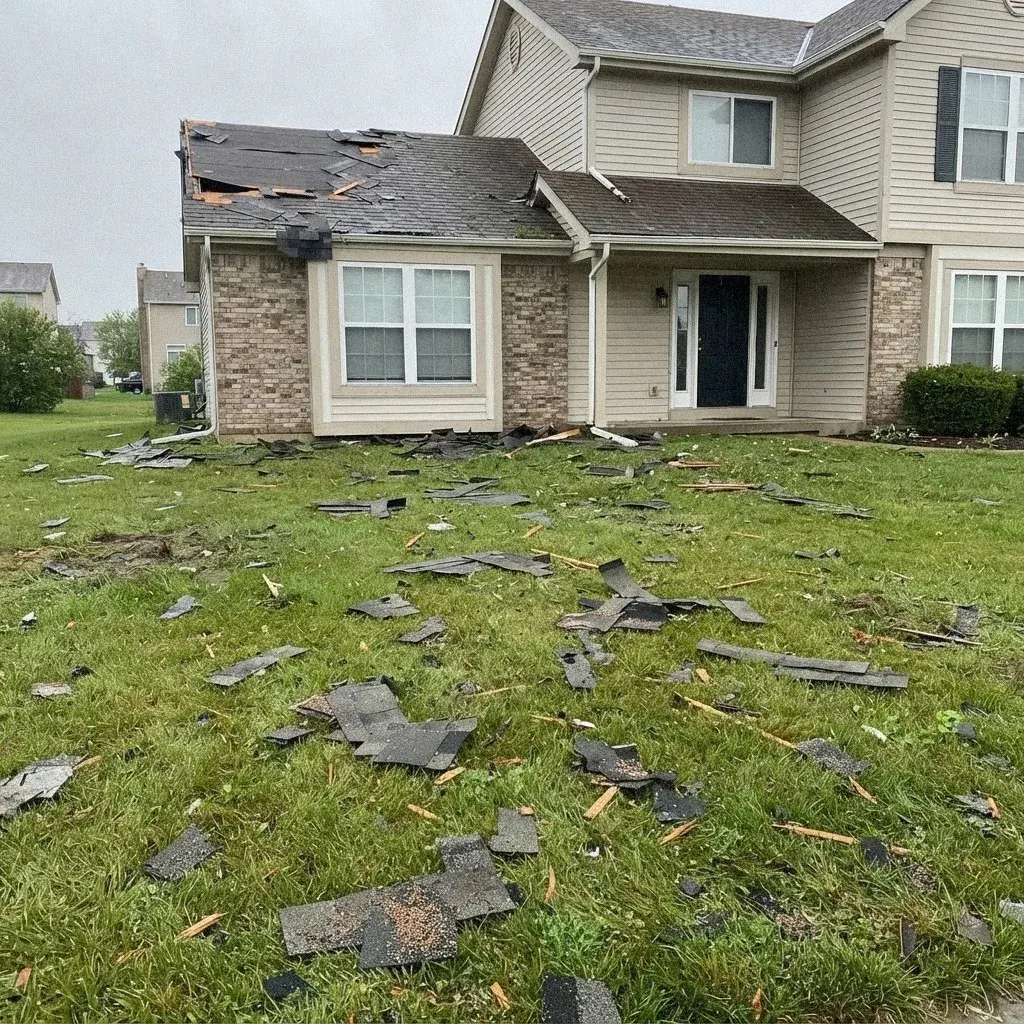
After a summer thunderstorm rolls through Minneapolis, walk the yard before anything else. Wind uplift can send blown-off shingles into the grass or against a fence, and creased shingles that folded without tearing loose often stay on the roof looking almost normal. Check the driveway and gutters too. A course of lifted tabs along one slope, still attached but not sealed flat, is an easy miss from the ground but rarely stays quiet once the next storm hits Hennepin County.

What You Can Spot From The Yard

Fallen limbs are the other common event, especially on lots near Theodore Wirth Park or older blocks in Kenwood and Tangletown with mature tree cover. A limb strike can crack a shingle course or punch straight through decking, and the hole is not always where the limb landed. Straight-line winds from a derecho-strength system can also drive one section of ridge cap loose while leaving the rest of the roof looking fine from below.

What The Inspection Finds Up Close

Closer up, a roofer checks for granule loss around vents and skylights, hail bruising on the shingle mat where the surface has gone soft or dented, and any torn flashing at chimneys or valleys. Impact damage from hail does not always break a shingle, so a soft spot found by hand often matters more than what shows from the street. Punctures near a limb strike get checked against the decking underneath, not just the surface layer.

How It Works

Our Storm & Wind Damage Roof Repair Process

Your Call After A Minneapolis Storm

What gets asked on that first call is when the storm hit, what you can see from the ground, and whether water is inside already. The date matters more than people expect, because a claim is paid on damage tied to a named event. If anything is on the roof or the ceiling is sagging, that changes the visit into an emergency one.

Full Roof Inspection In Minneapolis

Every slope gets walked or viewed, not only the one facing the street, because wind takes one exposure and hail takes another. Soft metal gets checked for dents, shingles for broken seals and bruising, flashing for lifting, and the attic for daylight and fresh damp. Photographs are taken as it goes, dated, so the record exists before anything is touched.

Clearing Debris, Photographing Damage

Debris removal from the roof and gutters, paired with photo documentation of the damage as the storm left it, before repair work changes any of it.

Fixing What The Storm Damaged

Emergency repair matched to what the inspection found, from creased or blown-off shingles and torn flashing to a punctured section of decking near a limb strike.

Why this matters

Minneapolis bungalows and foursquares built in the early 1900s carry decking and framing sized for that era, not for today's wind loads. A summer derecho or a hail-producing thunderstorm hits shingles that may already be older, and a fast storm inspection catches lifted tabs or a cracked ridge cap before a Minnesota winter finds the same opening and drives water into the attic.

Licensing & Local Standards

Code-Compliant Storm & Wind Damage Roof Repair in Minnesota

Why A Quick Look Matters

After a Minneapolis storm the roof does not have to be visibly broken to be open. A wind-lifted tab that settles back down looks intact from the driveway while the seal underneath is gone, and hail can bruise the shingle mat without cracking the surface. Both let the next rain in. Looking within days rather than weeks also matters for a claim, because an insurer pays for damage tied to a named event, and the further the date drifts the harder that link is to make. Photographs taken while debris is still in the yard do a lot of that work.

Documenting The Damage First

Documentation is the part homeowners skip and then need. Before anything gets tarped or repaired, the record wants the date of the storm, wide shots showing the whole slope, close shots of each damaged area, photographs of anything that landed in the yard, and shots of the interior damage with the ceiling stain in frame. Keep the receipts for a tarp or an emergency call too, since those are usually reimbursable. An insurer works from what can be shown, not from what was described on the phone, and a repair done before the photographs were taken removes the evidence along with the problem.

Plain Numbers

Storm & Wind Damage Roof Repair: Estimated Cost by Job Size

Most storm & wind damage roof repair jobs in Minneapolis fall inside these ranges. The inspection costs nothing and the exact figure is written down before any work starts.

Storm & Wind Damage Roof Repair — estimated ranges, per job
Roof SystemAccess PointsWinter Exposure
A crew that only handles roofs, not gutters, siding, and everything else, catches problems the others miss. Ice dam damage, valley flashing that failed years ago, decking gone soft under old shingles — these show up fast to someone who checks roofs every day and nothing else. Attic checked for ice dam damage, written report only an estimated $630–$7125
Reroofing is not a side job for the pros connected through this site. It is the only job. That focus means fewer guesses mid-tear-off, because the failure points on an aging roof tend to repeat, and someone who sees them constantly stops treating each one as a surprise. Old shingles stripped, valleys rebuilt, deck repaired only where soft an estimated $900–$9750
A bid built around speed alone tends to skip the parts that matter after the first winter: proper attic ventilation, correct flashing at valleys and chimneys, adequate ice barrier. Those gaps do not show on the invoice. They show up as a leak once the weather turns. Tear-off, attic baffles installed, no basement or foundation work included an estimated $1170–$13500
Older homes carry roofing quirks that take repetition to spot quickly: undersized downspouts, gutters rusted from decades of freeze-thaw, shingles lifted where moisture crept underneath. A crew doing this work constantly recognizes the pattern before it becomes a bigger repair. Full reroof, new gutters sized for cloudburst runoff, downspouts rerun an estimated $1620–$19500

A deposit covering most of the job before work starts leaves you with little leverage if the crew is slow to return or the job stalls partway through. Tie payments to stages finished, not to the calendar.

Questions & Answers

Frequently Asked Questions

How soon after a storm should the roof be looked at?

Within a day or two of the storm passing is reasonable, sooner if you can already see shingles in the yard or a section of roof that looks bare. Minneapolis gets frequent severe thunderstorms from spring through fall, and another system can move through before a first one gets addressed, so an early inspection keeps small damage from turning into a bigger repair.

How can I tell if a Minneapolis storm actually damaged my roof?

Often you cannot from the ground, which is the awkward part. Wind damage is a broken seal as much as a missing shingle, and a tab that lifted and laid back down looks perfect from the driveway. Hail bruises the mat under the granules without always cracking the surface. The things you can check yourself: shingle pieces or granules in the yard and gutters, dented soft metal like vents and gutter aprons, a screen or a downspout knocked out of line, and the attic for daylight or fresh damp. Any of those means it is worth having the roof looked at properly.

A tree limb fell on my roof, now what?

Get everyone out from underneath it first, and stay off the roof. A limb resting on a slope is holding weight the framing was not designed for, and moving it wrong drops it through. If the ceiling below is sagging or cracking, treat that room as off limits. Then call for an emergency tarp and photograph everything before anything is moved, since the limb in place is the clearest evidence a claim will ever have. Removing a limb safely usually needs a tree service and a roofer working in that order, because what is under the limb is not known until it comes off.

Why do you photograph the roof before repairing it?

Because a repair erases the thing the insurer needs to see. A claim is paid on damage tied to a specific storm, and once a shingle has been replaced the only proof left is somebody's word. Dated photographs, wide enough to show which slope and close enough to show what failed, are what a scope of loss gets built from and what a supplement gets argued with later. It also protects the homeowner in the other direction: a photographed roof before and after means nobody can claim the crew caused something they did not.

Can a few missing shingles turn into a leak?

Yes. A handful of missing shingles or a lifted section of ridge cap leaves the underlayment exposed, and Minneapolis sees enough rain between spring and fall that water can work its way under the gap within one or two more storms. Once it reaches the deck, it tends to travel before it shows up as a mark on a ceiling below.

Do you repair flashing or only replace shingles?

Both, and after a storm the flashing usually matters more. Wind gets under the metal at a wall or a chimney and lifts it, and hail dents soft metal like vents, gutter aprons, and counterflashing before it does visible harm to shingles. A repair that puts new shingles down over lifted or dented flashing leaves the actual entry point open, and the leak comes back at the next thaw. So the flashing at every wall junction, valley, chimney, and penetration gets checked as part of the same visit, and it goes on the estimate as its own line rather than being folded into the shingle work.

How much does storm & wind damage roof repair cost in Minneapolis?

Most Minneapolis roof calls trace back to two things: age of the shingle and how the attic breathes. Bungalows and foursquares from the early 1900s often got thinner insulation than builders use now, so heat escapes upward and melts snow unevenly, which sets up ice damming along the eaves.

Background

Read Up on Storm & Wind Damage Roof Repair

A full basement is standard under most older Minneapolis houses, and that matters for a roof more than people expect. Water that a damaged roof lets in has a long way to travel down through a bungalow or foursquare, and it often shows up as a basement problem before anyone connects it to the roof.

Checking Storm Damage After Hail | Minneapolis
Local & Seasonal

Checking Storm Damage Without a Ladder in Minneapolis, MN

After a Minneapolis hailstorm, most of the real damage is on the roof, not the ground. Here is what a homeowner can check from the yard, and why the camera matters more today than it will in a week.

Read article
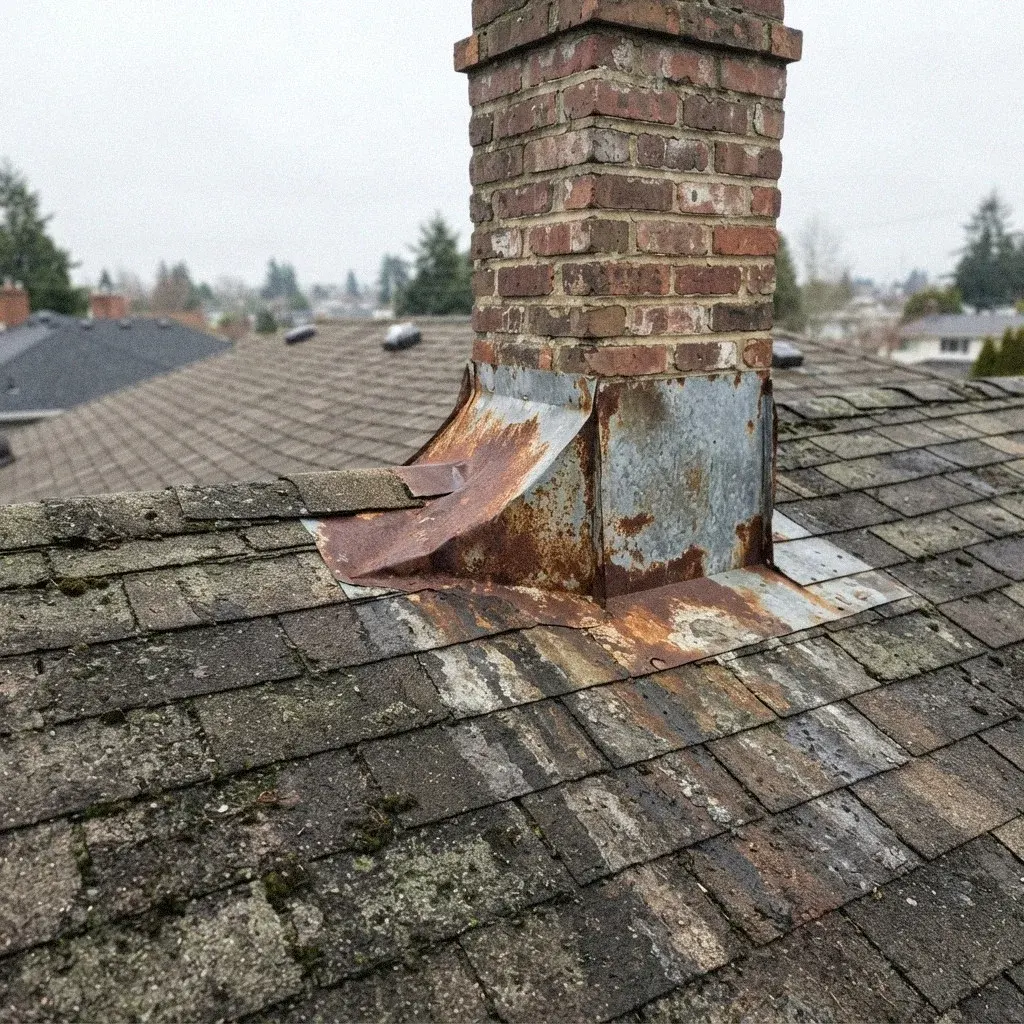
Signs Your Roof Is Failing in Minneapolis
Roof Problems

What Your Roof Shows From the Sidewalk in Minneapolis, MN

No ladder needed to start. Shadow lines, a wavy ridge, and debris piling at the downspout outlet tell a Minneapolis homeowner most of what's going on up top.

Read article
Where Minneapolis Roof Leaks Usually Start
Roof Problems

Common Roof Leak Entry Points in Minneapolis

A Minneapolis roof leak rarely comes from worn-out shingles. It comes from a specific joint, valley, or flashing detail. Here's a ranked look at where these leaks actually begin, from pipe boots to drip edge.

Read article
Get Started Today

Take The Next Step

This page explains what the work generally involves, but no two Minneapolis roofs age the same. A bungalow near Linden Hills with decades of shingle layers behaves differently than a roof replaced after wind damage near Prospect Park. Attic ventilation, pitch, and how much ice dam trouble a house has seen all change what this service means for your address. The licensed pros we connect you with can tell you how it applies to your roof specifically.

Call (612) 493-0152
Free inspections & same-day service available
Call (612) 493-0152 Schedule Online