How Ice Dams Form and What They Ruin in Minneapolis, MN
The mechanics of ice dams on a Minneapolis roof, and the order in which they damage a house.
An ice dam forms when heat escaping a Minneapolis attic melts snow on the upper roof, and that meltwater refreezes at the cold eave beyond the heated wall. The ridge of ice that builds there holds the next melt back until it works under the shingles, into the decking, then the insulation and the ceiling below.
The Heat Loss Behind the Ice
Ice dams start in the attic, not on the roof edge. Heat leaking up from living space warms the underside of the roof deck. Snow sitting on that warm section melts, even when the outside air is well below freezing. The meltwater runs down the slope until it reaches the eave, which stays cold because it overhangs unheated space. There it refreezes. That first ridge of ice is small, but every cycle of daytime melt and nighttime freeze adds another layer, and the dam grows thicker as the Minneapolis winter goes on.
Once the dam has some height, it stops being a minor edge problem. Meltwater from higher up the roof keeps arriving and has nowhere to go, so it pools behind the ice instead of draining off. That standing water is under no pressure to run downhill anymore; it just sits against the shingles at the eave, warmed enough by the roof deck below to stay liquid while the dam around it stays frozen solid. Given enough hours in that state, water finds its way sideways and upward, against gravity, into any seam it can reach.
Minneapolis averages roughly 51 inches of snow a year, and January highs sit around 24°F with lows near 8°F, so the freeze-thaw cycling that builds a dam is not a rare event here. It is a routine feature of an ordinary winter. Older bungalow and foursquare roofs, built before current attic insulation standards, tend to lose more heat through the ceiling than newer construction, which is why ice dams show up again and again on the same houses year after year.
How the Dam Builds Over a Winter
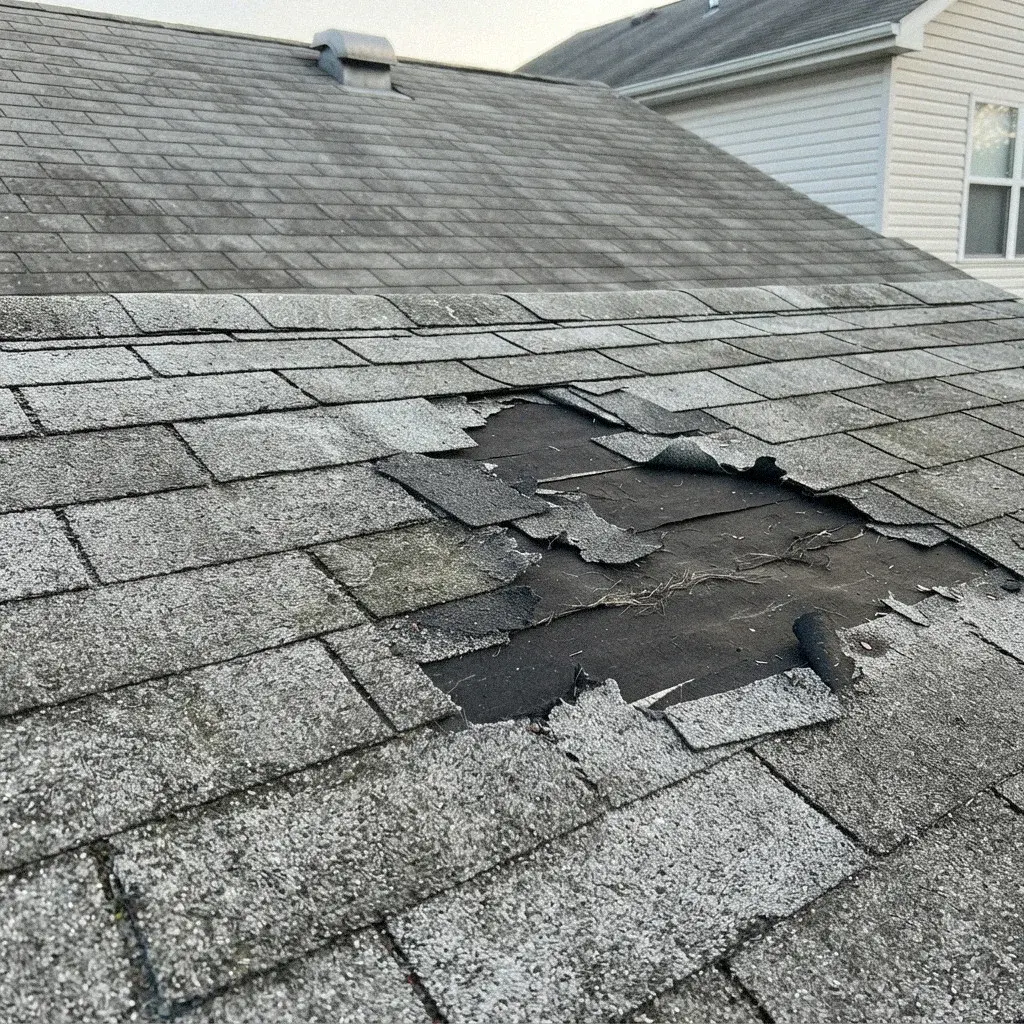
Asphalt shingles are built to shed water moving downhill, not to hold back a pool. At the eave, standing water behind a dam finds the horizontal laps between shingle courses and works upward under them through capillary action, helped along by wind. Underlayment beneath the shingles is the next layer of defense, and on older roofs it may be older felt rather than a modern water-resistant barrier. Once water gets past both, it is inside the roof assembly, running along the deck toward the first gap it can find.
From there the water reaches wood trim before it reaches anything inside the house. Fascia boards along the eave absorb moisture and can rot, warp, or pull loose from repeated wetting. Soffit panels underneath, which are meant to stay dry and ventilate the attic, take on water from above and can stain, sag, or separate at the seams. This damage often shows up on the outside of a Minneapolis house well before anyone notices a stain on a ceiling inside, which is part of why it gets ignored the first few winters it happens.
- Heat leaking into an unfinished attic warms the roof deck above the living space of a Minneapolis bungalow or foursquare, even when the outside air sits well below freezing on a January night.
- Snow covering that warmed section of deck melts from underneath, while snow over the unheated eave overhang, past the exterior wall line, stays frozen and undisturbed.
- Meltwater runs downhill under the snowpack until it reaches the cold overhang, where the roof deck temperature drops back below 32°F and the water freezes on contact.
- Each mild afternoon and refreeze at night adds another thin layer of ice at the eave, so the dam grows taller and wider over a stretch of freeze-thaw days rather than in one storm.
- Once the dam is tall enough, it holds back a pool of standing water on the roof behind it, sometimes inches deep, instead of letting meltwater drain off the edge.
- That standing water has time and pressure to find its way sideways and upward under shingle courses, since shingles are built to shed water running down, not sitting still.
Where the Water Goes Once It's Trapped
Gutters take a different kind of damage. A gutter full of ice, especially one anchored to a dam that keeps growing, can weigh far more than the hangers were sized for. As the ice expands and the dam pushes outward, gutters get pried away from the fascia, spikes pull out of the wood, and sections sag or tear loose entirely. This is a mechanical failure from weight and expansion, separate from the water intrusion happening at the same time, and it is common to see both on the same house after one bad stretch of freeze-thaw weather.
Once water has worked past the shingles and underlayment, it lands on the attic insulation directly below. Fiberglass batts and loose-fill insulation both lose most of their effectiveness when wet, since the trapped air pockets that make insulation work collapse when the fibers get saturated. Wet insulation also stays wet for a long time in an unheated attic, which keeps that section of roof deck colder than it should be and can extend the ice-damming problem into the next thaw cycle before anything has a chance to dry out.
- Shingles and the underlayment beneath them at the eave take the first hit, as trapped water works under tabs and seams that were never meant to hold a puddle.
- Fascia boards and soffits absorb water next, since they sit directly behind the ice and often show peeling paint or soft wood before anyone notices a leak inside.
- Gutters can be pulled loose from their hangers or crushed outright by the sheer weight of accumulated ice, especially along a north-facing eave that never gets direct sun.
- Attic insulation gets wetted from above once water finds a gap in the deck or flashing, which matters because wet insulation loses most of its ability to slow heat loss.
The Damage in the Order It Happens
The ceiling is usually the last place damage shows, and by the time it does, water has already passed through shingles, underlayment, decking, and insulation. A brown stain spreading across a bedroom or hallway ceiling in a Minneapolis foursquare is the end of a chain that started weeks or winters earlier in the attic. Homeowners sometimes treat the stain as the problem itself and patch or repaint it, without realizing the water is still getting in every time conditions are right for another dam to form.
Ceiling damage can also mean trouble migrating along framing rather than dripping straight down. Water that enters near one dormer or valley can travel several feet along a rafter or ceiling joist before it drips, so a stain's location does not always point straight up to where the ice dam actually formed. This is one reason a ceiling stain deserves an attic look rather than a guess based on where the mark appears on the plaster or drywall below.
| Stage | What's Happening | Where to Look |
|---|---|---|
| Shingles and underlayment at eave | Water forced backward under courses | Closest point to the standing meltwater |
| Fascia and soffit | Wood soaks, paint peels, rot sets in | Sits directly behind the ice buildup |
| Gutters and downspouts | Torn loose or bent by ice weight | Ice load exceeds hanger strength over weeks |
| Attic insulation | Wetted from above through the deck | Only after water has already breached the roof |
| Ceiling and interior wall | Staining, sagging, paint bubbling | Last, once insulation is saturated through |
Why the Eave Ice Is Only the Symptom
It helps to be clear about what the ice at the eave actually represents. It is not a separate problem from the attic; it is a visible readout of how much heat that attic is losing and where. A roof edge with a heavy, wide ice dam every year is describing an attic that runs warmer than it should, with air leakage or thin insulation letting heat concentrate on the upper roof and stay cold only at the unheated overhang.
This is also why chipping ice off the eave, on its own, does not solve anything for next winter. It removes the symptom that is actively causing damage right then, but it does nothing about the heat loss pattern that will build another dam as soon as conditions repeat. The dam re-forms because the attic side of the problem is unchanged, which is the part that determines whether a Minneapolis roof gets a small edge of ice each winter or a dam thick enough to back water up several courses.
Why the Eave Ice Is a Symptom
Not every Minneapolis roof ices the same way, and the pattern often tracks the house's age and roof shape more than its exact location, whether that is a Kingfield bungalow with a simple gable or a Tangletown foursquare with dormers and valleys that give meltwater more places to collect. Complex rooflines with multiple valleys, like those common on Queen Anne and Colonial Revival houses in older parts of the city, tend to dam at the valleys as well as the eaves, since valleys concentrate flow the same way eaves do.
Homes near the Chain of Lakes and along streets close to Minnehaha Creek show the same mechanism as anywhere else in the city; proximity to water does not change how an ice dam forms, since the cause is heat loss through the roof, not ground moisture or humidity. What does vary is roof pitch and attic geometry: a steep-pitched older roof sheds snow differently than a lower-slope addition, and additions with cathedral ceilings or minimal attic space above them are often where the worst dams and the worst interior leaks eventually show up.
How an Ice Dam Forms
- Minneapolis averages around 51 inches of snow a year, giving most winters plenty of snowpack sitting on roofs for ice dams to draw meltwater from.
- Average January highs run near 24°F with lows near 8°F, a swing that produces the freeze-thaw cycling an ice dam needs to keep growing at the eave.
- The all-time record low for the Minneapolis-St. Paul station is -41°F, set January 21, 1888, a reminder of how far below freezing an attic deck can sit.
- Attic heat loss, not outdoor temperature, is what starts the melt. A well-sealed and well-vented attic keeps the deck close to outdoor air, which is why two houses on the same Minneapolis block can see very different amounts of ice at the eave.
- Basements are the standard foundation type on most Minneapolis homes, a separate cold-weather concern from ice dams but part of the same winter-built envelope.
- Ice dams form at the eave, past the exterior wall line, which is exactly where the roof deck is coldest and least protected from a heated attic above it.
Frequently Asked Questions
Why is ice only forming at my roof edge?
Ice at the roof edge means the attic above that section is losing heat unevenly. Snow melts over the warmer, upper part of the roof, then refreezes at the cold eave. It is not caused by the gutters themselves, though a clogged gutter can make standing water and ice worse once a dam has already formed at the edge.
Can an ice dam actually cause a roof leak?
No. A dam needs a warm attic melting snow above the living space while the overhang stays cold. A well-insulated, well-ventilated attic in a Minneapolis home can hold snow on the roof all winter without ever forming a dam at the eave.
Will ice dams pull my gutters off the house?
The edge, or eave, overhangs past the exterior wall and gets no heat from the attic below it. Meltwater running down from the warmer roof above refreezes the moment it crosses that line, which is why the dam builds at the edge first.
Does attic insulation really stop ice dams?
Yes. Shingles, underlayment, fascia, soffits, and gutters can all take damage from standing water and ice weight well before a ceiling stain appears. The ceiling is usually the last sign, not the first, of an ice dam problem.
How do I know if an ice dam has already caused damage?
Not directly. Snow sitting on a cold roof is stable. The problem starts once part of the roof deck warms enough to melt that snow from below while the eave stays frozen, which is an attic heat issue more than a snow-load issue.
Worried an ice dam is already causing damage?
Worried about ice dam damage on your Minneapolis roof? Get connected with licensed pros who can inspect it.
Call (612) 493-0152