Making Sense of a Minneapolis Roof Claim
What an adjuster looks for, what a policy actually pays, and where claims get stuck.
A roof insurance claim moves from documenting storm or ice-dam damage, through a field adjuster's inspection and written scope of loss, to a settlement based on the policy's covered perils, deductible, and replacement cost or actual cash value terms.
What a Policy Actually Promises
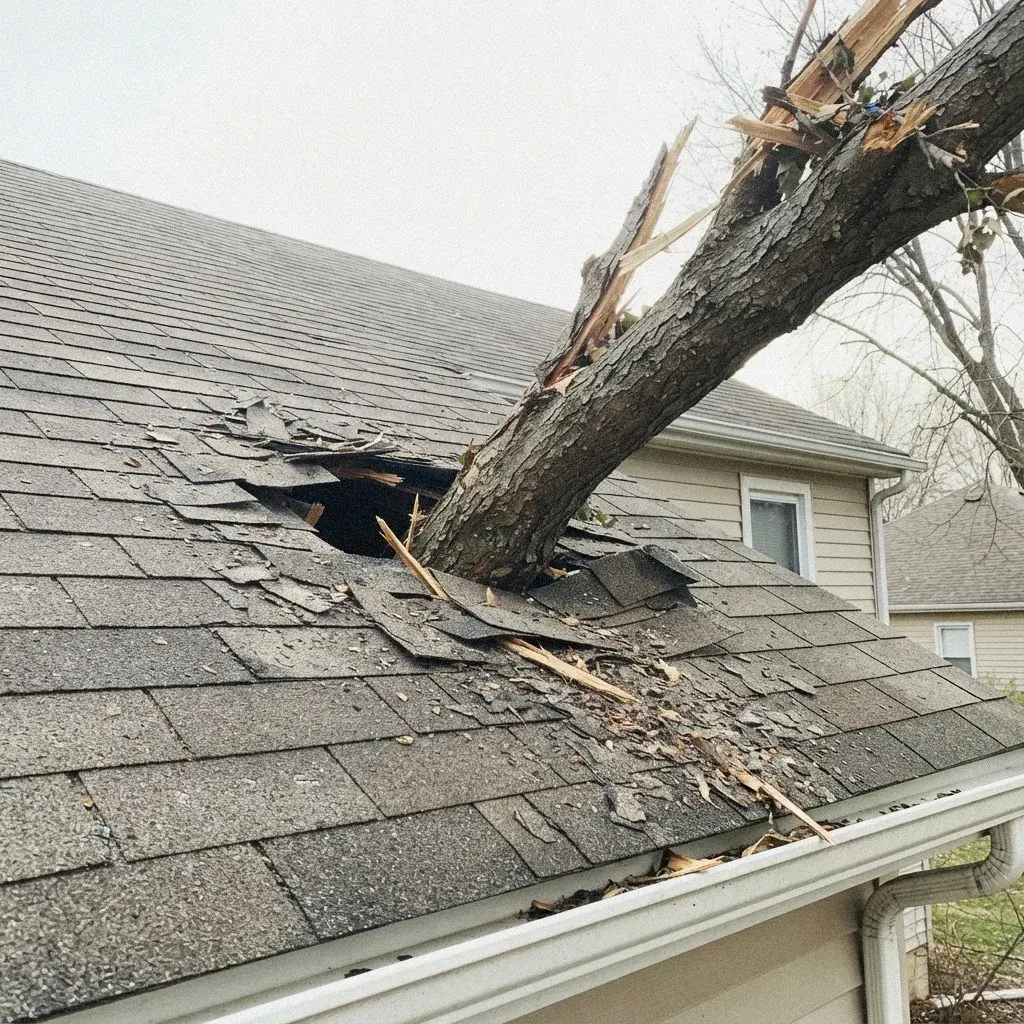
A roof claim starts with a covered peril: hail, wind, or a falling tree limb, something sudden and identifiable. Insurers separate that from wear and tear, which they treat as maintenance the homeowner owed the roof, not a loss they owe a payout for. On a Minneapolis bungalow or foursquare with an aging shingle roof, the line between a hailstorm's damage and years of granule loss can be genuinely hard to see, and that ambiguity is where most claim disputes begin.
Roof age matters more than most homeowners assume once a claim opens. Insurers in Minneapolis often price older bungalow and foursquare roofs on actual cash value, subtracting depreciation for years already served, while a newer install closer to the shingle's rated life draws a stronger settlement. A field adjuster checking a Kingfield or Longfellow roof will note granule loss and prior patch work as evidence the roof was already failing before the storm.
Every claim carries a deductible, subtracted from whatever the insurer approves. Many RCV policies also hold back depreciation until the repair is finished, releasing that second check only after a contractor's invoice proves the work was done. A homeowner near Lake Nokomis or Powderhorn Park who assumes the first check is the full payout is often surprised the depreciation holdback is a separate, later payment tied to completed work, not automatic.
Building the Record Before the Adjuster Arrives
Documentation starts before the adjuster ever arrives. Photos of the shingles, the gutters, any interior ceiling staining, and the date of the storm all support the claim. In Longfellow or Seward, where hail and straight-line wind damage often show up on one slope of a roof and not another, photographing every roof plane separately, not just the obvious damage, gives the field adjuster less room to write off a section as pre-existing wear.
The field adjuster's inspection produces a scope of loss, the line item estimate that becomes the basis for payment. If that scope misses damaged flashing, a bent gutter, or a full slope that needs replacing to match, the contractor doing the repair can write a supplement, a request to add those items to the estimate. Supplements are routine on older Minneapolis roofs where matching shingle discontinuation or hidden decking rot only surfaces once the roof is opened up.
- A covered peril is damage from a specific, sudden event named in the policy, like hail or wind. Everyday aging of shingles falls under the wear and tear exclusion instead, which is why an adjuster's first question is almost always what caused the damage and when.
- Actual cash value and replacement cost value are the two ways a policy can pay. Replacement cost pays what a new roof costs; actual cash value subtracts depreciation for age and stops there, which on an older Minneapolis roof is a large difference.
- The deductible is the portion of the loss the homeowner absorbs before the insurer pays anything, set in the policy and unrelated to the roof's age. Depreciation holdback is different: it is money withheld until repairs are finished and documented, not an upfront cost.
- A scope of loss lists every item the adjuster found damaged and priced, slope by slope, as a line item estimate. If a Whittier or Seward roof has ice-dam damage to flashing or decking that the initial walk missed, that gap belongs in a supplement request.
- A supplement is a written request to add items the original inspection missed or priced too low, sent back to the field adjuster with support. It is normal on a Minneapolis roof after ice-dam season, when hidden decking or flashing damage only shows up once repairs start.
- Proof of loss is the sworn statement of what happened and what it cost, and most policies set a window for filing it after the damage date. Missing that window can complicate an otherwise valid claim, so it is worth tracking from the day damage is discovered.
What Happens During the Inspection
Most Minneapolis homes still carry a mortgage, and insurers know it. A claim check above a certain amount is typically issued jointly to the homeowner and the mortgage lender, a mortgage endorsement built into most policies. The lender may require the homeowner to sign the check and forward it, or hold part of it in an escrow-style account until repairs are inspected, which slows down payment on a home in Fulton or Bryn Mawr more than homeowners expect.
A signed proof of loss, the homeowner's formal statement of what was damaged and what it will cost to fix, is usually required before the insurer finalizes payment. It should match the contractor's estimate and the adjuster's scope as closely as possible. Gaps between those three documents, common when a homeowner in Whittier or Prospect Park gets bids from more than one contractor, are a frequent source of delay while the insurer sorts out which number to use.
- The field adjuster's inspection sets the baseline for the whole claim, so it matters whether they walk the actual roof or only view it from the ground. A Longfellow or Powderhorn Park homeowner who can point to specific damaged slopes usually gets a more accurate first estimate.
- Photos taken right after a storm, before any tarping or temporary repair, carry more weight than photos taken weeks later. Timestamped images of hail bruising, torn shingles, or ice-dam leak stains inside the attic give the adjuster something concrete to measure the loss against.
- Reinspection is a second look, usually requested when the homeowner or their contractor disagrees with the first scope of loss. It is a normal step, not a confrontation, and often resolves gaps that come from an adjuster missing damage on a steep or hard-to-reach slope.
- Many Minneapolis homes carry a mortgage, and the insurer's check often names the lender through a mortgage endorsement, meaning both parties must sign before funds release. That extra step catches homeowners off guard mid-repair if they expected the full check to be theirs alone.
Payout Structures Compared Side by Side
A claim denial is not always final. Most policies allow a reinspection, a second visit from the same insurer, often triggered when new damage is found or the first adjuster missed something. If the homeowner and insurer still disagree on the scope or the amount after that, many Minnesota policies include an appraisal clause, a formal process where each side picks an appraiser and the two resolve the dispute, sometimes with a third neutral umpire.
A public adjuster is an option worth understanding even if most homeowners never hire one. Unlike the insurer's field adjuster, a public adjuster works for the homeowner, building the scope of loss and negotiating the settlement on their behalf, typically for a share of the payout. It's a real path for a Cedar-Isles-Dean or Linden Hills homeowner facing a complicated claim, not a step every roof claim needs.
| Stage | What Happens | Your Role |
|---|---|---|
| Replacement cost value | Pays to replace with new materials | Full amount released after work is done |
| Actual cash value | Replacement cost minus depreciation | Lower upfront check, ages of roof matters |
| Depreciation holdback | Withheld portion of RCV payout | Released once repair receipts are submitted |
| Depreciation holdback release | Homeowner's share of the loss | Subtracted before either payout is issued |
| Appraisal clause | Dispute path outside a lawsuit | Each side picks an appraiser to set value |
When The Adjuster's Scope Falls Short
The contractor's role sits alongside the insurance process without replacing it. The licensed pros a homeowner connects with can document damage, walk the roof with the adjuster, and write a line item estimate that supports a fair scope of loss, but the insurer decides what the policy pays. A contractor pushing a homeowner to sign anything before an adjuster has inspected the roof, in any neighborhood from Camden to Nokomis, is a sign to slow down.
Timing matters more than most homeowners expect. Filing soon after a storm, while damage is fresh and documented, keeps the claim clean. Waiting months, especially through a Minneapolis winter when a damaged roof might also develop an ice dam or interior leak, blurs the line between the original covered peril and new damage that could get labeled as neglect. An insurer reviewing a claim filed in spring for October hail will ask harder questions.
When a Reinspection or Appraisal Helps
Every insurer's process runs on paperwork most homeowners rarely see until they need it: the declarations page, the scope of loss, the proof of loss, the supplement, and the final invoice. Keeping copies of each, rather than relying on memory of a phone call with the insurer, matters most in a dispute. A homeowner in Diamond Lake or Howe who kept the original scope of loss has something concrete to compare against if a reinspection changes the numbers.
None of this replaces reading the actual policy. Deductible amounts, whether the roof is covered on an RCV or ACV basis, and how depreciation holdback is released all vary by policy and insurer, not by neighborhood. A homeowner in Uptown and one in Waite Park have different answers depending on what they bought, not where their roof sits, which is why the declarations page is worth pulling out before any call is made.
Terms That Show Up in Every Claim
- A claim denial is not always final. Ask for the specific reason in writing, then decide whether reinspection, a supplement with new documentation, or the policy's appraisal clause fits the disagreement better before escalating further.
- Matching, sometimes written as a matching clause, decides whether an insurer pays to replace an undamaged slope so the roof looks uniform, or pays only for the slope the storm hit. Policy language on this varies, and it is worth reading before the argument starts.
- The line item estimate is where most disputes start, since it prices every task separately, from tear-off to flashing to disposal. Comparing it against a contractor's own written estimate is the fastest way to spot what the insurer's scope of loss left out.
- A licensed contractor's part in a claim is documenting damage and writing an estimate the adjuster can compare against, not negotiating the settlement itself. That negotiating role belongs to the homeowner or a public adjuster, not to the crew doing the repair.
- When a mortgage endorsement applies, the insurer's check lists the homeowner and the lender jointly, and the lender's signature releases funds for repair draws. Homeowners who don't expect this step sometimes assume the check bounced or the insurer shorted them.
- Every policy defines its own covered perils, deductible, and depreciation terms, so two Minneapolis neighbors with hail damage the same week can see different outcomes. Reading the actual policy language settles more disputes than any general rule of thumb ever will.
Frequently Asked Questions
Can a public adjuster reopen my denied claim?
Yes, in most cases, if a public adjuster is hired after a denial, they can request a reinspection or push for appraisal under the policy's appraisal clause. They work for the homeowner, not the insurer, and typically take a share of any payout. It's most useful on a complicated or high-value claim, not a straightforward one with clear storm damage and no dispute over scope.
What is depreciation holdback and when do I get it?
Insurers usually require a licensed pro's inspection report and dated photos showing granule loss, cracked mats, or fractured seals tied to a specific storm date. A field adjuster will still want to see the roof directly, but documentation from Fulton to Longfellow speeds the scope of loss and cuts down on disputes over cause.
Why did the adjuster's estimate not match my contractor's?
Because they are answering different questions. The adjuster prices what the policy covers from the event named in the claim, using the insurer's own pricing software and their reading of what the storm did. The contractor prices what it takes to leave the roof right, which often includes items the adjuster did not see from a ladder or did not attribute to the storm: decking under an eave, flashing at a wall, code-required work triggered by the repair. The gap is normally closed with a supplement, a written request with photos and documentation asking the adjuster to add the missed items. Disagreement at this stage is routine, not a sign anything has gone wrong.
Does my mortgage company have to sign the claim check?
A denial usually means the insurer classified the damage as gradual wear rather than a covered peril, or the file lacked enough documentation to support the claimed cause. Request the adjuster's written reasoning, then ask about reinspection or the policy's appraisal clause before assuming the decision is final.
What is a supplement and why did my contractor file one?
Ready to document your roof damage?
Have the licensed pros we connect you with document damage and write an estimate an adjuster can't easily dispute.
Call (612) 493-0152