How a Minneapolis Reroof Actually Runs
How a Minneapolis crew moves from protecting the yard to the closing walkthrough.
A Minneapolis reroof follows a set order: crews protect siding and landscaping, strip old shingles, check the deck and re-nail loose boards, then layer synthetic underlayment, flashing, field shingles, and ridge cap before a magnetic sweep and final walkthrough.
Scheduling and Protecting the Property
A signed contract in Minneapolis fixes a crew and a rough week, not an exact date, because scheduling has to work around whatever the sky is doing between a spring hailstorm season and the first hard freeze. Crews stack jobs tighter in October as everyone tries to finish before snow, so a homeowner in Kingfield or Tangletown who signs in August often gets a firmer window than one who signs in late September.
Protecting the property happens before a single shingle comes off. Tarps get staged over foundation plantings and window wells, gutters and downspouts get covered where they'd otherwise catch falling debris, and anything near the driveway or garage gets moved clear. On a narrower Longfellow or Seward lot, where the house sits close to a neighbor's fence line, this step takes longer and gets checked twice before tear-off starts.
Once tear-off opens a section of deck, the licensed pros we connect you with look it over immediately rather than waiting until the whole roof is stripped. They're checking for soft wood, staining, and any spot where a past leak left a mark. Bungalows and foursquares built before 1940 make up a large share of Minneapolis housing stock, and their original sheathing often needs closer attention than a roof from the 1960s or later.
Tear-Off and What the Deck Reveals
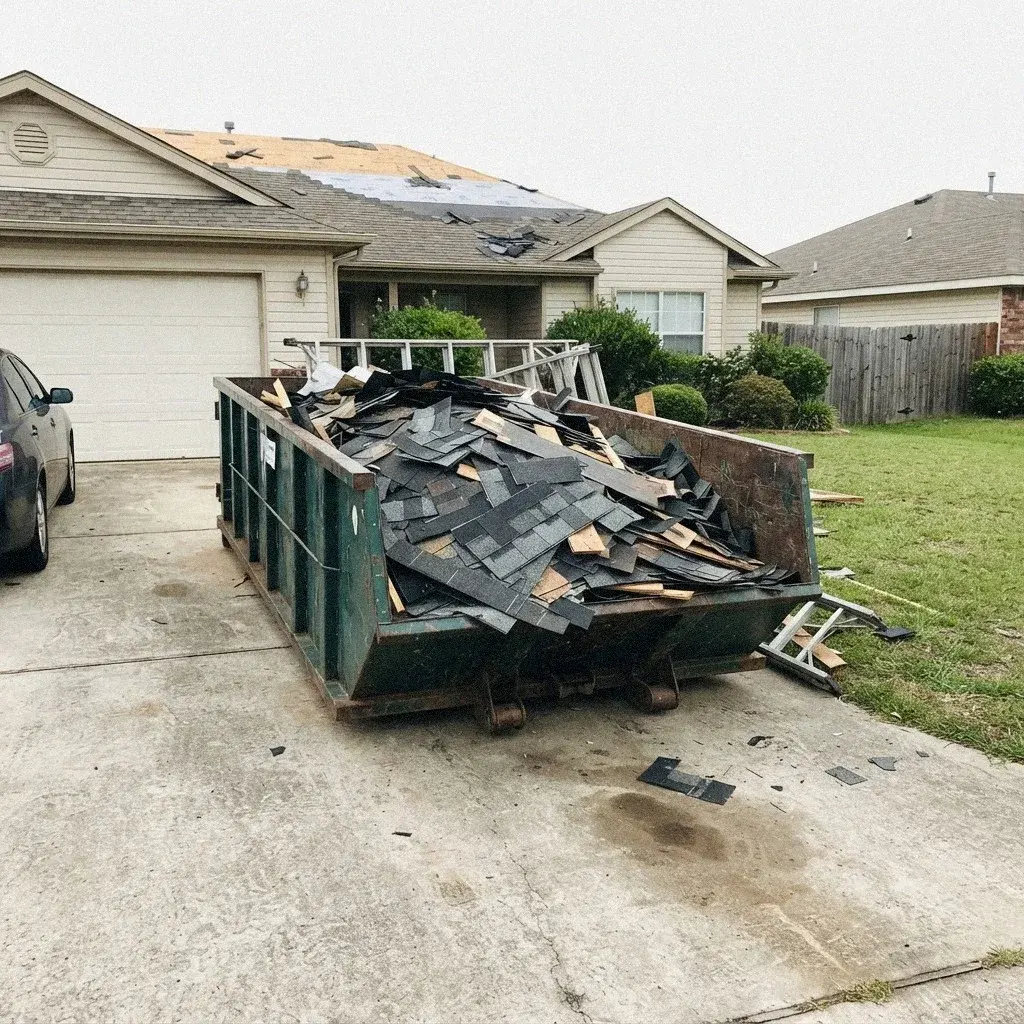
Tear-off proceeds in sections instead of stripping the entire roof down to bare deck at once, which matters most on a house near the Mississippi River corridor or anywhere a sudden thunderstorm could roll in with little warning. Keeping most of the roof covered at all times means a change in the forecast doesn't turn into water sitting on open sheathing. Old shingles, felt, and nails come off layer by layer and go straight into the dumpster.
Where sheathing comes up soft or delaminated, it gets cut out and swapped for new decking cut to match. The fasteners holding the remaining deck down get checked against a tighter pattern than what many older Minneapolis homes were originally built with, since attic insulation and nailing standards have both moved on since the bungalow era. This step matters more here than cosmetic repairs, because a loose deck is what lets wind and ice work a roof apart from underneath.
- Scheduling follows the signed contract, with the pros we connect you with picking a window that avoids Minneapolis's coldest stretches when shingles turn brittle and harder to seal. Dumpster placement gets confirmed at this point too, since a driveway on a narrow Whittier or Seward lot needs a plan before the truck shows up.
- Property protection goes up before tear-off starts: tarps over foundation plantings, plywood laid across walkways, and drop cloths against siding. On older Kingfield and Tangletown bungalows with narrow side yards, crews also cover window wells so falling debris doesn't end up against the basement glass.
- Dumpster placement depends on driveway width and street access, which matters more on narrow Prospect Park or Seward streets than on wider blocks near Diamond Lake. The crew checks for overhead lines and low branches before the container drops.
- Tear-off strips the old roof down to bare deck, one slope at a time, so the house is never left open longer than the day's work. Everything comes off: shingles, underlayment, old flashing, and the nails, since a fastener left standing telegraphs through the new field.
- Deck inspection and re-nailing come right after tear-off, with loose or undersized fasteners driven tight and any warped or rotted panel swapped out. Minneapolis attics that trapped moisture behind past ice dams often show soft decking near the eaves, especially on older Longfellow and Keewaydin homes with thin original insulation.
- Loose or spongy panels get pulled tight and re-fastened, or replaced outright if rot has set in. A firm, evenly nailed deck is what keeps the underlayment and shingles flat instead of telegraphing gaps once the field layer goes down.
Underlayment, Flashing, and Penetrations
A synthetic underlayment sheet goes down across the bare deck as the layer actually keeping water out, with the shingles above it functioning more as a wear surface than the primary defense. Along the eaves, a metal drip edge gets set to carry runoff clear of the fascia instead of letting it curl back under the first course. On a Whittier or Powderhorn Park bungalow with narrow overhangs, that detail keeps water off the wood siding below.
Flashing is where the roof stops being a simple surface. Every place something interrupts the shingle field, a wall, a chimney, a valley, a plumbing stack, a furnace vent, a skylight, needs metal shaped to carry water back out onto the field rather than letting it stop at a joint. Step flashing goes in course by course as the shingles rise along a wall, which is why it cannot be added later without opening the roof back up. New pipe boots go on rather than the old ones being reused, because the rubber that cracked once will crack again in the same cold. On a Minneapolis roof this is also where an ice and water membrane belongs, wrapped into the valleys and out along the eaves.
- Synthetic underlayment covers the bare deck first, sealing the house against rain or snow while the rest of the roof goes on over the following days. It also gives the crew a stable surface to walk and stage material on without exposing the sheathing underneath to Minneapolis's changeable spring weather.
- Drip edge goes along the eaves and rakes before the starter course locks down above it, setting a straight line that every following row of shingles keeps to. On a Diamond Lake or Howe roof with tight eaves, this line also decides how cleanly water clears the gutter below.
- Ice and water membrane goes down along the eaves and up every valley before anything else covers them. It is the layer that decides whether backed-up meltwater from an ice dam reaches the decking or stops at a self-sealing sheet, which is why it matters more on a Minneapolis roof than almost anywhere warmer.
- Step flashing at sidewalls and a pipe boot at every vent close off the small gaps that otherwise turn into slow leaks a season or two later. These go in before any field shingles cover them, since fixing a bad seal afterward means pulling shingles back up.
Deck Repair Through Drip Edge
Flashing goes wherever the roof plane meets something that isn't roof: a chimney, a dormer wall, or the seam where a rear addition joins the original structure. Step flashing gets layered course by course up a sidewall so each piece overlaps the shingle below it, rather than running one long strip that water can slip behind. Older homes near Prospect Park or Cedar-Isles-Dean, with additions built decades apart from the original house, tend to have more of these transitions to flash correctly.
Every plumbing vent, furnace flue, or other stack coming through the roof gets a new pipe boot sized to that pipe and set so the shingle courses above shed water over it rather than into it. A cracked or dried-out old boot is one of the more common places a slow leak starts in a Minneapolis attic, since the rubber collar degrades faster than the shingles around it after enough winters of freezing and thawing.
| Stage | What Happens | Why It Matters |
|---|---|---|
| Tear-off and deck check | Strip old shingles, inspect sheathing | Confirms the deck can take new fasteners |
| Re-nailing and underlayment | Secure sheathing, roll synthetic underlayment | Stops squeaking and gives a dry base |
| Drip edge and starter course | Metal edge, then adhesive starter strip | Directs runoff and anchors the first row |
| Field shingles and valley metal | Nailing pattern set eave to ridge | Covers the bulk of the roof surface |
| Ridge cap and cleanup | Ridge vent, hip cap, magnetic sweep | Finishes the roofline and clears loose nails |
Field Course to Ridge Cap
Field shingles go up in horizontal rows once the underlayment and flashing are set, each row offset from the one below so the vertical seams never line up in a straight column. That stagger is what keeps a wind-driven rain from finding a direct path down through the layers. Working a full roof on a Cedar-Riverside high-density block or a wide Diamond Lake gable takes the same care, just more rows to get through.
At the top, the hip and ridge cap pieces bend over the peak and any hip lines, covering the raw cut edges of the field shingles beneath them and sealing the highest, most exposed part of the roof. Where the design includes one, a ridge vent gets cut into that same line to let attic heat escape, which matters on older homes near Linden Hills or Fulton where attic ventilation was never part of the original build.
Magnetic Sweep and Sign-Off
Cleanup runs the whole time work is happening, not just at the end. Old shingles and paper come off the roof and go straight into the dumpster as tear-off clears each section, so a Bryn Mawr or East Isles yard isn't buried in debris on the last day. Once the roof is done, the crew walks the ground and does a magnetic sweep for stray nails before calling the site clear.
The punch list catches whatever small items came up along the way: a flashing edge worth another look, a gutter section that needs rehanging after tear-off, paint scuffed where a ladder sat against the siding. Walking that list with the homeowner before the job is called finished is what turns a mostly-done roof near Lake Nokomis or Keewaydin into a fully closed-out one.
How a Reroof Actually Unfolds
- It starts with a signed contract and a permit, not with a truck in the driveway. The scope names the product line, the layers coming off, and who holds the permit, which is what the final inspection gets measured against.
- Material delivery lands a day or two ahead on most jobs, either stacked in the driveway or loaded onto the roof. On a narrow Seward or Prospect Park lot, where the delivery truck can park is worth settling before the pallet arrives.
- If the plan includes one, this stage is also when a vent gets cut into the peak to let hot, moist attic air escape rather than collect under the deck. That trapped moisture is part of what drives ice dams on older Bryn Mawr and Lowry Hill East homes come January.
- Field shingles go on from the eave up, each course covering the fastener line of the one below it, with the starter strip and the drip edge setting the line everything else follows.
- Cleanup runs a magnet over the yard, the driveway, and the boulevard strip for nails, and the dumpster goes out the same day the last shingle does. This is the stage homeowners judge a crew on long after they have forgotten the roof itself.
- The punch list is a final check against the contract, not a fresh inspection. A pro walks the roof and the yard, notes anything left undone, like a loose pipe boot seal, and closes it out before the job is called finished.
Frequently Asked Questions
Where does the dumpster go on a narrow city lot?
Dumpster placement in Minneapolis usually means the driveway, since that keeps debris coming off the roof close to where it gets hauled away instead of crossing a yard or sidewalk. On a narrower lot in Whittier or Elliot Park, where driveways run tight to the house, the crew may need part of the street instead, which can mean checking with the city first.
What happens if the deck underneath is soft?
Dumpster placement depends on the lot. Bungalows in Kingfield or Tangletown with narrow driveways often need street placement, while Linden Hills and Fulton homes with wider driveways can usually keep it off the street entirely, which matters on Minneapolis blocks with tight parking.
How do they keep debris off my garden and driveway?
Re-nailing addresses decking that shifted or lost grip once the old shingles come off, a common finding on Longfellow and Seward bungalows where the original deck boards have decades of nail holes and seasonal movement from frost heave working the framing underneath.
Why does a crew run a magnet over my lawn?
A magnetic sweep goes over the driveway, sidewalk, and yard once tear-off and installation wrap up, catching roofing nails that bounce off the roof or ladder during the job. In neighborhoods like Fulton or Longfellow with mature trees and grass yards close to the roofline, this step keeps stray nails out of bare feet, mower tires, and dog paws.
What does the final walkthrough actually check?
A punch list is the short tally of leftover items found at final walkthrough: a ridge cap set slightly crooked, a paint touch-up near a pipe boot, a downspout that needs re-securing. The pros we connect you with work through it before calling the job finished.
Ready to schedule your Minneapolis reroof?
Tell us about your Minneapolis roof and timeline, and we'll connect you with a licensed pro who can walk this sequence with you.
Call (612) 493-0152