Metal Roofing or Composition Shingle in Minneapolis
How standing seam metal and asphalt shingles hold up on Minneapolis bungalows, from ice dams to resale value.
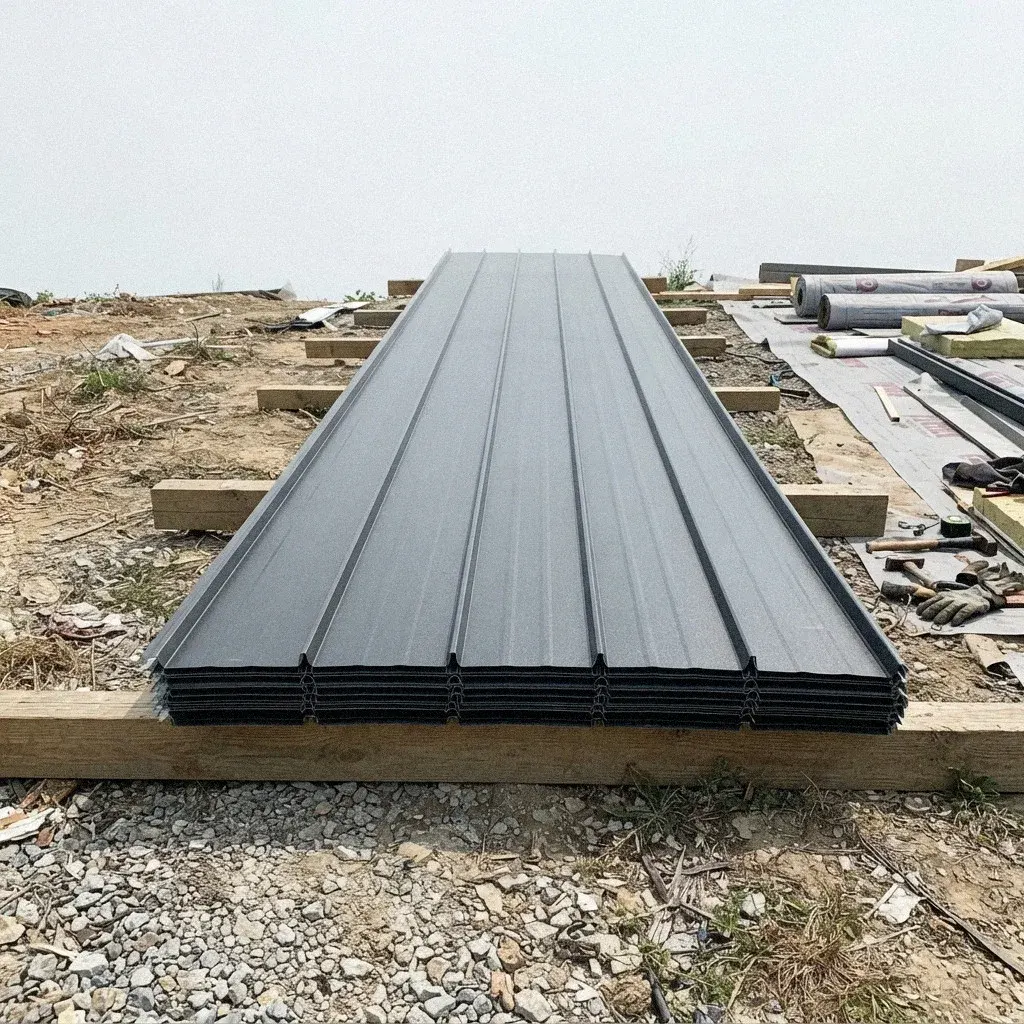
On a Minneapolis home, composition shingle costs less upfront and holds snow in place; standing seam metal costs more, lasts several times longer, and sheds meltwater before an ice dam can build. Metal weighs less than people expect, so bungalow framing is rarely the obstacle. Snow guards are the usual addition where a metal slope drops onto a walkway.
Service Life Through Minnesota Winters
Minneapolis reroofs mostly narrow down to composition asphalt shingle or metal, usually standing seam or an exposed fastener panel system. Bungalows in Kingfield and Longfellow and foursquares near Tangletown were built for shingle, and shingle still covers most of them today. Metal shows up more on additions, garages, and homeowners planning to stay put through several more Minnesota winters. Neither material is wrong here; the right pick depends on how long you want to avoid thinking about the roof again and what the house can carry.
Composition shingle is the default across Minneapolis, from Fulton bungalows to Longfellow foursquares, because installers stock it, know it, and can match a Craftsman roofline without a special order. Asphalt composition shingle handles the steep pitches common in Tangletown and Kingfield without adding much dead load to a rafter system built a century ago. Metal, by comparison, is the material homeowners ask about after a hailstorm or an ice dam leak, once they start weighing a longer service life against a higher install cost.
Service life is the clearest split. A composition shingle roof in Minneapolis, cycling through 51 inches of average snow and repeated freeze-thaw, often needs replacing well before a standing seam panel with a Kynar coating shows any wear. Fire classification matters less as a deciding factor here than in wildfire states, but impact rating matters a great deal after the hail that rolls through Powderhorn Park and Seward most summers. Metal panels generally shrug off that hail; shingles can bruise or lose granules.
Dead Load on Bungalow Framing
Dead load matters most on older housing stock. Roughly half of Minneapolis homes predate 1940, and rafters sized for a Queen Anne or Colonial Revival roof in Elliot Park or Whittier were not engineered with today's loads in mind. Composition shingle adds noticeably more weight per square than most metal panel systems. Add Minnesota's snow load and the accumulated weight of an ice dam sitting on the eaves, and the margin between what a roof carries and what it was built for gets thinner on a shingle roof than a metal one.
Panel gauge changes this picture more than people expect walking in. A heavier-gauge standing seam panel resists oil canning and holds up better under foot traffic during a snow-retention or gutter repair, but it also weighs more than a thin exposed fastener panel. Composition shingle sits in a fairly narrow weight range regardless of grade. On a Prospect Park or Marcy-Holmes home with original rafters, that consistency is part of why some structural engineers prefer shingle over a heavy-gauge metal system without reinforcement.
- Composition shingle on a Minneapolis bungalow generally wears out over roughly two decades, faster where ice dams have soaked the deck underneath. A well-installed standing seam roof with a Kynar coating can run several multiples of that span before the finish or panel needs attention.
- Dead load is where the intuition runs backward. Standing seam metal weighs less per square than composition shingle, so bungalow and foursquare framing around Minneapolis rarely needs reinforcing for a metal roof; the weight question usually comes up over layers of old shingle, not over the metal.
- Exposed fastener panels cost less upfront but rely on screws with rubber washers that harden and crack as Minneapolis swings from a January cold snap to a July heat wave. Concealed clip standing seam hides the fasteners under the seam itself, sidestepping that failure point entirely.
- Cost tier separates the two more than anything else does. Composition shingle sits at the low end of a reroof budget and metal at the high end, and the case for metal is made over decades rather than at signing.
- Fire classification matters less here than moisture does, since Minneapolis roof failures trace back to ice dams and hail far more often than heat exposure. Both composition shingle and metal carry ratings adequate for a residential roof in this climate, so fire class rarely decides the choice.
- Snow retention matters more here than in milder climates, since a bare metal roof can shed a slab of snow onto a walkway below a Fulton or Diamond Lake home all at once. Shingle holds snow in place naturally; metal often needs added bar systems to do the same job.
Panel Systems Versus Shingle Grades
Panel profile and shingle grade are not the same measurement, but both decide how a roof handles a valley, a chimney flashing, or a skylight curb. Exposed fastener panels are simpler and cheaper to install but rely on gasketed screws that can loosen as the panel expands and contracts. Standing seam uses concealed clips instead of exposed fasteners, so the field of the roof has no penetrations to fail. Composition shingle grades vary mainly in thickness and impact rating, which affects hail performance more than water shedding at penetrations.
Thermal movement is the detail that separates a good metal install from a bad one in a climate like this. Minneapolis panels can swing from well below zero in January to well over 90 degrees in a July heat wave, and that range is wider than most parts of the country see. Standing seam with concealed clips is designed to slide slightly as the metal expands and contracts. Exposed fastener systems have less room to move, which is where screw-hole widening and eventual leaks tend to start.
- Composition shingle repairs in isolation reasonably well. A wind-torn or hail-cracked section near a valley on a Keewaydin or Cooper home can be cut out and reshingled without disturbing the rest of the slope, as long as matching shingle from the same run is still available.
- Standing seam repairs are less forgiving. A panel dented by hail or a fallen branch usually has to be pulled and replaced along its full run, since the interlocking seam ties it to the panel on either side rather than letting one patch stand alone.
- Impact rating separates the two more sharply than most homeowners expect. A higher-rated metal panel resists hail denting far better than standard composition shingle, which is worth weighing given how often summer storms move through the Twin Cities metro and leave bruised or cracked shingle behind.
- Thermal movement drives most long-term repair needs for metal. Panels expand and contract as Minneapolis swings between a below-zero January stretch and a humid July afternoon, so clips need room to let the panel slide without buckling the seam or forcing a fastener to work loose.
Cost Tier, Recyclability, and Resale
Appearance settles plenty of these decisions before the technical comparison even starts. Composition shingle blends into nearly every Minneapolis block, from the foursquares near Lake Harriet to the bungalows around Diamond Lake, without drawing a second look. Metal stands out more, especially exposed fastener panels in bold colors, and some homeowners in older, architecturally consistent pockets near Lake of the Isles or Kenwood choose shingle mainly to match the block. Where an association or covenant applies, checking its rules on metal before ordering material saves a redo.
Noise and walkability differ more in practice than in reputation. A metal roof sounds louder in a hard summer rain than shingle, but with solid decking and underlayment beneath it, the difference is smaller than most people picture before living under one. Walkability favors shingle for routine chimney or vent-boot work, since it grips boots and hides scuff marks; metal, especially standing seam, can dent or scratch underfoot and needs more care from anyone walking the roof for a repair or a satellite dish removal.
| Consideration | Metal Panel | Composition Shingle |
|---|---|---|
| Relative cost tier | Higher install tier | Lower install tier |
| Dead load on framing | Light, low psf added | Heavier, more with layovers |
| Recyclability at tear-off | High scrap value | Mostly landfilled locally |
| Recover over old shingles | Rarely done here | Common on bungalow reroofs |
| Ice dam and snow shedding | Sheds snow, needs retention | Holds snow, feeds ice dams |
Noise, Walkability, and Repair Access
Getting a roof fixed fast after a hailstorm usually comes down to what a crew already carries on the truck. Composition shingle dominates older tracts from Camden to Nokomis-area streets near Lake Nokomis, so matching shingle color and repairing a wind-torn section is rarely a special order. Metal is less common on Minneapolis houses, so a damaged panel sometimes means waiting on a specific profile and gauge from a supplier rather than pulling stock off a shelf, which can stretch out a repair timeline after a bad spring storm.
Recover-over-shingles has a rough rule of thumb: a metal panel system with concealed clip attachment can often go over one layer of sound composition shingle, skipping a full tear-off if the deck in a Whittier or Lowry Hill East attic is dry and unrotted. Composition shingle recover is more restricted and depends on the existing layer count already on the deck. Either way, a contractor pulling a Minneapolis permit should check the deck first — old nail patterns and frost-heave-related sheathing movement in older homes can rule out a simple layover.
Choosing Between Them in Minneapolis
Setting dollar figures aside, the cost order stays fairly predictable across Minneapolis: composition shingle costs the least upfront, exposed fastener metal panels land in the middle, and standing seam with concealed clips sits at the top. Fire classification and impact rating can push a shingle roof's cost up within its own tier without moving it into metal territory. Homeowners comparing bids in neighborhoods like Seward or Powderhorn Park usually find the real spread is inside each material, not just between the two.
Recyclability and resale value tend to move together. Metal roofing is widely recyclable once it comes off, while composition shingle recycling is far less consistent depending on who's hauling tear-off debris out of a Kenwood or East Isles job site. For resale, a metal roof with a long service life reads as a maintenance item a buyer won't face for decades, which matters to anyone touring older housing stock near Lake Harriet or the Chain of Lakes, where roofs get noticed during an inspection.
Metal and Composition Compared Fast
- Composition shingle covers most Minneapolis roofs, and it is what a bungalow or foursquare was built expecting. It is the cheaper install, the easier repair, and the shorter service life of the two.
- Standing seam metal shows up more on remodels and newer construction, including some infill and loft conversions near North Loop, where the profile fits alongside exposed-beam warehouse architecture better than a shingle roof would.
- Ice dams shorten shingle life faster than age alone would predict, especially on older homes with less attic insulation. Metal sheds meltwater more readily and resists the granule loss that a repeated freeze-thaw cycle causes on composition shingle.
- Snow shedding cuts both ways. A metal slope clears itself before an ice dam has anything to build on, and it can also drop that load onto a walkway or a side entry in one go, which is why snow guards get specified here.
- Repairs are simpler on shingle. A damaged tab can be swapped out course by course, while a dented or scratched metal panel usually has to come off as a full length, and matching an older finish is not always possible.
- Resale reads differently by block. A recent shingle roof removes an objection anywhere in Minneapolis; standing seam is a selling point in some pockets and a surprise in a street of matching bungalow roofs.
Frequently Asked Questions
Is a metal roof actually worth the higher price tag?
Sometimes. A metal recover installed over one layer of sound composition shingle can work structurally on a Minneapolis home, since panel systems generally weigh less than adding a second shingle layer would. The deck underneath still needs to be solid, especially on pre-1940 bungalows where original sheathing may have aged or seen past leaks. A licensed pro should inspect the decking and rafters before recommending a recover instead of a tear-off.
Can a new roof go directly over my old shingles?
Sometimes, and it is worth knowing the trade before saying yes. The Minnesota State Building Code caps how much roofing can stack on a house, so a home already carrying what the code allows has run out of room. Even where a layover is allowed, it hides the deck, and on an older Minneapolis roof the deck is exactly what needs looking at, since ice dams soften sheathing along the eaves where nobody can see it. A layover also cannot get a new ice and water membrane down at the eaves, which is the layer that matters most here. Metal panels over shingles is a different conversation again and depends on the framing.
Does switching to metal actually lower my premiums?
Metal costs more to install per square than composition shingle in Minneapolis, but the gap closes over a long hold. Shingle roofs on Tangletown or Fulton bungalows typically need replacement within a couple decades, while a well-installed standing seam roof can outlast several shingle cycles, changing the lifetime math even though the upfront bid runs higher.
Will a metal roof pass muster with my HOA board?
Both hold up to foot traffic when dry, but ice and frost change the picture in a Minneapolis winter. Composition shingle grips boots reasonably well across most of a Seward or Powderhorn Park roof. Standing seam gets slick fast, especially with frost, so weight has to land on the flat pan, never on the raised seam itself.
How much noisier is metal roofing during a thunderstorm?
Most Minneapolis HOAs and architectural review boards accept both without much friction. Composition shingle matches the older housing stock in neighborhoods like Kingfield and Longfellow, so it draws no objection. Standing seam gets more scrutiny in historic districts near Lowry Hill or Kenwood, where a review board may weigh panel color and profile against surrounding rooflines.
Torn between metal and composition shingle?
Weighing standing seam against composition shingle for a Minneapolis reroof? Talk with the licensed pros we connect you with about your options.
Call (612) 493-0152