Making The Call On An Aging Minneapolis Roof
Why roof age, damage spread, and deck condition point some Minneapolis roofs toward a patch and others toward a tear-off.
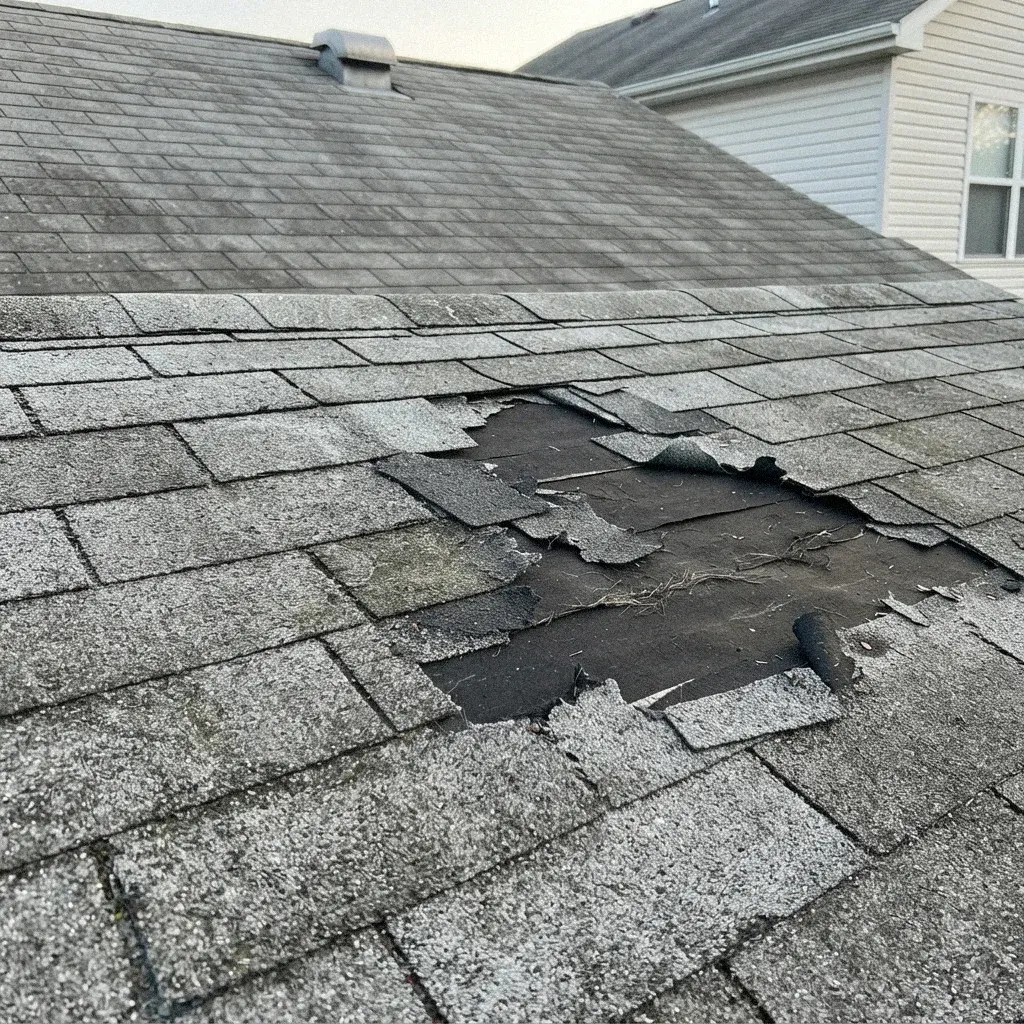
Repair or replace comes down to three checks on a Minneapolis roof: whether the deck is sound, how many roofing layers are on the house, and whether the damage sits in one place or shows on every slope. One fault on a sound deck is a repair. Soft sheathing, a full layer count, or wear everywhere means a tear-off.
Weighing What's Left In The Roof
A roof over a Minneapolis bungalow does not fail all at once. It wears down through repeated freeze-thaw cycles, each Minnesota winter stripping a little more granule and flexibility from the shingles until a spring hailstorm or an ice dam off Powderhorn Park finds the weak spot first. The honest question is never just how old the roof is. It is how much remaining service life is actually left in the deck and the shingles above it, and whether that number still justifies a repair bill.
Start by naming the actual damage instead of guessing at severity from the ground. A few shingles lifted after wind off the Mississippi River gorge, a leak that showed up near a chimney in Longfellow, a valley that backed up once during a heavy thunderstorm downpour — these are specific, bounded problems. Widespread granule loss across every slope, or leaks appearing in more than one room, points toward deferred maintenance catching up with the whole roof rather than one repairable spot.
Deck condition decides more of this argument than the shingles do. Pull back damaged material and check the plywood or board sheathing underneath: if it is dry and firm, a spot repair or later full tear-off both stay realistic options. If the deck has gone soft, delaminated, or shows staining that traces back years, the discussion shifts immediately, because no shingle choice matters on top of wood that can no longer hold a fastener reliably.
What The Damage Pattern Tells You
Layer count matters under the Minnesota State Building Code the same way it does everywhere in Hennepin County, since the code caps how much roofing material can stack on a house before a full tear-off becomes mandatory rather than optional. A Minneapolis foursquare with one layer of aging asphalt still has a repair or overlay path open. A house already carrying a second layer from a past reroof has far less room, and a contractor should confirm layer count before pricing any patch.
Pattern is what separates a repair from a replacement more reliably than age does. Damage that sits in one place, a torn boot, a lifted course above a garage tie-in, a valley that packed with leaves, is a repair no matter how old the roof is. Damage that turns up on every slope at once, granule loss on the south face and cracked tabs on the north and nail pops along three courses, is telling you the shingles themselves are done. Walk the whole roof before pricing anything, because one obvious hole often distracts from the wider story.
- Age against the shingle line's rated years sets the baseline for this math. A roof already past that mark on a Kingfield or Tangletown bungalow has little cushion left, and every added winter of freeze-thaw cycling works against it rather than for it.
- Damage spread is the reading that costs least to take. One torn boot or a single lifted course above a dormer is a repair on any roof. The same wear turning up on the north slope, the south slope, and the ridge at once says the shingles have reached the end together.
- Deck condition sets a hard floor under repair. Sheathing that has gone soft from trapped moisture, common where ice dams have backed water up along the eaves of older Whittier and Seward homes, won't hold fasteners, so a full reroof becomes the only real option there.
- Layer count is a hard limit rather than a judgment. The Minnesota State Building Code caps how much roofing can stack on a house, so a Minneapolis home already at that limit has to be stripped rather than covered again, and stripping two layers is not the same job as stripping one.
- Shingle availability for patch matching gets harder the longer a roof has been up. A discontinued line from a Seward or Cooper reroof decades back may force a slope-by-slope replacement instead of a patch, since deferred maintenance on old sections rarely blends with new material.
- Selling a Minneapolis house changes the math on a roof that still has life in it. A resale disclosure listing roof age or a repair history can slow a deal near Diamond Lake or Keewaydin, and an insurance-driven replacement after storm damage may settle the question before a listing ever goes up.
Checking The Deck And Layer History
Patch matching quietly ends more repair plans in Minneapolis than the damage itself does. A shingle installed fifteen years ago has faded and lost granule in a way a brand-new bundle of the same product line cannot replicate, and if that exact line has become a discontinued shingle line, the manufacturer cannot fill the gap at all. A repair on a Fulton or East Isles home with a distinctive shingle color often turns into a search for a close approximation rather than an exact one.
Layer history is easy to check and often gets skipped. Lift a shingle at a rake edge, or look at the cut edge where the roof meets a wall, and the stack is visible: one layer, two, sometimes three on a house that has been reroofed twice without a tear-off. That count changes the plan, because a roof already carrying what the code allows cannot take another layer, and the cost of removing two layers is not the cost of removing one. The deck underneath tells the other half. Soft sheathing along the eaves of an older Minneapolis house means the repair now includes carpentry.
- Divide the repair cost by the years of life it likely buys back. A cheap fix on a roof with a decade of shingle life left is money well spent; the same fix on a roof already past that mark just delays a job you'll pay for twice.
- Skipped gutter cleaning and ignored flashing gaps push the timeline the wrong way. A Kingfield bungalow with clogged gutters through a few Minnesota winters can lose years off a roof's remaining life before any leak ever shows up inside.
- Most Minneapolis roof failures trace back to age, ice dams, and hail rather than a single catastrophic event, so insurance involvement is the exception. When a summer hailstorm does cause the damage, that claim can shift the math toward full replacement fast.
- A full tear-off strips every layer down to the deck and gives the whole roof one consistent age going forward. A layover costs less today but leaves whatever deck problems or old damage were already hiding underneath the existing shingles.
Repair Or Replace At A Glance
Set side by side, the two paths ask different questions. A repair asks whether the rest of the roof can carry on unaided once this one fault is closed, and the honest answer depends on the deck, the layer count, and whether a matching shingle can still be bought. A replacement asks whether spending on this roof again inside a few years is likely, and on an aging Minneapolis roof that has already been through many freeze-thaw winters it usually is. Neither answer is automatically the cheaper one over a decade, which is why the deck comes first.
A partial reroof sits between a patch and a full tear-off, and it is a legitimate option when wear concentrates on one exposure of the house instead of spreading evenly across every plane. A south-facing slope on a Linden Hills home that has taken more direct sun and ice-dam runoff than the north side can sometimes be replaced on its own, leaving sound shingles elsewhere in place, though matching the new section to the old remains the same challenge as any other patch.
| Factor | Repair Wins | Replace Wins |
|---|---|---|
| Roof age | Well within expected shingle life | At or beyond expected shingle life |
| Damage extent | One slope or a single spot | Several slopes or widespread |
| Deck condition | Firm, dry sheathing nearby | Soft, stained, or spongy plywood |
| Shingle match | Shingle line still in production | Shingle line discontinued, patch won't blend |
| Layer count | Single layer, overlay still an option | Second layer already down, tear-off required |
Planning A Reroof Before Listing
A reroof before listing is a different calculation from a reroof you plan to live under. The buyer is not going to pay for a premium shingle line they cannot see the difference in, but they will notice a roof age on the disclosure that reads within the last year rather than nearly two decades ago. That single line removes an objection before it is raised, and in a Minneapolis market where a home inspector will be in the attic looking for ice dam staining, it removes the negotiation that follows too.
Timing matters more than it looks. Shingles seal by warming in place, so a roof laid in a Minneapolis February may not fully bond until spring, and a crew working in the cold cannot handle material the way they can in September. If a listing is going up in the spring, the roof wants doing in the fall before it. Leave enough room, too, for the permit to close: an open permit sitting in city records is exactly the sort of thing that surfaces during a title search at the worst possible moment.
Planning A Repair Before Listing
Bringing this together for a Minneapolis roof: start with the deck, since soft or delaminated sheathing changes the entire scope regardless of how the shingles above it look. Count the existing layers next, because that number can force a full tear-off under the state building code before cost even enters the conversation. Only after both of those are settled does it make sense to price a patch against a reroof and compare what each one buys in years.
Repairing before a listing is the right move when the roof is genuinely sound and one fault is doing all the damage to the impression. Close the leak, replace the boot, clear the valley, and get it in writing with a date on it, because a documented repair reads far better to a buyer than a fresh stain and a verbal assurance. What does not work is patching a roof at the end of its life and hoping nobody counts the layers. A Minneapolis home inspector will be up there, and a disclosure that turns out to be optimistic costs more at the closing table than the reroof would have.
What Minneapolis Permitting Expects
- Minneapolis requires a permit for roofing work, and that holds whether a contractor or the homeowner is doing it. There is no size threshold to fall under, so a repair-or-replace decision here always ends with a trip through the permit office.
- Residential roofers in Minnesota are licensed by the Department of Labor and Industry rather than by the city, so a license number belongs on the bid before the permit conversation even starts.
- Shingle pliability drops after years of Minneapolis freeze-thaw cycles. Older shingles near Longfellow or Seward crack instead of flexing when a crew lifts them for a patch, which is part of why matching repairs get harder as a roof ages.
- A permit left open in city records outlasts the roof job by years. It surfaces at resale, when a title search or a buyer's inspector asks why the inspection card was never closed out.
- Roofing work in Minneapolis is easiest to schedule outside the coldest months, since shingles seal and handle better above freezing. A repair-or-replace call made in January often waits on weather before a crew can act on it.
- Discontinued shingle lines are common on older homes around Prospect Park or Diamond Lake, where a roof may have gone up decades ago. When the original shingle is no longer made, a visible color or texture mismatch is one more reason a patch stops making sense.
Frequently Asked Questions
How do I tell whether to repair or replace?
Three things settle it, in this order. Check the deck: if the sheathing has gone soft where ice dams backed water up at the eaves, no patch will hold fasteners and it becomes a reroof. Count the layers: a house already carrying what the code allows cannot take another one. Then look at the pattern: one fault in one place is a repair, wear showing on every slope is not. Age matters, but it is the tiebreaker rather than the test, because a well-ventilated roof outlasts a badly ventilated one of the same year.
Is it ever worth patching a really old roof?
Yes, in two cases. If water is coming in now and a reroof cannot be scheduled until the weather allows, a patch is damage control and worth every dollar, because the alternative is soaked insulation and stained ceilings all winter. And if the roof is old but sound and one thing has failed, a split pipe boot, a lifted valley, that is a genuine repair rather than a delay. What is rarely worth it is patching an old roof to avoid a reroof you already know is coming. The shingles around the patch are brittle, they crack when lifted, and matching the color is usually impossible.
Can a roofer just replace one slope of my house?
Common on Tangletown and Linden Hills homes reroofed fifteen or more years back. Once a shingle line goes out of production, a patch runs in a different color band or profile than the surrounding field, and it reads as a visible seam from the street, especially on steep Queen Anne and Colonial Revival rooflines common in these neighborhoods.
Does having two layers of shingles hurt resale?
Soft decking usually means moisture has been sitting under that spot for more than one winter, not from a single storm. Meltwater working its way past shingles and refreezing along the eaves rots plywood or old board sheathing over time. Once it flexes underfoot, that section of deck needs replacing before new shingles go down, regardless of how the rest of the roof looks.
Should I replace my roof before I sell my house?
Want A Second Opinion On Your Roof?
Not sure whether your roof needs a patch or a tear-off? Get it looked at by a licensed pro matched to your Minneapolis address, deck and layer count included.
Call (612) 493-0152