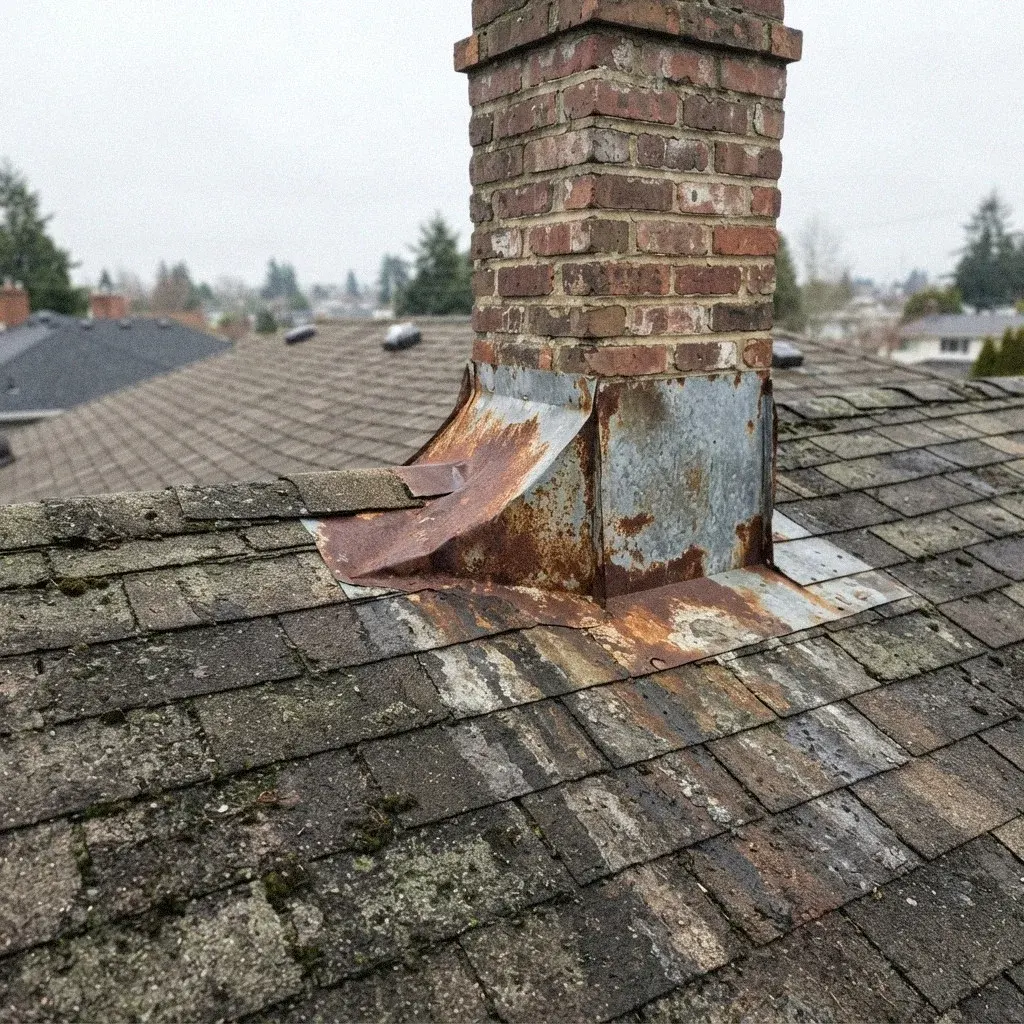
The morning after a hailstorm or a line of straight-line wind moves through Minneapolis, most people walk the yard before they walk the block. That instinct is right. Between March and November this city sees thunderstorms that can drop large hail or push gusts strong enough to strip shingles, and the signs worth photographing are often on the ground and around the eaves, not up on the slope itself.
Start With the Gutters
Start at the gutters. Hail dents aluminum and steel gutters more easily than it marks a shingle, so a run of small, evenly spaced dings along the top edge is a fair sign the same hail hit the roof above it. Check both the gutter face and the outside corners, where hail tends to leave a cleaner mark than it does on a sloped, granule-covered surface.
Granules at the Downspout
Downspouts tell a second part of the story. Look at the ground or splash block under each outlet for a scatter of asphalt granules, the sandy grit that coats every shingle. A normal roof sheds some granules over the years, but a fresh, noticeable pile right after a storm usually means hail impact knocked loose more than usual, washed down with the runoff.
Check the Metal First
Any metal on the roof is worth a closer look with binoculars from the yard: plumbing vent stacks, furnace and bath fan caps, and step flashing along a chimney or dormer. Metal dents where shingles can absorb an impact without showing it, so a pockmarked vent cap or a dinged flashing edge is often the clearest ground-level evidence that hail actually hit the house.
Lifted or Missing Shingles
Walk the perimeter and look up at the shingle edges themselves, especially after wind rather than hail. Straight-line gusts can lift a tab at the eave or peel a shingle back enough to leave a visible gap, and a hard enough gust can send a shingle into the yard entirely. A torn or missing shingle is one of the few things on this list that does not need a trained eye to spot.
Siding and Screen Marks
Screens on windows and storm doors, especially those facing the direction the storm came from, sometimes show small punctures or dimples that match the hail size that day. So do vinyl siding and window sills. These marks won't tell you anything about the roof directly, but they help date the damage if a question comes up later about which storm did what.
What Bruising Actually Means
Bruising is the term roofers use for hail impact that drives granules into the asphalt mat without tearing it open. From the ground, and often even standing on the roof, bruised shingles can look completely normal. The mat is softened underneath in a way that shortens the shingle's life, but there is no visible crack, tear, or missing granule pile to point to.
Why the Ground View Stops Short
That is the honest limit of a ground-level check. A homeowner can spot dented gutters, granules at the downspout, marked vents, and torn shingles without ever leaving the yard, but confirming bruising means someone walking the actual slopes, pressing on suspect spots, and checking the mat under raking light. There is no shortcut to that from the driveway.
Photograph It Today
Photograph everything today, even the marks that seem minor. Granule piles wash away in the next rain, gutter dents can go unnoticed once they're pointed out and forgotten, and screen punctures get replaced without a second thought. A dated photo taken the morning after matches a specific storm; the same photo taken in April tells nobody which of several storms caused it.
What Makes a Useful Photo
Take wide shots of each side of the house along with close-ups of individual dents or gaps, and include something in frame for scale, like a hand or a tape measure. Photograph the downspout outlets and the ground beneath them before the next rain moves the granules around. A phone camera is enough; what matters is timing, not equipment.
Damage Can Vary Block by Block
Storms move through the Minneapolis area from the North Loop down through Longfellow and out past Richfield and Bloomington in a matter of minutes, and hail size and wind speed can vary block by block along that path. A house near the Mississippi River may see different damage than one a mile away in Kingfield or Tangletown, which is one more reason a homeowner's own dated photos matter more than a general description of the storm.
Why Photos Belong to Today
None of this replaces someone getting on the roof. Ground-level checking is about catching what you can, documenting it while it's fresh, and knowing that a clean-looking roof from the driveway does not rule out bruised shingles overhead. What it does is give a homeowner a clear, dated record to work from, whatever comes next.
Dealing with this in your home?
Minneapolis roofs carry the weight of two seasons pulling in opposite directions. Bungalows near Kingfield and Longfellow trap heat in poorly vented attics, melting snow that refreezes at the eaves into ice dams. Come summer, hail off a Hennepin County thunderstorm can strip granules city-wide, no matter the neighborhood.