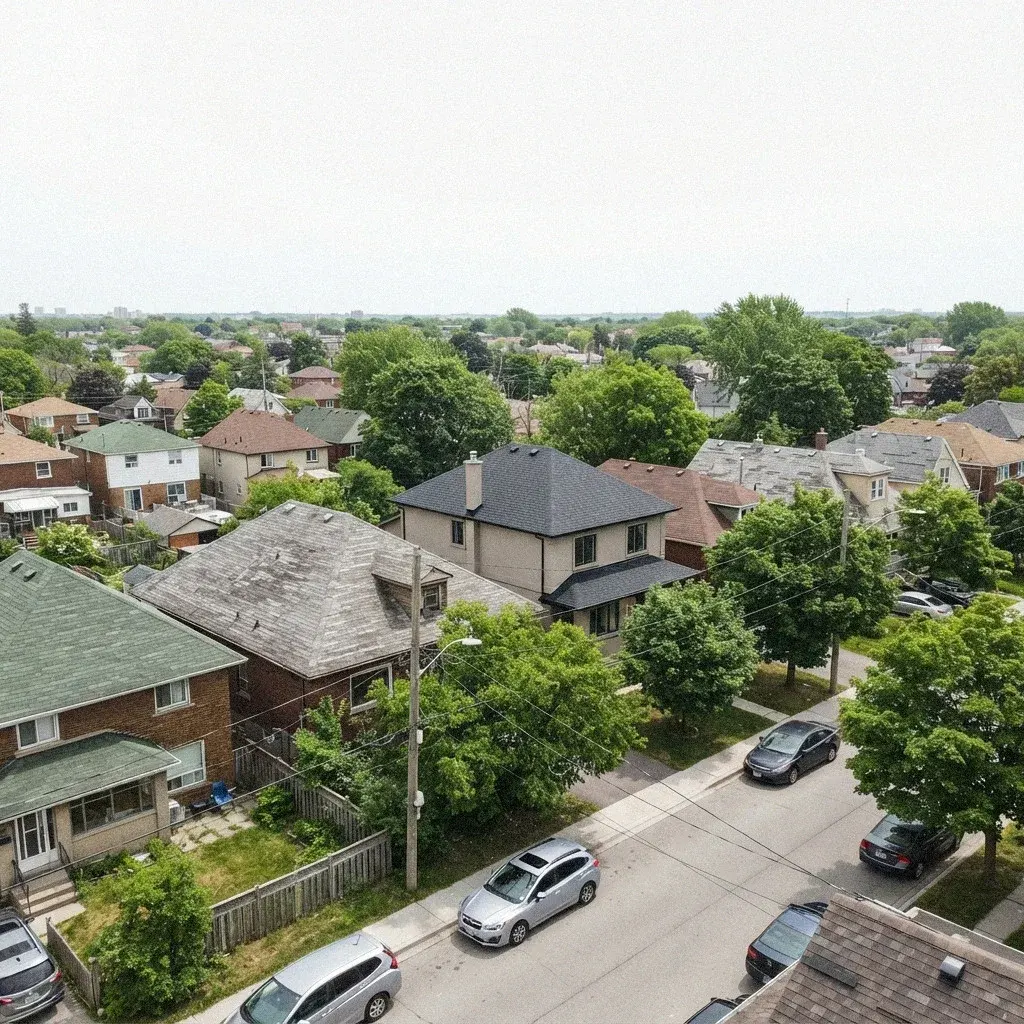
A fall storm over Minneapolis usually starts as noise before it becomes damage: wind picking up along the Mississippi River corridor, rain turning sideways for an hour, then quiet. Nothing on the ground tells a homeowner in Linden Hills or Longfellow what happened forty feet above their yard. The roof takes the storm alone, and most of what it takes doesn't show up as a hole. It shows up as something bent, lifted, or knocked loose that still looks fine from the driveway.
Where Wind Grabs a Roof
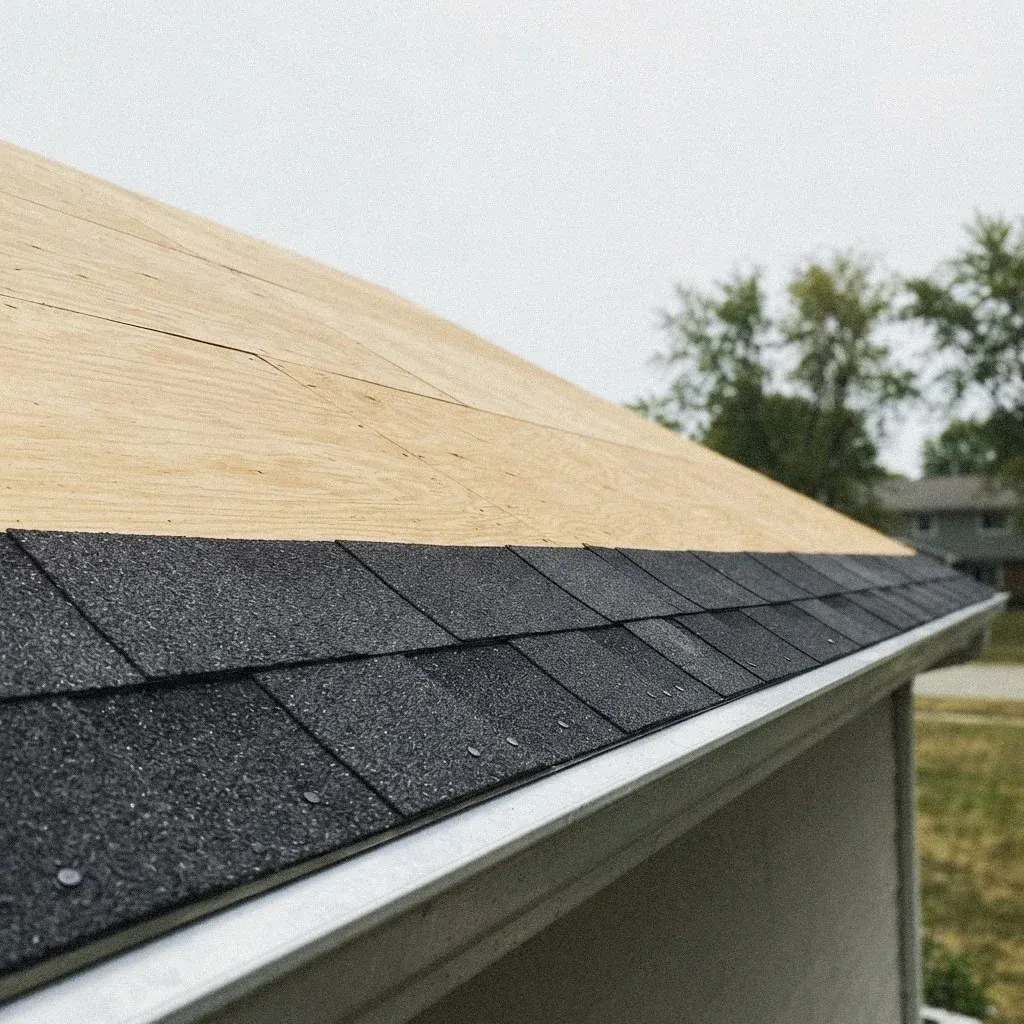
Wind moves faster where a roof breaks shape, at hips, corners, and the edge running along the rake. That extra speed builds a pulling force under the shingle tabs, not a push. A gust strong enough will lift a tab, crease it at the fold, and set it back down loose. Some tabs snap off outright and land somewhere in a Minneapolis yard, from Kingfield to Tangletown, well past where the roof line ends.
Shingles That Don't Tear Off
Not every shingle that gets hit by wind comes loose. Some get pushed upward, bend, and settle back down with a fold across them that never fully flattens out. That's a creased shingle, and it's easy to miss because the roof still looks complete. A blown-off shingle is the obvious version of the same problem — a bare rectangle on the deck where a tab used to be. Both start with the same gust; one just goes further than the other.
When a Branch Does the Damage
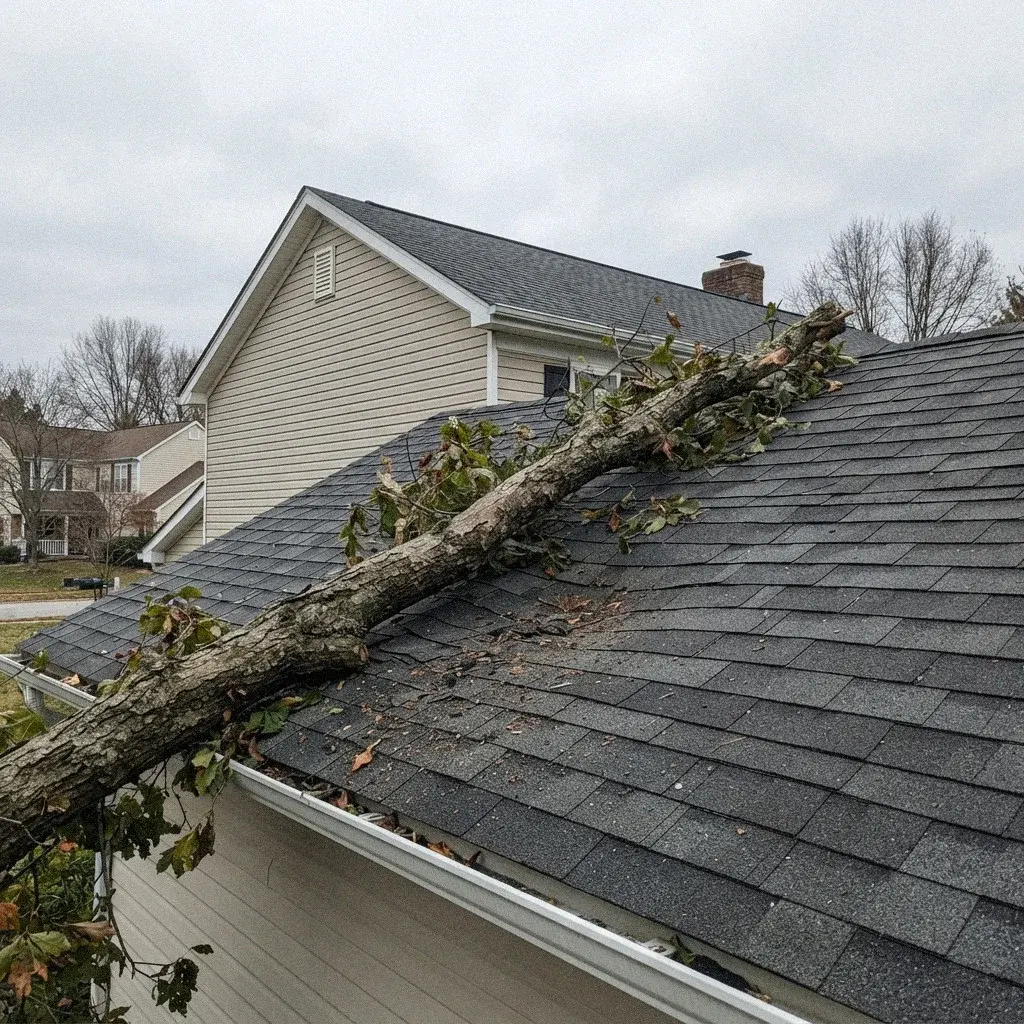
Minneapolis has real tree cover in older neighborhoods like Kenwood, Prospect Park, and along parts of Seward, and a fall windstorm brings branches down with it. A branch strike can crack a shingle, knock granules loose, or leave an impact bruise — a soft spot where the mat underneath has been compressed without an obvious tear. Bruises like this are harder to spot than a missing shingle because the surface often still looks unbroken from a distance.
What Settles Into the Valleys
After the wind stops, the roof is left holding whatever came down with it. Leaves, twigs, and small branches collect in valleys and pile up against chimneys, skylights, and vent pipes. This debris field doesn't just sit there looking messy. It holds moisture against the roof surface long after the rain has stopped, and it blocks the path water is supposed to take off the roof and into the gutter below.
Gutters That Can't Keep Up
Rain rarely comes straight down in a fall storm here. It arrives at an angle, pushed sideways by the same gusts working the shingles, and it finds any gap around a chimney, skylight, or vent pipe before it finds the attic floor. A ceiling stain in a Longfellow or Seward bungalow often starts at flashing that lost its seal weeks earlier, not at the shingles themselves. The water travels along a rafter before it ever shows itself.
Where Driven Rain Gets In
Ordinary rain falls straight down and sheds off a roof the way it's built to. Wind-driven rain doesn't behave that way — it comes in at an angle and finds any gap a calm rain would never reach. Loose flashing around chimneys, skylights, and the places where a roof meets a wall is the usual entry point. A seam that's held fine for years can let water through the moment wind starts pushing it sideways instead of down.
Hips and Ridge Lines Take More
Ridge caps take a beating that flat field shingles don't. They sit exposed on both sides at once, right where two roof planes meet, and they're smaller pieces with less overlap holding them down. A hard gust off the Mississippi River valley can work a cap loose at the nail line long before it pulls a full shingle free elsewhere. Once one cap lifts, the row next to it loses some of its wind resistance too.
Older Roofs Around the City
Minneapolis carries a lot of older housing stock — bungalows and foursquares built well before modern attic ventilation standards, common in neighborhoods stretching from Powderhorn Park to Fulton. Decades of freeze-thaw cycles and prior ice dam seasons can leave the deck underneath a shingle less solid than it looks, so a fall windstorm sometimes finishes off what winter already weakened. A roof that made it through several Minnesota winters isn't automatically ready for the next wind event.
Flat Sections and Additions
Not every roof in Minneapolis is a simple pitched surface. Additions, porches, and some newer construction in areas like North Loop include low-slope sections finished in a membrane rather than shingles. Wind affects these differently — instead of lifting individual tabs, it can work at seams and edges where the membrane is fastened down. A membrane roof that's held tight for years can still develop a lifted edge after one hard, sustained gust.
Looking the Roof Over After
Check the yard first. A scattering of granules in the grass, or shingle pieces near the downspout, points to damage before you've looked up at all. Binoculars help more than a ladder does. Scan for a shingle sitting higher than its neighbors, a dark patch where the mat shows through, or a dent from a branch strike near Lake Harriet or Powderhorn Lake-adjacent blocks where old trees still drop heavy limbs. Note it, but stay off a wet roof.
Damage That Shows Up Later
Some storm damage waits. A creased shingle can hold through a few dry days before finally giving way in a smaller gust that wouldn't have bothered it otherwise. A small gap at a flashing seam might not leak until the next storm pushes rain at exactly the right angle. That's why a ceiling stain or a damp spot in the attic sometimes appears well after the storm that actually caused it has passed.
Dealing with this in your home?
Minneapolis roofs carry the weight of two seasons pulling in opposite directions. Bungalows near Kingfield and Longfellow trap heat in poorly vented attics, melting snow that refreezes at the eaves into ice dams. Come summer, hail off a Hennepin County thunderstorm can strip granules city-wide, no matter the neighborhood.