Minneapolis moves from frozen ground to heavy spring rain fast, sometimes within a couple of weeks, and a roof that spent the winter under snow load doesn't announce its weak points on its own. The practical move is a short walkaround before the first sustained rain, done in a set order so nothing downstream gets checked before what feeds it. This isn't a full inspection. It's a way to catch what a winter left behind before rain finds it first.
Start With Gutter Clearing
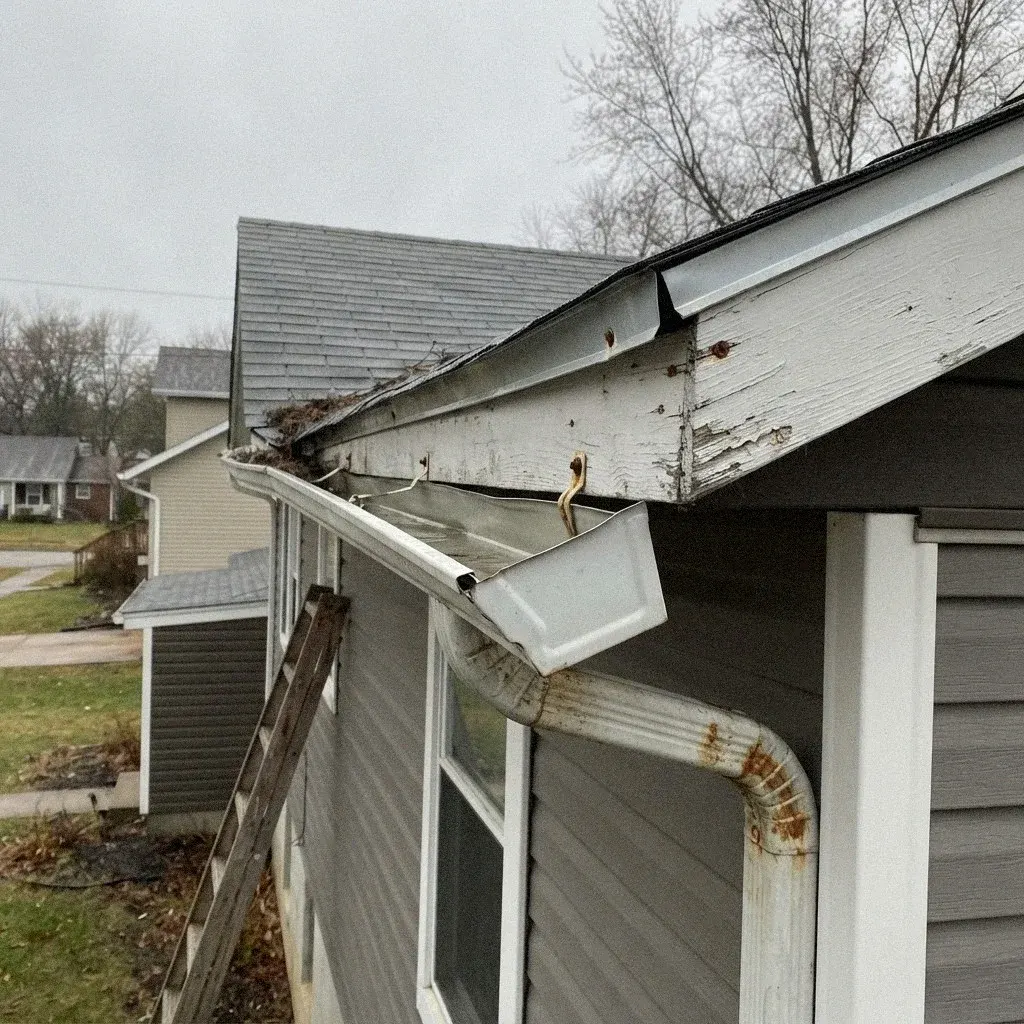
Winter leaves gutters packed with grit, shingle granules, and whatever blew in off nearby trees, and that debris sits heavier after months of freeze and thaw than it would after a single storm. Clear every run by hand before anything else, working from Linden Hills bungalows to Longfellow foursquares alike. A gutter still holding winter debris will overflow at the first real downpour, and every step after this one assumes the gutters are already working.
Check Downspout Flow Next
With gutters cleared, check downspout flow before moving on. Send water through each run and confirm it reaches the bottom and clears the splash block, rather than pooling partway up. A slow downspout usually means a seam knocked loose or debris packed lower in the run than a visual check from the ladder catches. This matters more in Minneapolis than it looks, since a downspout that backs up sends water behind fascia boards on older Kingfield and Tangletown bungalows before anyone notices from the ground.
Clear Out Roof Valleys
Valley debris builds up faster than the rest of the roof plane because two slopes are draining into one narrow channel. Leaves and grit settle there and hold water against the shingle mat longer than an open slope would. On the foursquares and Colonial Revival homes common in Linden Hills and Fulton, a steep valley can shed most debris on its own, but a low-pitch dormer valley often needs a hand sweep before the shingles underneath show any wear.
Walk Every Roof Plane
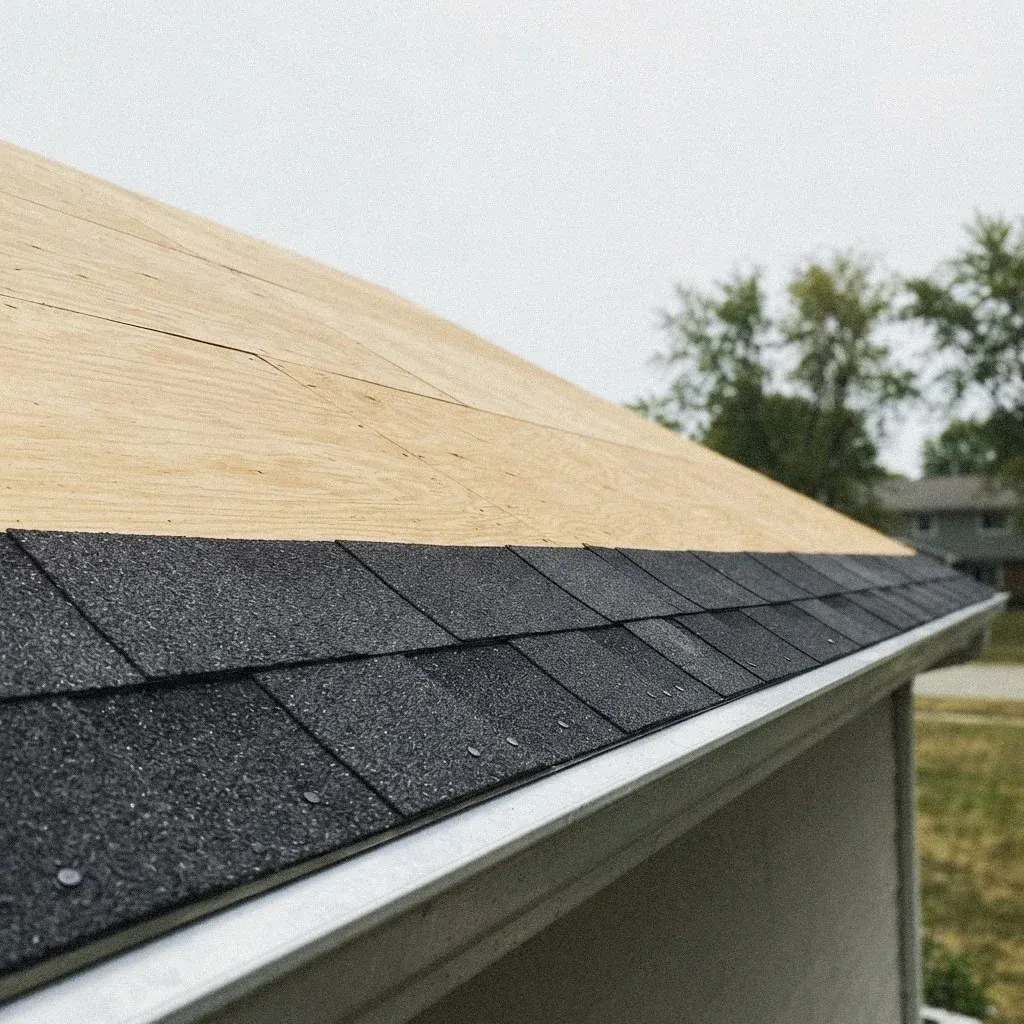
A roof plane walkaround means looking at every slope, not just what's visible from the street or driveway. Look for lifted or curling shingle edges, bare patches where granules wore thin, and any spot where the drip edge along the eave looks bent or pulled loose. Steep-pitched roofs common on older Minneapolis bungalows and foursquares make a full ground-level look harder, and anything unclear from below is worth a closer look before rain finds it.
Inspect Flashing And Pipe Boots
A flashing check looks at the metal where the roof meets something else: chimneys, skylights, dormer walls, and the joint where a roof plane butts into a sidewall. Lifted edges, cracked caulk, or a seam that has pulled a quarter inch from the surface all count as findings. On older Whittier and Lowry Hill East houses with brick chimneys, the step flashing along the chimney base is worth extra attention, since mortar movement over the years can open a gap that was tight when the roof was installed.
Do A Sealant Check
Sealant is the part of a roof with the shortest life, so it is worth a deliberate look rather than a glance. From a ladder, check the bead around vent flanges, at the counterflashing line on the chimney, around any skylight curb, and where an old repair was made. What you are looking for is cracking, shrinkage that has pulled the bead away from one side of the joint, or a bead that has gone chalky and hard. All three mean it has stopped moving with the metal it is sealing. And a note worth carrying: sealant is a finish detail on a roof, never the waterproofing. A joint that only works because of caulk was built wrong.
Look Inside At The Attic
This is the step people skip and the one that finds the most. Take a flashlight up before the rain arrives, on a dry day, and look at the underside of the deck rather than the floor. Old staining tells you where water has been; fresh damp tells you it is still coming. Daylight at a penetration means an open hole. Frost on the sheathing means moisture is condensing out of house air, which is a ventilation problem rather than a leak. Feel the insulation near the eaves for damp, and check that bath and kitchen fans exhaust outside rather than into the space. Fifteen minutes here beats an hour on the roof.
Confirm Grade Drainage Nearby
Grade drainage is the last check and it happens on the ground, not the roof. Walk the foundation line and see where water from each downspout actually lands. If the soil slopes back toward the house, or a splash block has settled and lost its tilt, water pools against the basement wall instead of running off. This matters on the clay-heavy soil common through Kenwood and Bryn Mawr, where the ground shifts enough season to season to change a slope that used to work fine.
Write A Short Punch List
By this point the walkaround has produced a handful of findings, and the useful thing is to sort them rather than list them. Three piles works: things letting water in now, things that will let water in at the next heavy rain, and things that are wear worth watching. Put a date beside each one. Write down what you saw and where, because in three weeks a note saying loose flashing on the north wall above the kitchen window is worth far more to a roofer than a memory of something being off. Photograph anything you can from the ground while you are at it. A written list is also what keeps two quotes comparable.
Choose A Scheduling Window
The practical window for addressing anything on that list sits before Minneapolis moves into its heavier spring storm pattern, since demand for roof work across the metro, including nearby St. Louis Park and Richfield, picks up once the first hard rains hit. Booking a repair while the ground is still workable and before a full schedule of storm calls arrive is easier than trying to get on a list after the rain has already found the weak spot.
Know When To Call Someone
Some of this list is homeowner work and some of it is not, and the line is mostly about where you have to stand. Gutters, downspouts, splash blocks, the attic, and looking with binoculars from the yard are all fair. Walking a slope, reaching into a valley, lifting shingle courses, or doing anything at a chimney means being on the roof, and a wet or frosted slope in a Minneapolis spring is genuinely dangerous. There is also a category that is not about safety at all: if the attic showed fresh damp, if a section of deck felt soft underfoot, or if the roofline has changed shape, none of those are waiting-and-watching findings. Those get the licensed pros we connect you with, now rather than after the rain.
Dealing with this in your home?
Minneapolis roofs carry the weight of two seasons pulling in opposite directions. Bungalows near Kingfield and Longfellow trap heat in poorly vented attics, melting snow that refreezes at the eaves into ice dams. Come summer, hail off a Hennepin County thunderstorm can strip granules city-wide, no matter the neighborhood.