A ceiling stain in a Minneapolis bungalow is not just an eyesore. It is a paper trail. Color, shape, and how the edge is drawn tell you roughly when the water arrived and whether it is still moving. Before anyone climbs into the attic above a Kingfield or Tangletown house, the drywall itself has already testified to most of what happened, if you know how to read it instead of just repainting over it.
What the color is telling you
A recent stain runs pale yellow, sometimes barely visible against white ceiling drywall. Give it a few weeks and the center darkens toward tan or light brown as tannins in the wood sheathing bleed into the water. A stain that has gone deep brown or rust-colored, especially one with a hard edge, has likely been re-wetted more than once. Fresh always looks faint. Old looks stained on purpose.
Reading the tide line
That ring drawn around the discoloration, sometimes called a tide line, marks the farthest point the water reached before it dried in place. One clean ring usually means a single event, like an ice dam that let go during a February thaw. Several rings stacked inside each other, like growth rings on a cut log, mean the ceiling has been wetted, dried, and wetted again on separate occasions, not one long soak.
The touch test for moisture
Press two fingers against the drywall a few inches from the stain's center, not on it. Solid resistance means the material has dried out, even if the color remains. A soft spot, or drywall that gives under light pressure, usually means moisture is still in the paper facing or the insulation matting behind it. A moisture meter settles the question fast, but a thumb test is often enough to know whether to worry today or next week.
Dormant stain or active leak
A dormant stain has a fixed outline you can trace with a pencil and check again in a month with no change. It stays dry to the touch and the color does not deepen. An active leak keeps writing on the same page: the ring grows outward, new color shows up past the old edge, or the spot feels damp after any rain or thaw. Dormant can wait for a routine roof check. Active should not wait through another Minneapolis snowmelt.
Where on the ceiling it sits
A stain a few feet from an exterior wall, in a Fulton or Linden Hills foursquare, often traces back to a gutter that overflowed or ice building up along the fascia rather than a hole in the field of the roof. A stain nearer the center of a room, away from any wall, usually points higher up, toward a plumbing vent, a chimney chase, or a valley where two roof planes meet. Distance from the wall is a rough compass, not a fixed rule.
Why water travels before it shows
Roofs shed water downhill along the slope, but once it gets under a shingle it stops obeying gravity in a straight line. It clings to the underside of the sheathing and creeps sideways and downward across the wood grain, riding the slope of the rafters underneath. That means water can enter a roof near the ridge on a Seward or Longfellow gable and not show up as a ceiling stain until it has traveled several feet toward a lower point, often well past where the actual opening sits.
Penetrations worth a second look
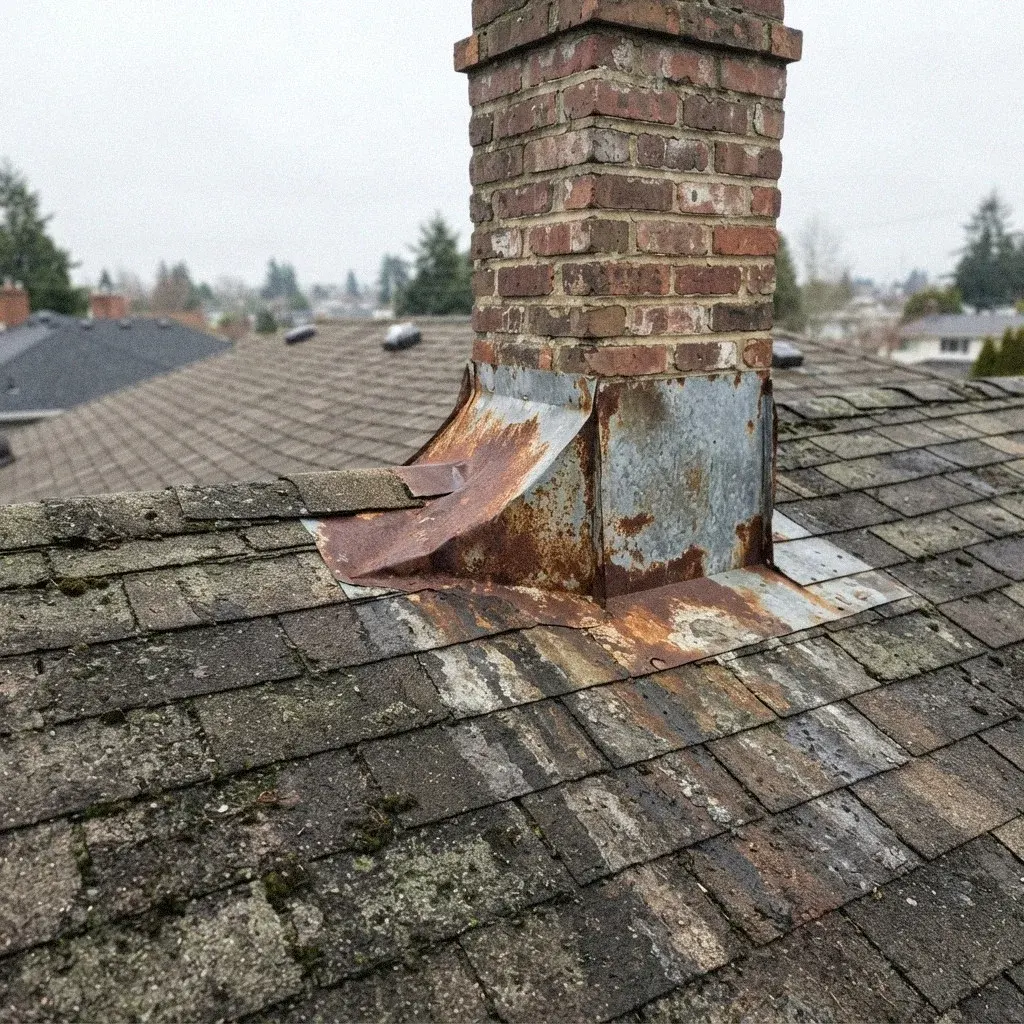
Chimneys, plumbing vents, and skylights all break the continuous surface of a roof, and flashing is what has to seal each break. A stain that sits directly below or slightly downhill from one of these features deserves a second look before you assume the shingles themselves failed. Older Minneapolis homes near St. Anthony West or Prospect Park often have a chimney serving a furnace or fireplace, and the flashing collar around it ages faster than the shingles surrounding it.
What bubbling paint adds
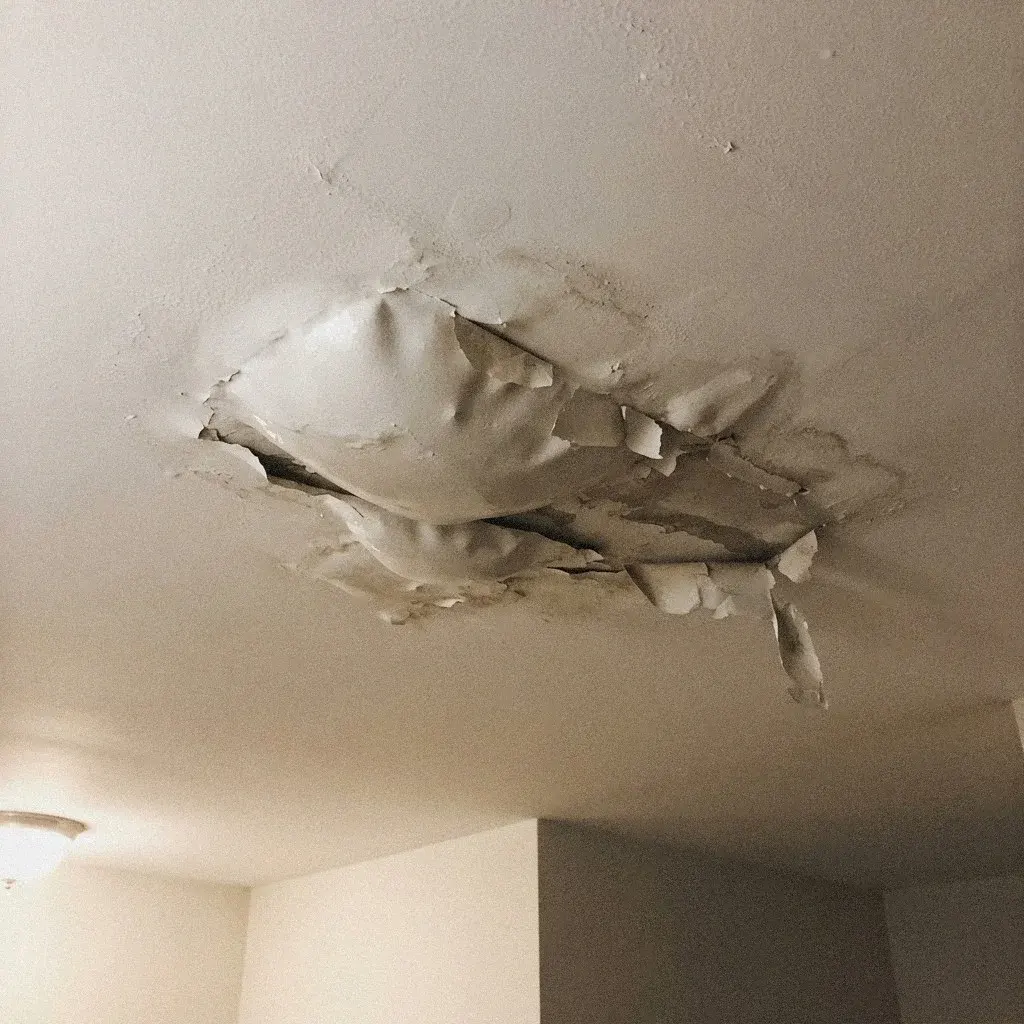
Plain discoloration means water reached the paper facing of the drywall and dried there without much volume behind it. Bubbling or peeling ceiling paint is a different story: it means water arrived faster than the drywall could soak it in, pooling briefly behind the paint film until it lifted. That points toward a more active source, not a slow trickle that dried out weeks ago, and it usually means the drywall has taken on more water than a simple stain would suggest.
When a sag changes the picture
Sight along the ceiling at a low angle rather than staring straight up, and a sag will show as a shallow dip you would miss otherwise. A stain paired with any dip means the wood fibers in the drywall, or the insulation matting resting on top of it, have absorbed enough water to lose some of their original shape. That is a heavier, longer-standing wetting than a stain alone, and it changes how soon the area above deserves a direct look.
Checking the attic to confirm
If the attic above the stain is reachable, a flashlight beats guessing from below every time. Look at the underside of the roof sheathing for dark streaking, at the rafters for staining that runs along the grain, and at the insulation for matting or compression where it has been wet and dried. Condensation forming on cold sheathing during a hard freeze can mimic some of this, but that is a separate question from what the ceiling stain itself is showing you.
The limits of a stain alone
What a stain confirms is that water crossed a boundary it should never have crossed, along with rough clues about timing and direction. It does not name the exact shingle, flashing seam, or vent boot responsible, and it should not be treated as a diagnosis on its own. Reading it well simply means a homeowner in Whittier or Cedar-Isles-Dean walks into any roof conversation already knowing what questions matter and what to check first.
Dealing with this in your home?
Minneapolis roofs carry the weight of two seasons pulling in opposite directions. Bungalows near Kingfield and Longfellow trap heat in poorly vented attics, melting snow that refreezes at the eaves into ice dams. Come summer, hail off a Hennepin County thunderstorm can strip granules city-wide, no matter the neighborhood.