Curl is not a single defect on a Minneapolis roof, it is a family of shapes, and each shape has its own backstory. A ridge that bows on a Linden Hills bungalow may share nothing with a curled edge on a foursquare near Kingfield. Reading the shape first, before guessing at a cause, keeps a homeowner from fixing the wrong thing.
Cupping Is Not Clawing
Cupping shows up as the two outer edges of a shingle pulling up while the middle stays flat, so from the ground in front of a Kingfield or Tangletown bungalow it looks like a shallow dip running down each row. It starts with the mat drying out and shrinking unevenly, usually from heat trapped under the deck rather than from age alone. Catch it early and it's a warning sign, not yet a leak.
What Cupping Points To
Cupping usually starts underneath the shingle rather than on top of it. Attic heat pushes into the mat from below, and if that heat carries moisture from below along with it, the asphalt softens on one side while the exposed surface stays dry. That uneven drying bends the shingle upward at the edges, and it can show up on a roof that still looks new from the driveway.
Clawing And Mat Fatigue
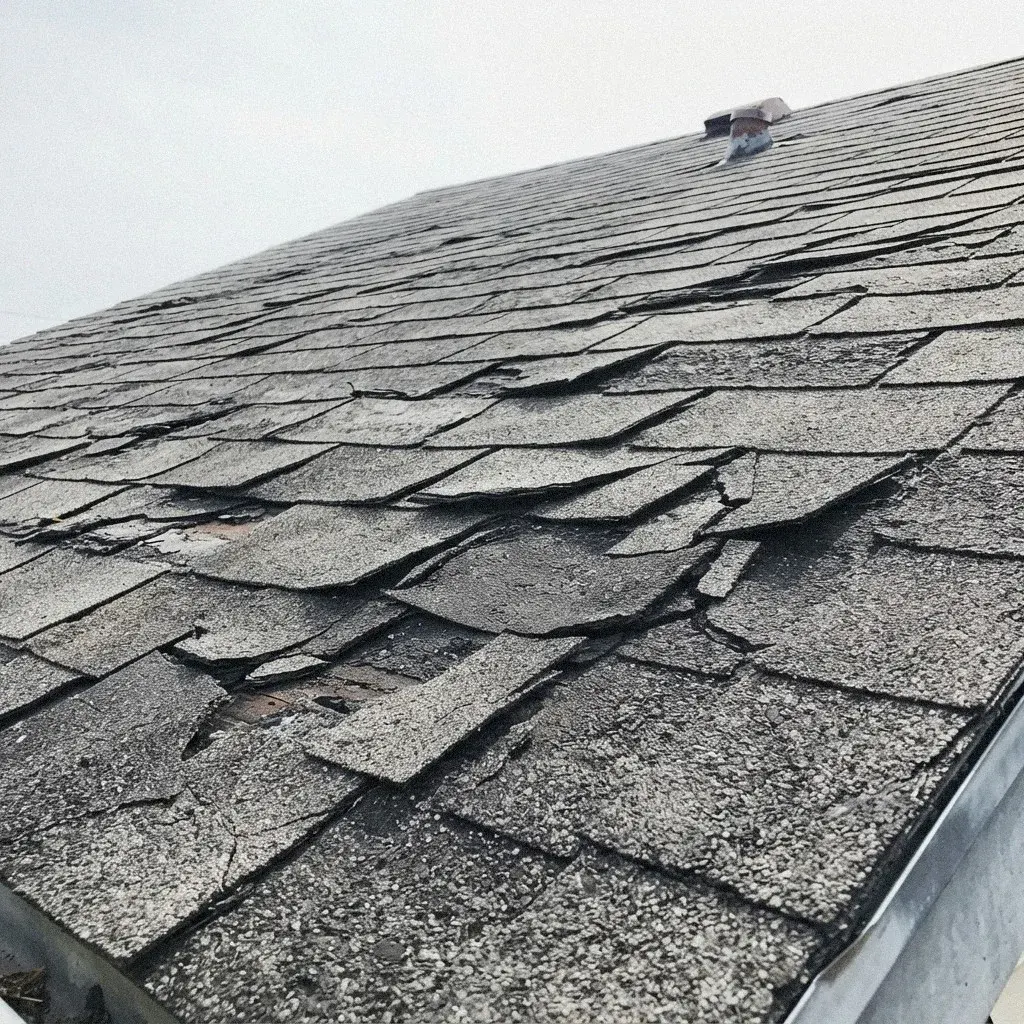
Clawing is a later-life problem. It builds after years of thermal cycling, the daily swing of a Minneapolis roof baking in July sun and then dropping well below freezing in January. Each cycle stresses the asphalt a little more, and eventually the shingle mat loses the flexibility that once let it lie flat. Once brittleness sets in, the tabs curl unevenly instead of bowing in one clean line.
Edge Lift Stays Local
Edge lift is narrower than cupping, and it stays right at the perimeter of one shingle. It usually starts where the sealant strip never bonded, or bonded and then let go after enough freeze-thaw cycles pried at the seam. Wind gets a grip under that loose edge and works it further open. A roof can show edge lift on a handful of shingles while the rest of the slope lies flat.
Field Lift Means Something Else
Field lift sits in the open middle of a slope, well past any edge or seam. Because it is not tied to a sealant strip at all, it more often reflects something happening across the whole mat, not just one shingle. A layover roof, deck movement from frost heave, or a slope that runs hotter than its neighbors can all produce field lift without a single failed seal in sight.
How A Layover Changes Things
A layover roof, where a second course of shingles sits over the first instead of a tear-off, traps more heat against the mat below and curls faster than a single layer would. Homes in Linden Hills or Fulton with older additions sometimes carry this from a past reroof done without stripping the original layer. The buried shingles can't shed attic heat the same way, so cupping shows up sooner near ridges and southern-facing slopes than the rest of the field.
Curl Before Its Time
Curl that shows up early, long before a shingle mat's normal exposure to sun and weather should have worn it down, is rarely random. It points to a cause worth naming: a bathroom fan venting into the attic instead of outside, blocked soffit vents, or a slope that runs hotter than the rest of the roof. A roof past Diamond Lake curling ahead of schedule is telling you something specific is going on underneath it, not just that time has passed.
Architectural Versus Three-Tab
An architectural shingle carries a heavier, laminated mat, which resists cupping longer than a three-tab shingle does. A three-tab roof is thinner and reacts to attic heat and thermal cycling sooner, so cupping and clawing tend to show up earlier on it than on an architectural roof of the same age facing the same sun. The difference is in the mat's stiffness, not in the shingle color or the brand.
Shade And Standing Moisture
Tree cover near Minnehaha Park or a shaded lot along Minnehaha Creek keeps shingles damp long after a Minneapolis rain has moved through, and that lingering moisture softens the mat from beneath. Clawing tends to show up here first, since a shingle held wet on its underside pulls differently than one just drying out on top from sun. Gutters clogged with leaf litter make it worse, since water sits against the eave instead of draining off the roof.
When Curl Is Just One Spot
When curling stays confined to one slope, or gathers near a valley or chimney flashing on a foursquare in Seward or Longfellow, it's worth checking that spot for a specific cause before assuming the whole roof has aged out. A cracked seal at the flashing, a valley that channels more runoff than the shingles nearby ever see, or an attic bay with poor airflow can all curl shingles locally while the rest of the roof still lies flat. Isolated curling is a clue about a problem's address, not its expiration date.
Matching Shape To Cause
None of this replaces climbing up and looking. A shaded corner near Lake Nokomis, a layover roof past Powderhorn Park, and a bare slope facing full sun can each curl for a different reason even if the shapes look similar from the sidewalk. If a Minneapolis roof is showing any of these patterns, the licensed pros we connect you with can look closer and figure out which explanation actually fits.
Dealing with this in your home?
Minneapolis roofs carry the weight of two seasons pulling in opposite directions. Bungalows near Kingfield and Longfellow trap heat in poorly vented attics, melting snow that refreezes at the eaves into ice dams. Come summer, hail off a Hennepin County thunderstorm can strip granules city-wide, no matter the neighborhood.