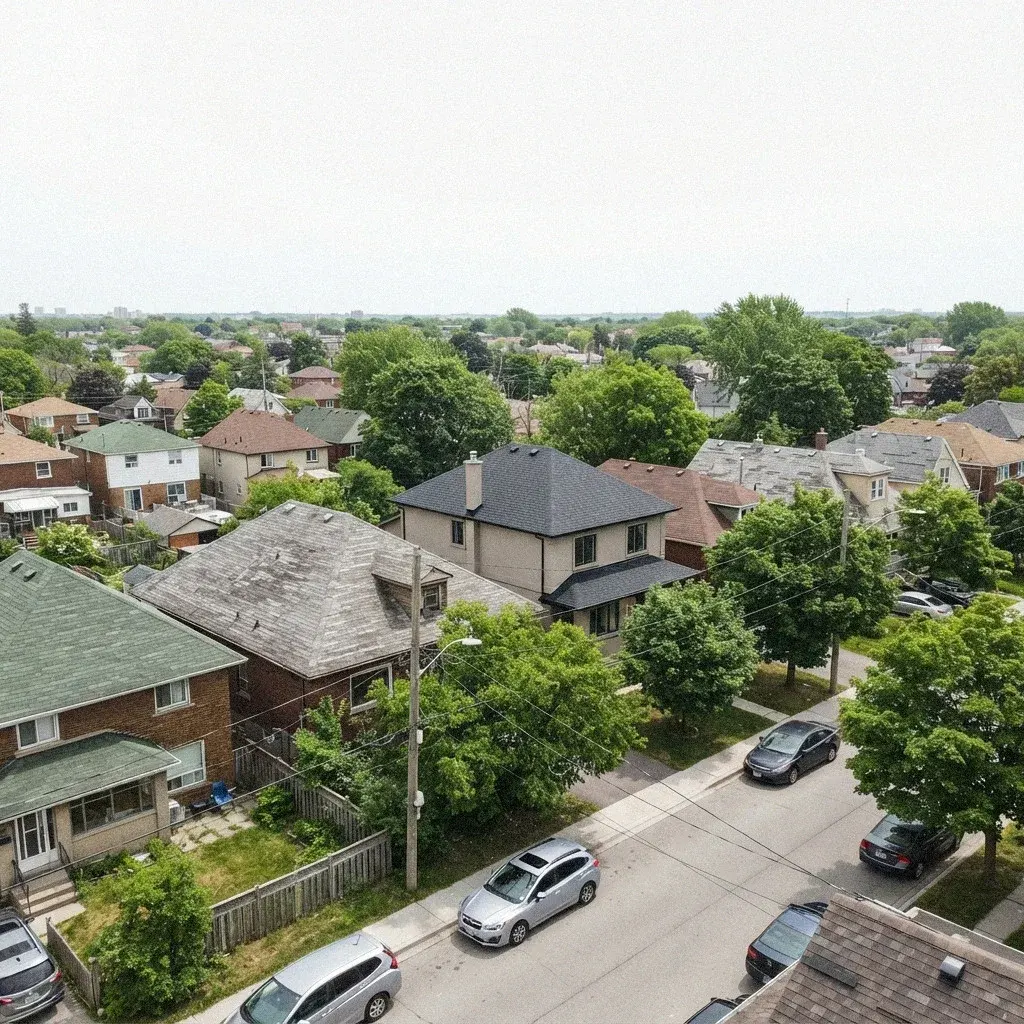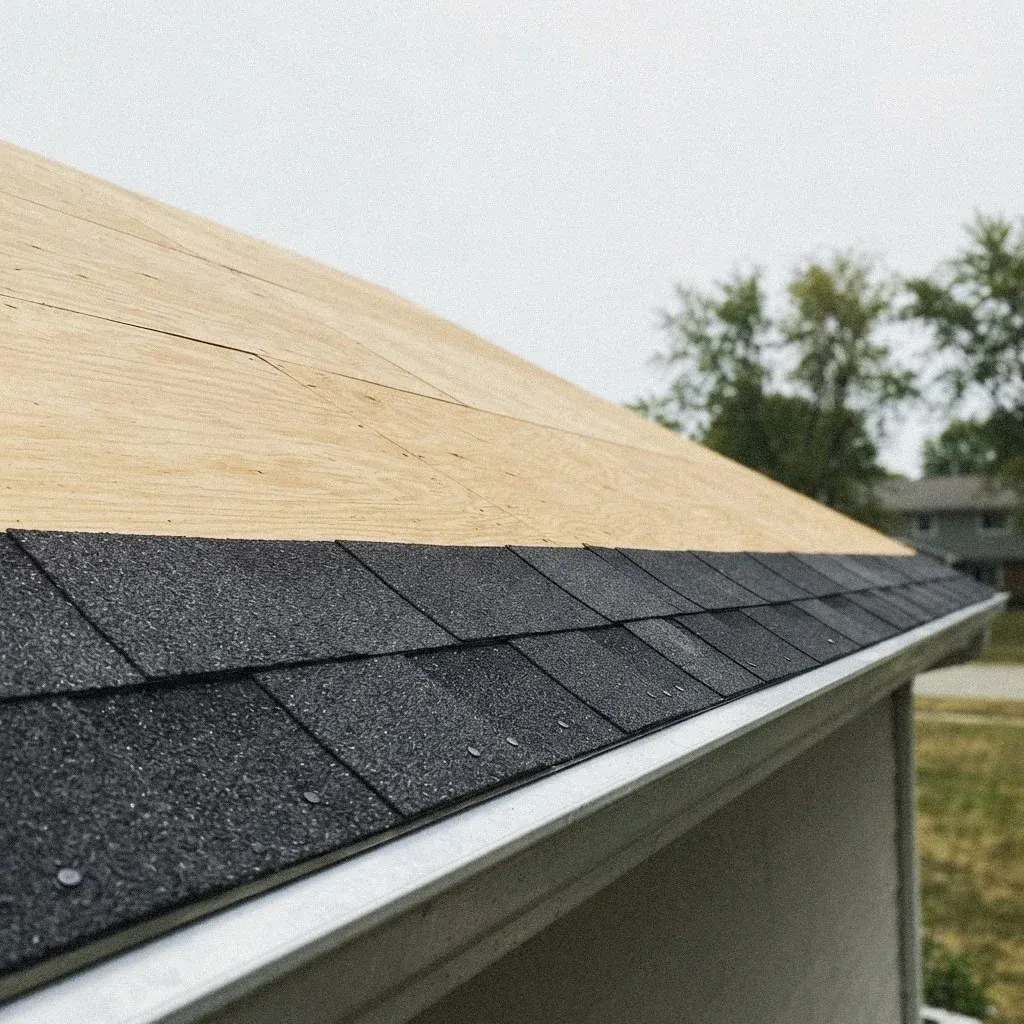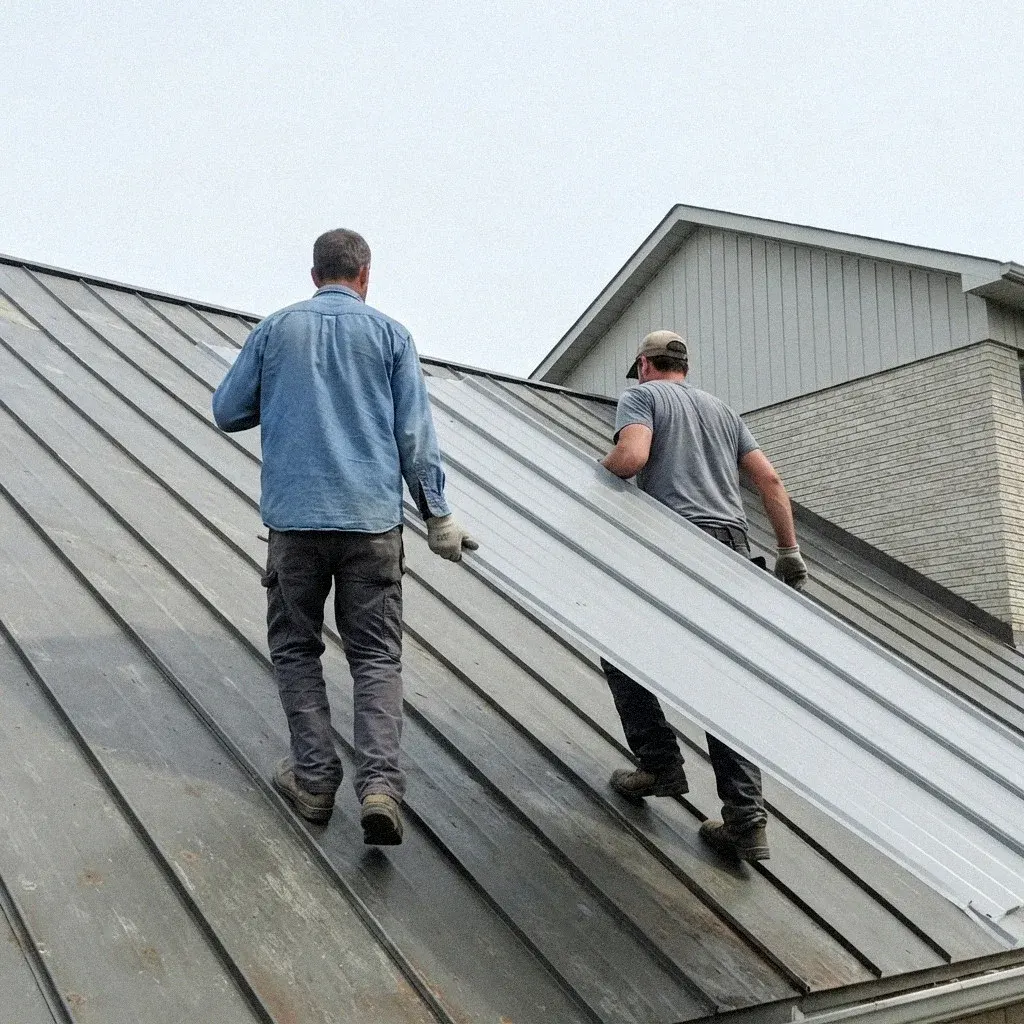
Look at a metal roof from the street in Linden Hills or Tangletown and the difference sits right in the lines. Standing seam shows tall, narrow ribs running straight up the slope with no visible fasteners anywhere on the panel face. Exposed-fastener panel, sometimes called R-panel or corrugated panel, shows rows of screw heads marching down each rib line. That one visual check tells a Minneapolis homeowner which system is up there before anything else does.
What the Seam Reveals
Standing seam holds itself down through a concealed clip hidden inside the seam, so nothing punctures the panel and the metal can slide slightly as it expands and contracts through a Minnesota winter. Some seams are mechanically seamed with a tool that folds the metal over itself; others use a snap-lock design that closes by hand. Exposed-fastener panels rely on neoprene washer screws driven straight through the panel into the deck, which holds firm at first but gives thermal movement nowhere to go, and that stress often shows up later as oil canning.
Where the Screws Show
An exposed-fastener panel works differently. Screws with a neoprene washer go straight through the flat or ribbed face at set intervals, usually into the panel rib or the flat between ribs. R-panel and corrugated panel profiles are the common versions seen around Minneapolis on garages, sheds, and some additions. From a distance the fastener rows read as faint dots running up each panel. That pattern is the giveaway a concealed-clip system never shows.
Why Fastener Count Matters
Every exposed screw is a hole the roof depends on staying sealed. The neoprene washer compresses against the metal to keep water out, but washers harden and shrink with age, and Minneapolis summers into winters put real temperature swings on that rubber. A standing seam roof has no field-mounted screws at all, so it has no washers to watch. That difference alone explains why the two systems get compared so often in the same conversation.
How Metal Reacts to Cold
Metal panels expand and contract with temperature, and a Minneapolis roof swings from summer heat into well-below-zero cold every year. That thermal movement has to go somewhere. On a standing seam roof, the concealed clip lets the panel slide slightly beneath the seam as it moves, so the panel isn't fighting its own fasteners. On an exposed-fastener panel, the screw holds the metal fixed at that exact point, and the panel has to flex around it instead.
Reading Oil Canning on a Roof
Oil canning is the wavy, rippled look that shows up in the flat part of a metal panel when the metal has nowhere to release stress. It's mostly a cosmetic issue, not a leak risk, but it shows up differently on each system. Standing seam panels, especially in a lighter panel gauge, can oil can along the flat pan between ribs. Exposed-fastener panels rarely show it the same way, since their tighter rib spacing breaks up that flat area.
What Seam Height Tells You
Seam height is another marker worth checking. Standing seam profiles typically run higher, often an inch or more, giving the roof a strong vertical shadow line when the light hits it at an angle. Exposed-fastener panels have a shorter, more repetitive rib that reads flatter and busier from the street. On a foursquare in Fulton or a bungalow near Powderhorn Park, that shadow line is often the easiest visual cue before getting close enough to look for screws.
The Role of Closure Strips
Closure strips are the foam or rubber pieces that fill the gap under a panel's ribbed profile where it meets a ridge, eave, or wall. Exposed-fastener panels depend on them at nearly every transition to block wind-driven rain and pests from getting under the rib. Standing seam roofs use them too, but less often, since the concealed clip and taller seam already close off more of that path. Seeing exposed closure strips at the edges is a smaller but useful tell.
Panel Gauge and What It Signals
Panel gauge is the thickness of the metal itself, and it isn't always visible, but it often tracks with which system a roof uses. Standing seam roofing is commonly run in a heavier gauge since the panel spans further between clips with no fastener holding it down mid-panel. Exposed-fastener panels get direct support from every screw, so lighter gauges hold up fine across shorter panel widths, which is part of why they show up more often on outbuildings.
Where Each System Shows Up
Around Minneapolis, standing seam tends to show up on additions, porches, and full reroofs where the owner wants the concealed-fastener look and is willing to pay for the taller seam and mechanical lock. Exposed-fastener panels show up more on garages, sheds, and outbuildings near Longfellow or Seward, where a simpler, screw-down install covers the same square footage for less. Neither is wrong for the building it's on; they're just built around different priorities.
A Quick Way to Check
From the ground, look for three things: a raised seam standing clear of the panel face, visible screw heads in rows, and the width of the flat pan between ribs. A standing seam roof shows none of the first two and often a wider pan. An exposed-fastener roof shows regular fastener rows and a narrower, busier rib pattern. Binoculars help on a two-story near Lake Harriet, but the pattern is usually clear even from the street.
Getting a Second Look
Photos from the ground only go so far when a roof is failing at the seams or the screws instead of aging normally. A homeowner near Diamond Lake or in Cooper who isn't sure which system is on their house, or whether it's holding up the way it should, can have the licensed pros we connect you with take a closer look and explain what they're seeing panel by panel.
Dealing with this in your home?
Minneapolis roofs carry the weight of two seasons pulling in opposite directions. Bungalows near Kingfield and Longfellow trap heat in poorly vented attics, melting snow that refreezes at the eaves into ice dams. Come summer, hail off a Hennepin County thunderstorm can strip granules city-wide, no matter the neighborhood.