A hard freeze in Minneapolis is not just a cold night. It is a stretch of temperatures dropping well below freezing that locks moisture already sitting in the roof system, rather than letting it evaporate off. Materials that flex fine in October behave differently at single digits. The roof does not change shape, but everything on it gets less forgiving, and that shift is where most winter roof problems start.
Why Shingles Turn Brittle in Cold
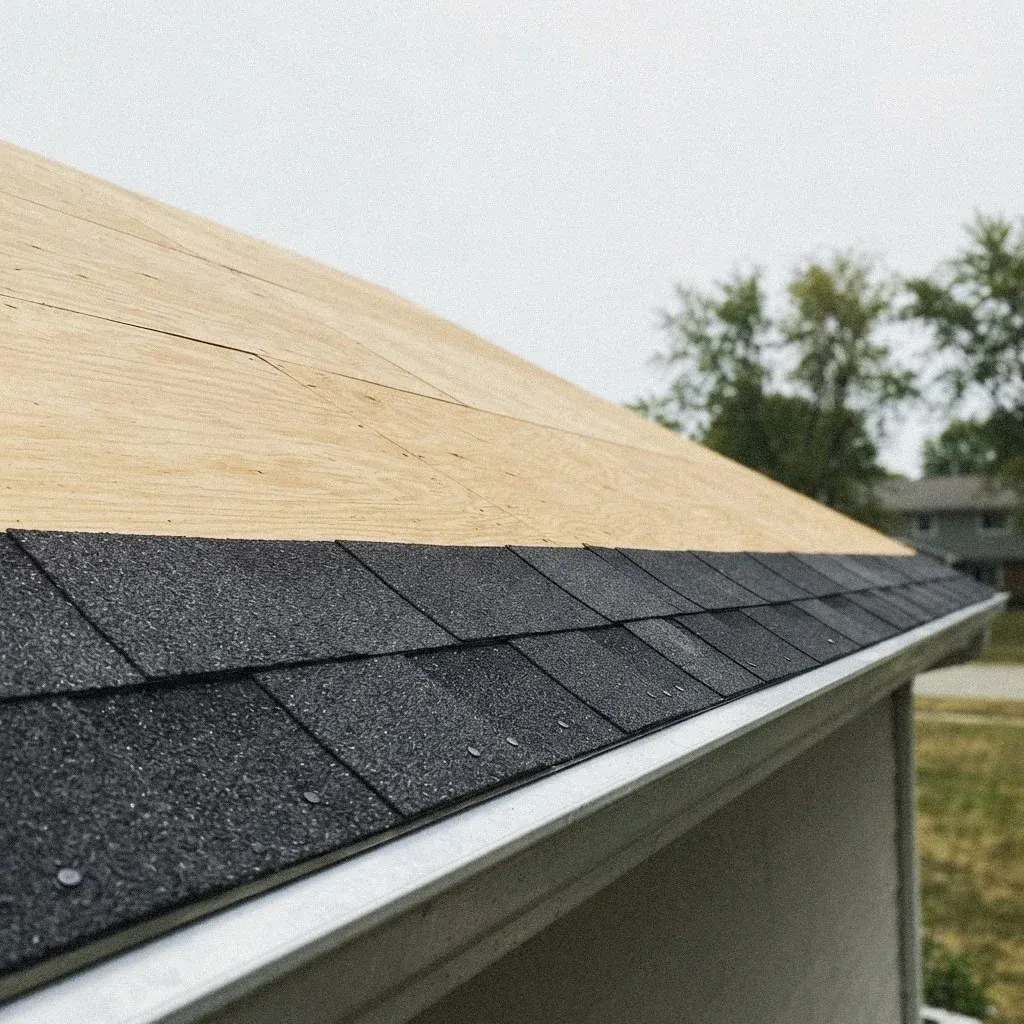
Asphalt shingles are made to flex a little with daily temperature swings, but cold pulls the give out of them. Below a certain point, the asphalt binder stiffens and the shingle acts more like a thin sheet of hardened material than a flexible one. A shingle that bent slightly under light pressure in September can crack under the same pressure in January. That brittleness does not show up until something presses on it.
Where Sealant Gives Out First
Sealant strips and caulking around flashing, vents, and chimney bases go through the same change. Rubberized sealant is formulated to stay pliable, but extreme cold shrinks it and reduces its ability to move with the roof. A bead that has been sealing a joint for years can develop a hairline crack during a hard freeze simply because it lost the flexibility to absorb the roof's minor expansion and contraction.
How Repeated Cracking Adds Up
Freeze-thaw cycling makes any existing crack worse over the course of a Minneapolis winter. Water gets into a hairline crack during a slightly warmer stretch, then freezes when the temperature drops again. Ice takes up more room than water, so it pushes the crack wider each time it forms. A crack that started as a cosmetic flaw in a shingle or a bead of sealant can widen enough to let water through by the time spring meltwater arrives.
Why Downspouts Freeze Solid
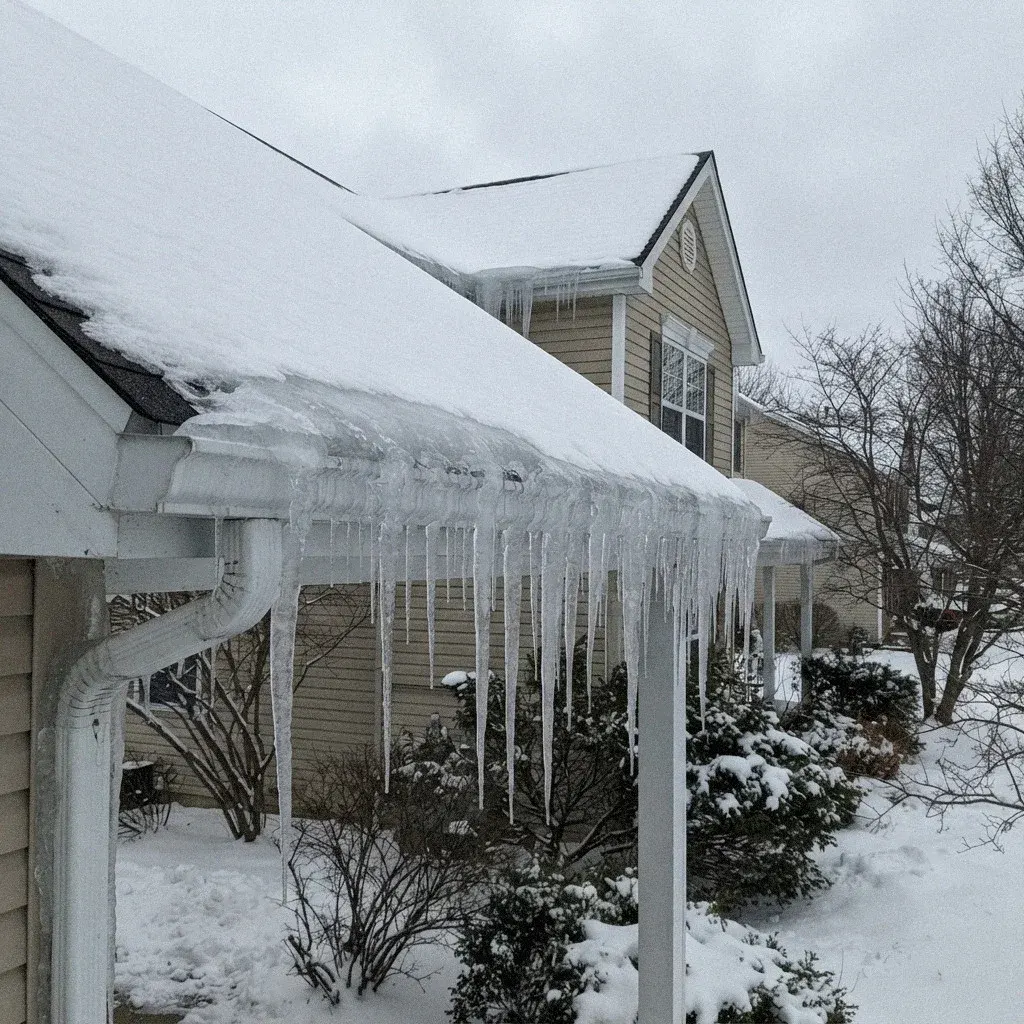
Gutters and downspouts are especially exposed during a hard freeze because they hold standing water even after a roof itself has mostly dried. That water freezes solid inside the trough or the downspout tube, and a frozen downspout has nowhere for new meltwater to go. The blockage backs water up toward the eave instead of letting it drain, which is a separate problem from the shingles cracking above it.
What Gutter Ice Does to Hardware
The eave, the lowest edge of the roof overhanging the exterior wall, runs colder than the rest of the roof because it sits away from the warmer attic space above the living area. Meltwater traveling down from higher on the roof reaches that colder edge and refreezes there, building gutter ice that can grip the shingles and fascia. This is a normal cold-weather pattern on Minneapolis roofs, not evidence that something has failed.
Ice Building Along the Eave
Pipe boots, the rubber collars sealing plumbing vent stacks where they pass through the roof, are one of the more common failure points during a hard freeze. Rubber loses flexibility in the cold the same way sealant does, and repeated expansion and contraction around the pipe can split the collar. A split pipe boot is a small opening, but it sits directly over a penetration, so it is a direct path for meltwater once temperatures climb again.
Why Pipe Boots Split in Cold
Thermal shock is the more sudden version of this stress. A roof that has been sitting at a steady low temperature and then gets hit with direct sun, or a rapid swing into the 30s, expands unevenly across its surface. Materials that were uniformly brittle a moment earlier are now trying to move at different rates in different spots. That mismatch is often when a marginal crack or a weakened sealant joint actually gives way.
Flashing Seams Under Cold Stress
None of this shows up as dramatic damage right away. A hard freeze mostly produces small, quiet changes: a shingle edge that is a little more rigid, a sealant bead that is slightly less adhered, a downspout that gurgles instead of draining. Homeowners in neighborhoods like Longfellow or Kingfield, with older bungalows and foursquares, often notice these signs only after several freeze cycles have compounded through a winter.
Why Walking a Frozen Roof Is Risky
Cold-weather sealant products exist because standard sealant is not rated to be applied in freezing temperatures and will not cure properly if it is. This matters mainly for anyone considering a DIY patch on a cold day. A repair applied with the wrong product in a hard freeze can look fine on the surface while failing to actually bond, which leaves the original problem unresolved under a new layer of sealant.
Reading What the Roof Is Telling You
Walking a frozen roof is a separate risk from any of the above. Roof traffic damage happens because a boot puts direct, concentrated weight on a shingle that has lost its flexibility, and a brittle shingle cracks under a foot the way a chilled cracker cracks rather than bends. Ice hidden under a thin layer of snow near the eave also makes footing unreliable in a way that is hard to judge from the ground.
Getting a Closer Look Once It Thaws
A roof near Bde Maka Ska or along the Mississippi River gets the same hard-freeze exposure as anywhere else in Minneapolis; wind off open water can add to how fast a surface cools, but the underlying mechanics are the same citywide. The practical takeaway is not to inspect problems by walking the roof in cold weather. A ground-level look, or a call to the licensed pros we connect you with, avoids adding roof traffic damage on top of what the freeze already caused.
Dealing with this in your home?
Minneapolis roofs carry the weight of two seasons pulling in opposite directions. Bungalows near Kingfield and Longfellow trap heat in poorly vented attics, melting snow that refreezes at the eaves into ice dams. Come summer, hail off a Hennepin County thunderstorm can strip granules city-wide, no matter the neighborhood.