Walk the alley behind a foursquare in Kingfield or Tangletown after a windy October week and the yard tells one story. The roof tells another. Leaves don't just fall and blow off; they catch on shingle tabs, settle into valleys, and pack in behind chimneys and dormers. What looks like a seasonal yard chore on the ground is a different, slower problem once it's sitting on a roof plane instead of a lawn.
Where Debris Actually Collects
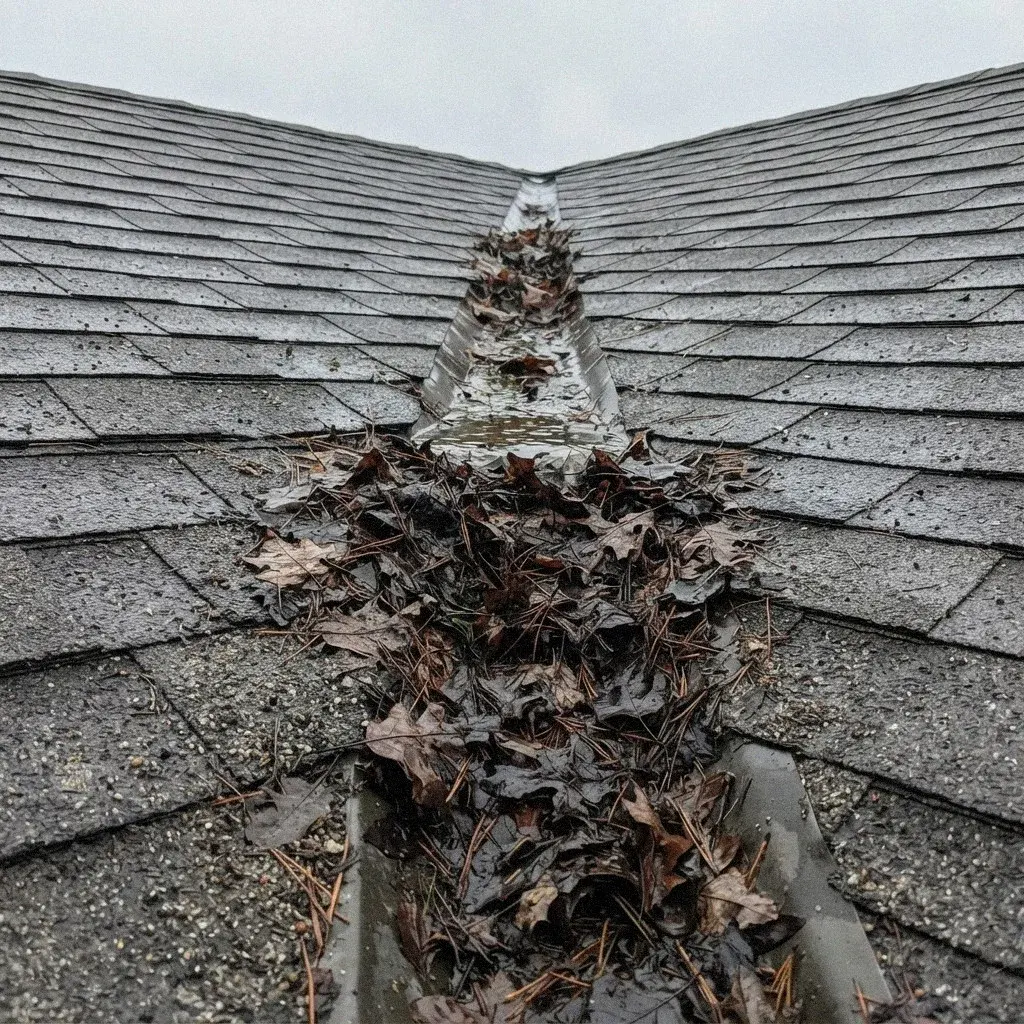
Debris doesn't spread evenly across a roof. It settles wherever airflow stalls: valleys where two planes meet, the low side of a dormer, and the uphill side of a chimney or plumbing vent. Minneapolis homes with steep Queen Anne or Colonial Revival rooflines tend to funnel more material into fewer spots, so a small number of trouble areas can hold most of a season's litter while the rest of the roof stays clear.
Why It Holds Water
A pile of leaves acts like a sponge laid over shingles. It absorbs rain and slow-melting snow, then releases that moisture gradually instead of letting it run off. On a low-pitch valley, that trapped water can sit for days rather than hours. Combined with a Minnesota winter's freeze-thaw cycles, a debris dam in a valley is doing the same basic damage an ice dam does, just starting earlier in the season.
What It Does to Shingles
Composition shingles are built to shed water quickly across their surface. Debris sitting on top holds moisture against the granules and the mat underneath far longer than the shingle was designed for. Over repeated seasons, that constant damp can soften the mat, loosen granules, and leave the spot looking darker or bare compared to shingles nearby that dried out normally after each rain.
Gutters Fill From the Roof Down
Most gutter clogs start with material that washed down off the roof itself, not just what falls straight from a tree overhead. Once a gutter run is packed, water backs up under the drip edge instead of draining off the fascia. On older Minneapolis bungalows with narrower overhangs, that backed-up water has a shorter path to the sheathing, which is one reason gutter litter is worth checking as often as the roof surface.
Ground-Level Removal First
Debris rarely sits evenly across a Minneapolis roof. It gathers where planes meet: behind chimneys, in valleys, against low parapet walls near flat sections common on North Loop and Downtown West buildings. A homeowner clearing a bungalow roof after a windy week off Minnehaha Parkway should check those same spots first, since ground-level raking near the eaves along Bryn Mawr or Prospect Park misses what's trapped higher up entirely.
Clearing It Off the Roof Safely
Working on a roof to clear debris means dealing with a wet, uneven surface, not a flat driveway. A plastic rake or gloved hand works better than a metal tool that can lift granules while scraping leaves loose. Debris should get pulled toward the eave and off the edge rather than pushed downhill into a valley or gutter, which just relocates the clog instead of removing it.
Clearing the Gutter Line Too
A roof that's been cleared but still has packed gutters hasn't solved the underlying problem. Debris needs to come out of the gutter trough itself, then get flushed with a hose to confirm the downspout is actually draining rather than just less full. Skipping this step is how a homeowner ends up back on the roof a few weeks later wondering why water is still sitting at the eave.
The Trees Minneapolis Actually Has
What sheds onto a Minneapolis roof depends heavily on what's planted nearby, and this metro is oak country as much as anything. Boulevard and yard oaks drop leaves late into fall, often after other trees are already bare, which stretches the debris season longer than a single cleanup pass can cover. Homes near Theodore Wirth Park or along the parkways of the Grand Rounds tend to deal with heavier, longer-lasting leaf loads simply from proximity to more mature canopy.
Litter From Nearby Water and Parks
Houses backing onto Minnehaha Creek or sitting near the Chain of Lakes often have more tree cover overhead than a block further inland, and that cover keeps contributing debris well after a windstorm has passed. Wet leaves carried by rain off a canopy near Lake Harriet or Lake Nokomis can end up matted against a roof edge even without a fresh gust, since the water itself helps push loose litter down the slope and into a valley.
When Debris Signals a Bigger Issue
Clearing the same valley or the same spot behind a chimney every single season is worth noticing, not just repeating. If a debris dam keeps forming in one place, that's often the lowest, slowest-draining point on the roof, and it's also the spot most likely to show soft or discolored shingles first. A homeowner who's cleared the same corner three years running has already found the roof's weak point without needing to look anywhere else.
Getting a Direct Look When Needed
A homeowner can clear loose surface litter from the ground safely, but repeated buildup in the same valley or persistent staining after cleanup is a different situation. That points to a spot that's been holding moisture longer than the rest of the roof, and it deserves a direct look rather than another round of raking. The licensed pros we connect you with can check whether the shingles underneath a chronic debris spot still hold up.
Dealing with this in your home?
Minneapolis roofs carry the weight of two seasons pulling in opposite directions. Bungalows near Kingfield and Longfellow trap heat in poorly vented attics, melting snow that refreezes at the eaves into ice dams. Come summer, hail off a Hennepin County thunderstorm can strip granules city-wide, no matter the neighborhood.