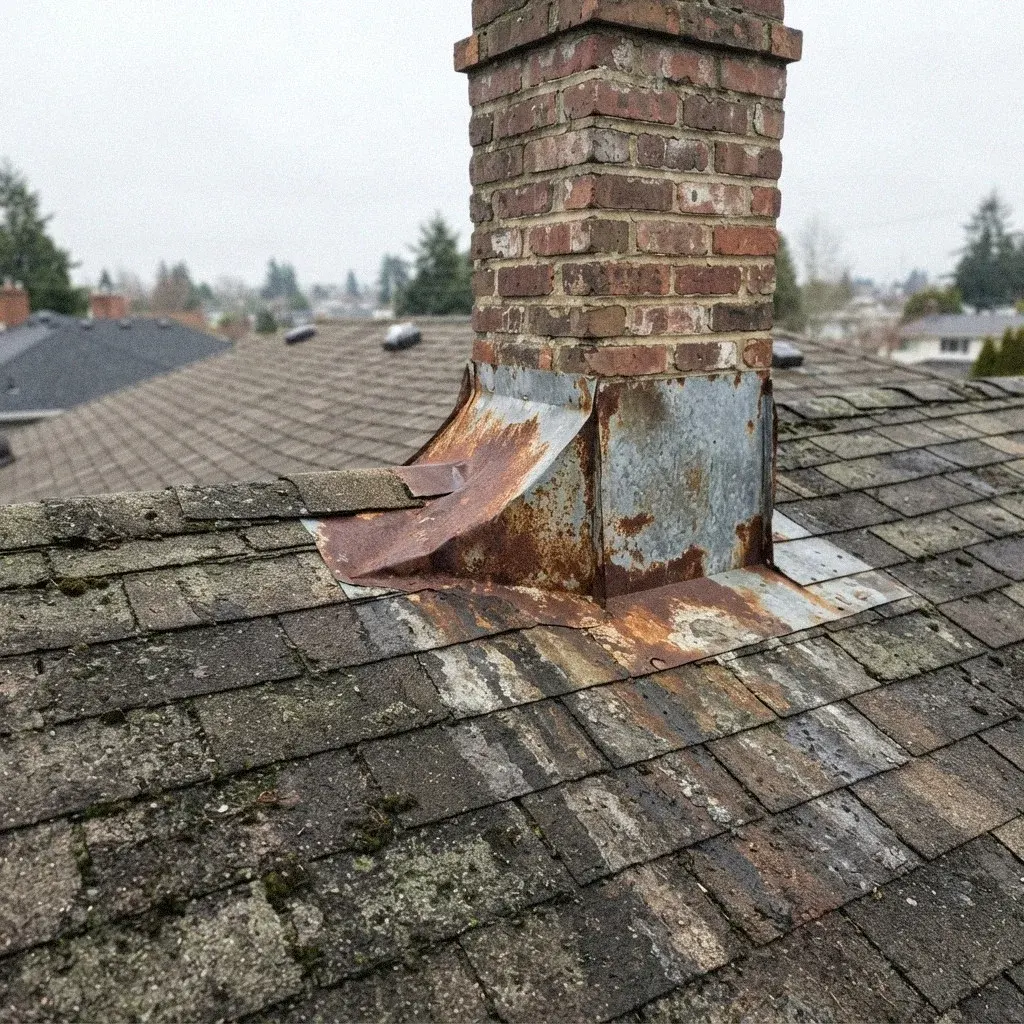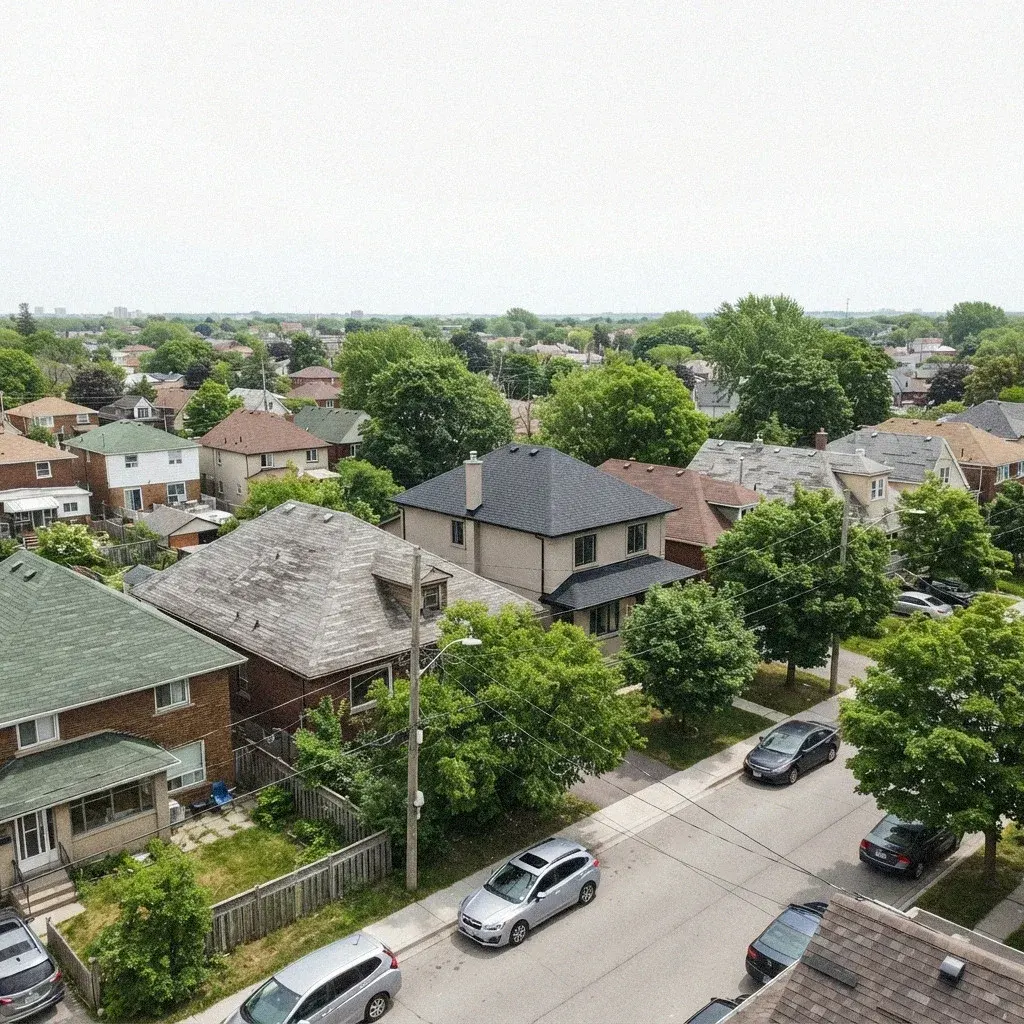
Most Minneapolis homeowners never climb onto their bungalow's roof, and a first read doesn't require it. Stand in the driveway, or walk across the street toward a Kingfield or Tangletown lot line, and look at the whole roof plane at once instead of a single shingle. This wide view catches shape and shadow patterns a close-up inspection would miss entirely, and it costs nothing but a few minutes outside.
Follow the Ridge Line
Find the ridge line and follow it from one end to the other against the sky. It should hold one continuous, level line without dips or waves. A sag near the center of a Longfellow foursquare often points to structural stress underneath, not just an old roof surface. This single check, done from the sidewalk, tells a homeowner more than almost anything else they can see without a ladder.
Reading the Shingle Courses
Look at how each shingle course runs across the roof plane, from ridge toward the fascia. The lines should stay parallel and even, without one course suddenly bulging out of rhythm with the rest. On an older Powderhorn Park or Seward home, an uneven course often traces back to sheathing that has shifted or softened below the surface, something worth noting before it becomes a bigger repair.
Catching Cupping and Clawing
Cross the street and crouch slightly, letting your eye travel along the roof plane at a shallow angle rather than straight on. This sightline catches cupping, where shingle edges curl upward and start to look like small cups, and clawing, where the center lifts while the edges stay flat. Both show up as tiny shadows breaking the surface, visible mainly when the sun sits low over a Fulton or Diamond Lake rooftop.
Spotting a Bald Spot
A bald spot shows where the granule layer has thinned or come off entirely, leaving a smoother, darker patch of exposed asphalt. From the ground near a Whittier or Lyn-Lake block, it often reads as a faint discoloration rather than a clear hole, easy to mistake for a shadow until the light shifts. Granules protect the shingle from sun and freeze-thaw cycling, so a cluster of bald spots is worth tracking over a season.
Streaking on a North Slope
Dark vertical streaks on a north-facing roof plane, common on homes near Lake Nokomis or Lake Hiawatha where shade lingers longer, usually point to algae rather than dirt buildup. Moss reads differently, showing as a raised, textured green patch that holds shape even in dry weather rather than a thin line. Neither is an emergency on its own, but both mean moisture is sitting somewhere on that shingle course longer than it should.
Downspout Outlets After Rain
Look at each downspout while rain is actually falling. If the gutter is clearly full but one outlet stays dry, the run between it and the gutter is blocked or has pulled apart at a seam. On older Minneapolis bungalows, a loose gutter apron near the drip edge can let water slip behind the fascia instead of into the spout. Note which outlet is dry and mention it to the licensed pros we connect you with when they look at the roof plane above it.
Staining Below the Soffit
Check the siding and soffit just under the roofline for streaking that runs down from where the gutter meets the roof edge. A rust-colored or dark line trailing down toward a Cooper or Howe home's siding usually means water has been overflowing or backing up instead of draining forward. This kind of staining tends to show up gradually, so a homeowner who checks the same spot each season will notice the pattern before it spreads.
Buildup at the Drip Edge
The drip edge sits along the lowest border of the roof, and while the metal itself is hard to judge from a distance, what collects against it is easier to spot. Look for a buildup of granules, small shingle fragments, or plant growth gathering right at that edge near a Bryn Mawr or East Isles home. A steady pile there often means the roof surface upslope is shedding more material than a newer shingle would.
Why Binoculars Help
A pair of ordinary binoculars, used from the driveway or across the street, turns a lot of guesswork into something closer to certainty. Details that blur at a distance, like a hairline gap in flashing near a chimney or the exact edge of a bald spot, come into focus without setting foot on a ladder. It's a cheap way to confirm what the naked eye only half-noticed on a walk around a Victory or Camden block.
What the Ground Can't Show
None of this replaces a real inspection, and the ground view has clear limits. A low-slope section tucked behind a taller roof plane, or a hip facing away from the street on a Prospect Park or Marcy-Holmes lot, stays out of sight no matter how far back you stand. A roof can look fine from the sidewalk and still hide a soft deck or a failed seal somewhere the eye can't reach.
When to Stop Guessing
If a wavy ridge line, a streaked north slope, or a stained soffit near Nicollet Island or out toward Theodore Wirth Park keeps catching your eye every time you pull into the driveway, that's the signal to stop guessing and get a closer look. The licensed pros we connect you with can confirm what a ground survey only suggests, on a Minneapolis roof that's been through more than one hard winter.
Dealing with this in your home?
Minneapolis roofs carry the weight of two seasons pulling in opposite directions. Bungalows near Kingfield and Longfellow trap heat in poorly vented attics, melting snow that refreezes at the eaves into ice dams. Come summer, hail off a Hennepin County thunderstorm can strip granules city-wide, no matter the neighborhood.