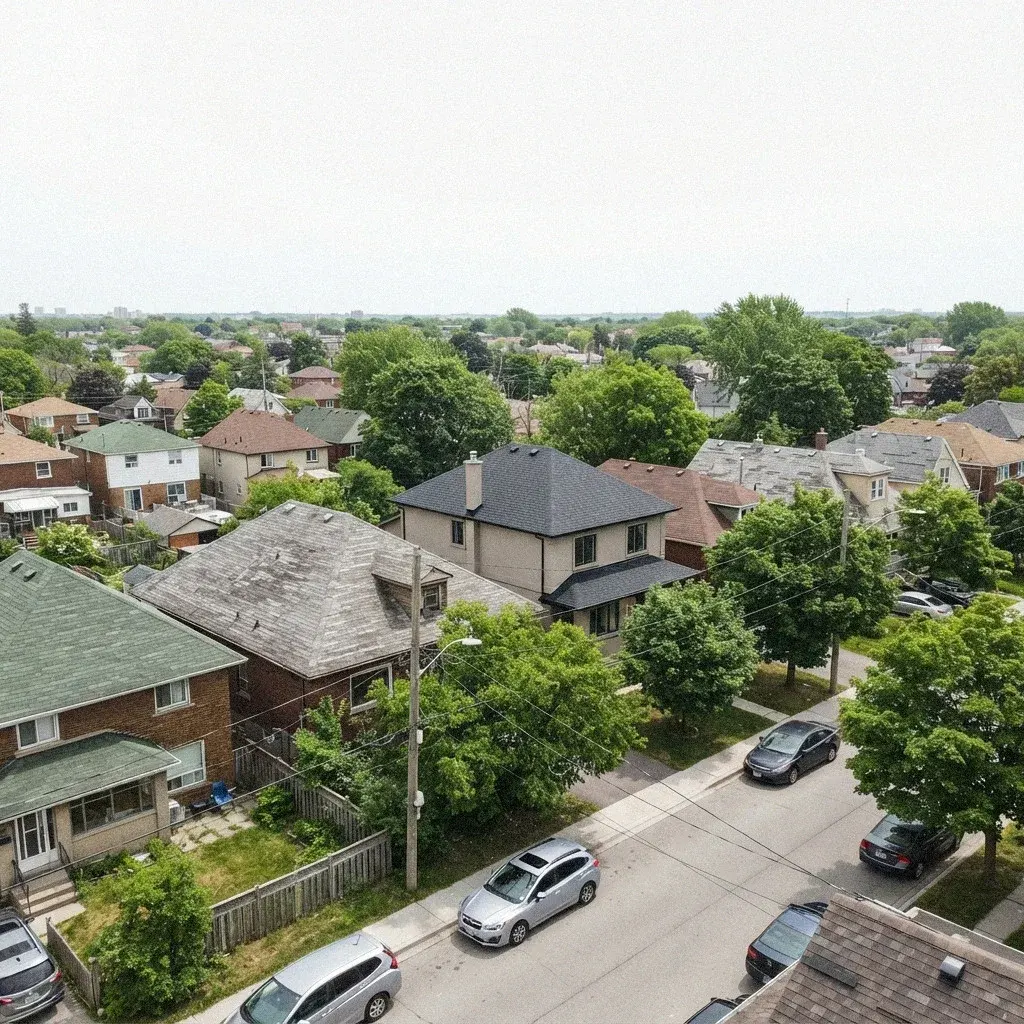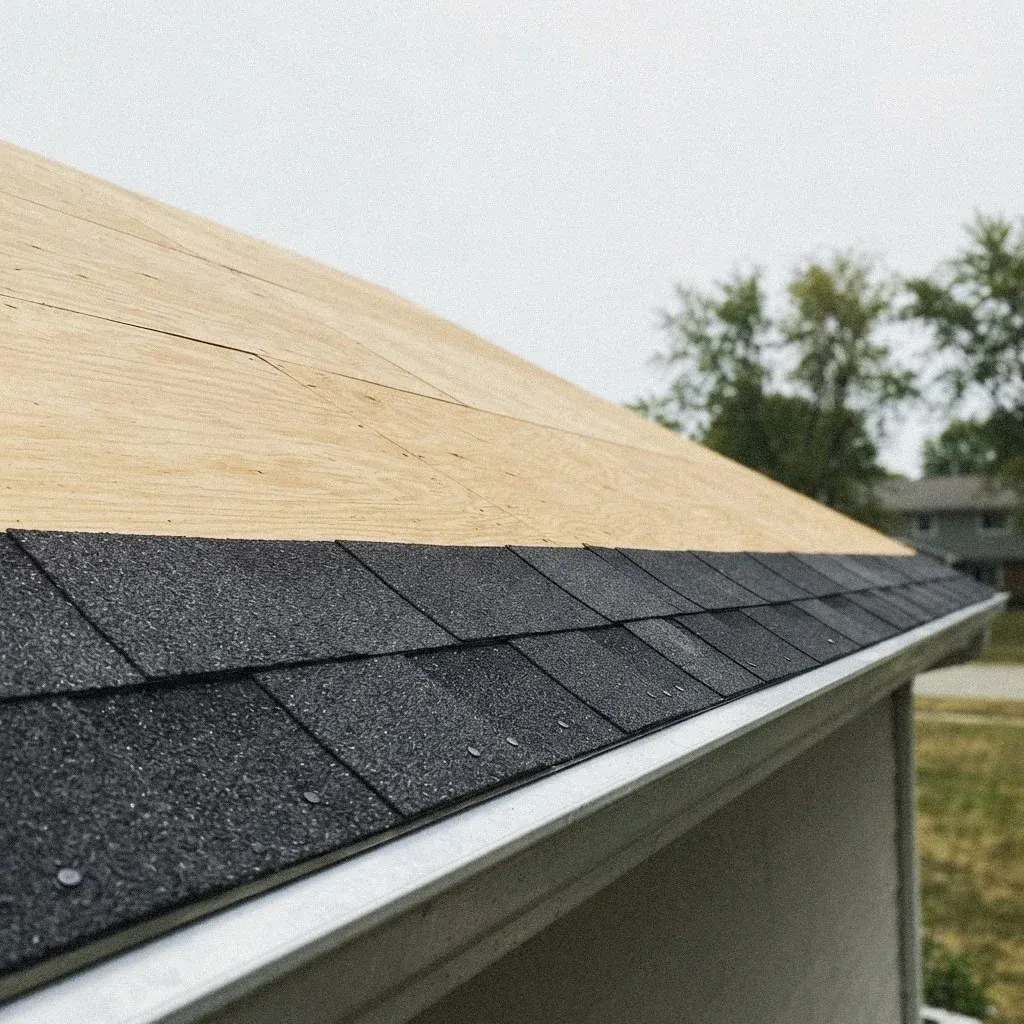
Walk down a block in Kingfield or Tangletown and look at the roofline before the shingles. Bungalows and foursquares from Minneapolis's early decades were framed to hold snow load for a century, and most still do. But a roof that has started to sag isn't showing you one problem. It's showing you one of three distinct shapes, and each shape points a different direction underneath the decking.
Ridge Sag Has a Signature
Ridge sag is the one you can read from the sidewalk. Sight along the peak of the roof against something straight behind it, a power line, a neighboring roofline, the edge of a window frame across the street, and a sagging ridge shows as a long shallow dip with its lowest point somewhere near the middle. The ends stay where they were because they are tied into the gable walls. That shape matters, because it tells you the load is being carried by something in the middle of the span that has given a little: a ridge board with no support under it, a rafter that has spread at the heel, or a bearing wall that was removed in a remodel and never properly headed.
A Slow Curve, Not a Break
Ridge sag builds gradually, which is why it reads as a smooth curve rather than a sudden break when you look down the roofline from the street. That slow curve reflects deflection accumulating year over year, often tied to a collar tie or rafter pair that's no longer holding its original shape under repeated Minnesota snow loads, not a single storm event or one bad winter.
A Dip in One Section Only
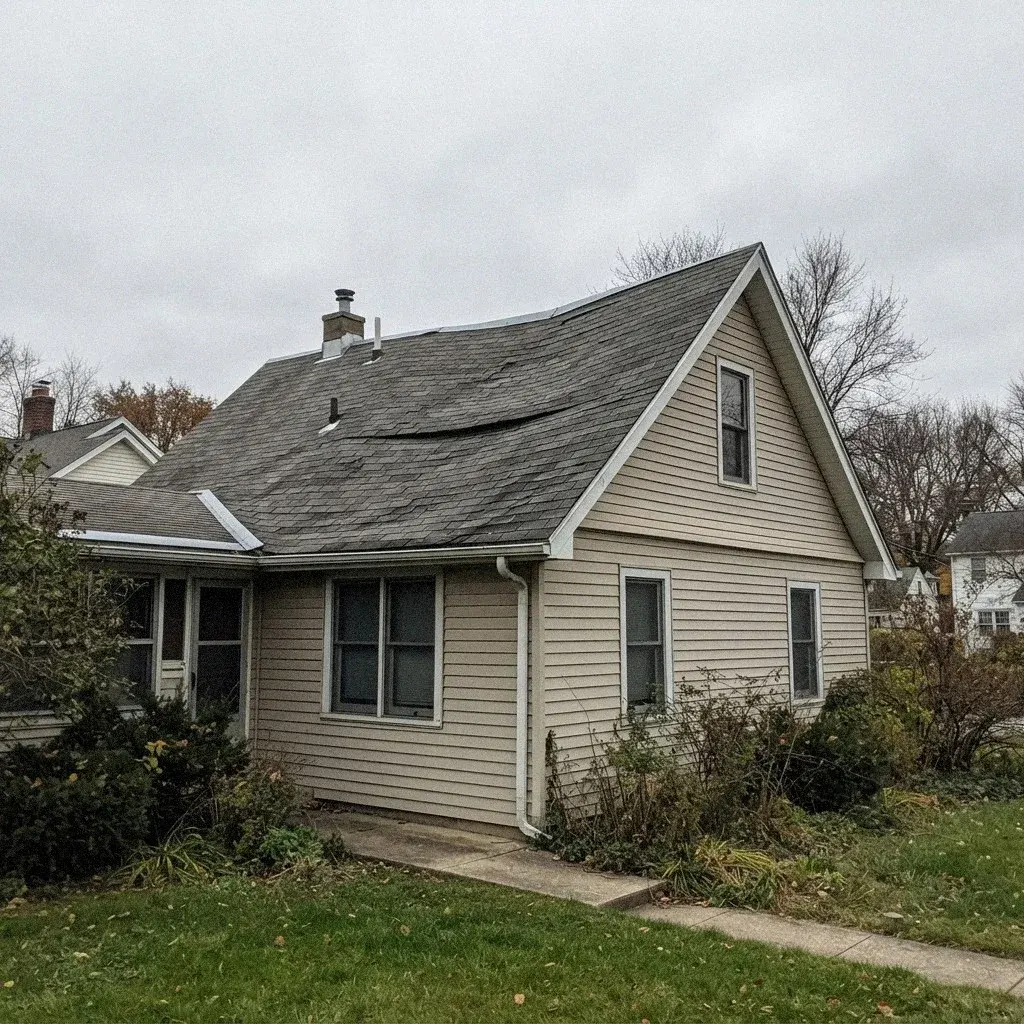
A dip confined to one part of a plane is a different animal from ridge sag, and usually a more urgent one. Where ridge sag is a long gentle curve across the whole span, a section dip has edges: you can see roughly where it starts and stops, and it often sits somewhere with a reason attached, below a valley, around a chimney, above a bathroom, or over an addition. That confined shape almost always means the decking itself has failed rather than the framing. On a Minneapolis house the usual cause is water that got in at one point and stayed, softening the sheathing until it lost the strength to span between rafters.
Two Shapes, Two Targets
Ridge sag and a single-section dip both register as sagging when you're standing on the curb, but a structural assessment goes looking in different places for each. One directs attention up to the ridge beam and the rafter pairs bearing on it. The other sends a contractor toward one localized run of framing or decking, often near a valley, dormer, or old addition where the load path changes.
When the Whole Plane Rolls
A wavy field is a third pattern entirely. Instead of one dip, the entire roof plane rolls gently, almost like loose fabric caught in a breeze off the Mississippi River. This pattern points more toward the roof decking itself than toward the framing underneath it. The rafters can still be straight and sound while the plywood or board sheathing above them has gone soft.
How Delamination Shows Up
Delamination in the roof decking rarely produces one clean low spot the way a cracked rafter does. Instead, the plywood or older board sheathing loses its stiffness across a broader stretch, and the roof plane develops a wavy field instead of a sharp dip. From the street it can look like the whole slope is slightly out of true, with soft spots that only become obvious underfoot.
What Purlins Point To
Some older Minneapolis homes, particularly in the city's mid-century wave from the 1940s through 1960s, use purlins as intermediate supports carrying rafter load down to an interior wall. A wave or dip that lines up at even, regular intervals across the roof plane often traces back to a purlin or its supporting wall settling rather than to the rafters themselves.
Water Is the Common Thread
Whatever shape the sag takes, most sagging rooflines in Minneapolis connect back to water more than one overloaded moment. Roughly 51 inches of snow a year, ice dams along the eaves, and attic condensation in older, less-ventilated bungalow attics all soak into decking and framing slowly, long before the roofline outside ever shows it.
Confirming a Soft Spot
Feeling a soft spot underfoot is how a roofer tells delaminated sheathing apart from framing that has actually moved, and it isn't a homeowner test to try alone on a pitched roof. From the attic side, the same spot usually shows staining, daylight through gaps, or fasteners that have backed partway out of softened wood.
Why This Can't Wait
A sag is the one roof symptom that gets worse on its own, with no help from the weather. Every shape on this list means something is carrying less load than it was built to carry, and a Minneapolis winter puts the heaviest load of the year on top of it. Snow accumulates in the low spot first because that is where it stops sliding, and the extra weight deepens the dip, which collects more snow. A curling shingle waits patiently for you to get to it. A structural sag does not. If the roofline has visibly changed shape, that is the point to get it looked at rather than watched.
Getting It Looked At
None of this replaces someone in the attic with a flashlight and someone on the roof checking the deck by hand. A homeowner in Fulton, Kingfield, or anywhere else in the city who spots a ridge dip, a local low spot, or a wavy field is better served getting a structural assessment scheduled than guessing from the sidewalk.
Dealing with this in your home?
Minneapolis roofs carry the weight of two seasons pulling in opposite directions. Bungalows near Kingfield and Longfellow trap heat in poorly vented attics, melting snow that refreezes at the eaves into ice dams. Come summer, hail off a Hennepin County thunderstorm can strip granules city-wide, no matter the neighborhood.