Offices & Storefronts
Commercial Roofing
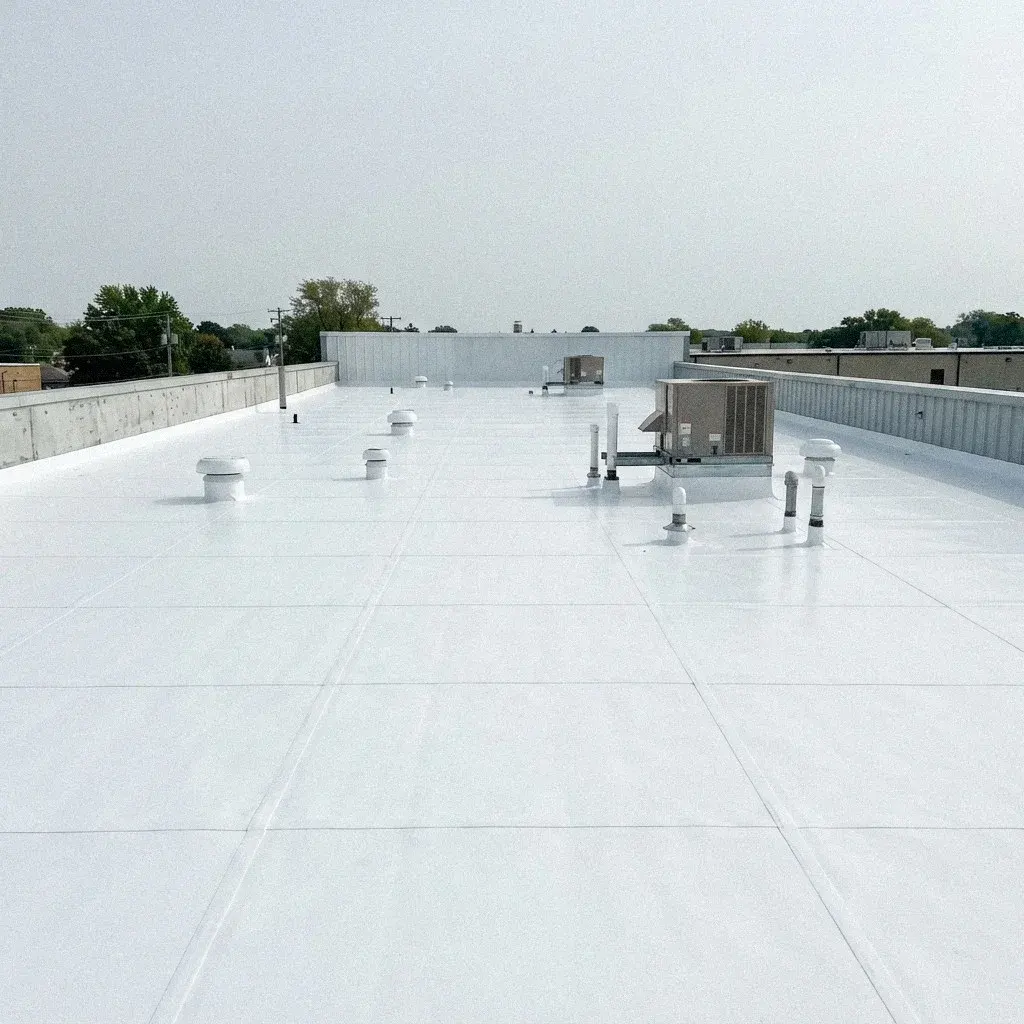
Phased, building-by-building roof work that keeps residents in place across the site.
A property manager schedules Minneapolis apartment roof work building by building, not all at once, so most residents stay in their units. The licensed pros we connect you with plan staging, parking, and a per-building capital plan around the site.
An apartment or condo complex in Minneapolis puts residents under a roof while it's being worked on, which a single-family bungalow owner never has to plan for. A property manager overseeing several buildings on one site cannot clear occupied units the way a homeowner clears a house for the day, so the work has to move around people who are home, working, or asleep on the other side of the ceiling.
A multi-building property in a neighborhood like Powderhorn Park or Longfellow rarely has every roof fail on the same afternoon. One building's top-floor unit gets a maintenance request about a ceiling stain weeks after wind or hail actually opened up the roof, while the building next door might go another two winters before its shingles show the same wear.
What separates a Minneapolis multifamily site from a house is scale that never lines up evenly. A property near Lake Nokomis or along the Mississippi River might carry roof area across six or ten buildings added or reroofed at different times, some original construction, some replaced after a prior hailstorm, and a property manager has to track condition building by building rather than treating the whole site as one roof.
Sequencing work across an occupied Minneapolis complex means giving each building its own timeline instead of running one continuous job across the whole property. Phased building-by-building sequencing lets residents in a finished building go back to normal while crews move on to the next roof, and it keeps a property manager from having to explain why every unit on site is dealing with noise and staging at once.
Resident notice has to go out before crews ever show up, and it has to say more than a date. People near neighborhoods like Seward or Kingfield need to know which building is affected, when a walkway pad or common corridor will be blocked, and where resident parking gets moved for the days work is happening above their unit.
| Step | What It Involves | Effect on Residents |
|---|---|---|
| Who requests the work | One landlord, one tenant | Property manager, many residents |
| Sequencing plan | Single roof, one visit | Building by building, phased |
| Leak reports | Direct call to landlord | Maintenance request system |
| Staging and parking | Driveway, one household | Shared lot, resident parking plan |
| Notice needed | One tenant informed | Building-wide resident notice |
| Capital plan scope | One repair cost | Per-building capital plan |
| Breezeway and corridor tie-ins | Flashing where roof meets shared walkways | Short closures of one walkway pad at a time |
| Building close-out | Property manager walks the finished building | Staging area and resident parking reopen before next building starts |
A property built as apartments was never laid out with a roofing job in mind, so staging has to work around whatever the site already runs on. A staging area for material and a dumpster placement spot both have to avoid blocking a fire lane, a leasing office entrance, or the parking a building's residents count on every day, whether the property sits in Whittier or out toward Fulton.
Breezeways and common corridors slow material movement in ways a detached driveway never would. Getting shingles or underlayment from a staging area up to a specific building's roof often means routing around a walkway pad residents are still using, especially on a site with buildings connected by shared entries rather than separate driveways.
The work-hour window on an occupied Minneapolis property tends to run narrower than on an empty commercial building, since nobody wants a tear-off starting before residents are up or home from an overnight shift. That window can shrink further in winter, when shorter daylight and the cold itself limit how long a crew can safely work a low-slope section before materials get too stiff to handle.
A resident rarely calls in to report a roof problem directly. Instead, maintenance staff get a request about a water stain near a light fixture or a drip along a top-floor wall, and someone has to trace that interior leak report back to the roof above that specific unit before anyone can say what's actually failing.
Once a leak gets traced to the roof, a property manager needs an inspection that speaks to that one building's condition, not a general statement about the whole complex. The licensed pros we connect you with can walk that building's roof area specifically and report back on what's actually driving the interior leak report, rather than guessing based on a neighboring building's age or repair history.
Capital planning for a Minneapolis multifamily property works building by building, because roof age rarely lines up evenly across a site that got built in phases or repaired piecemeal after past storms. A useful capital plan lists each building's roof area separately, with its own condition notes and its own rough timeline, instead of averaging the whole property into one number.
Deciding between a repair and a full reroof on any one building depends on how much of that roof area is actually failing and what the decking underneath looks like once it's opened up. A property manager comparing that cost against next year's budget needs building-specific findings, not a complex-wide estimate that blends a fifteen-year-old roof with one due for replacement.
None of this changes because a property sits in Minneapolis rather than somewhere else, but winter adds its own pressure here. Ice dams along roof edges and frost heave under walkways complicate both the timeline and the staging plan for buildings anywhere from North Loop to Tangletown, and a phased schedule has to account for how much shorter the work-hour window gets once temperatures drop.
A property manager should ask which building's roof area is closest to failing, how resident notice will go out before crews arrive, where resident parking and dumpster placement land during that building's phase, and whether the capital plan treats each roof on the site as its own line item. Those answers matter more than a single number for the whole property.
Capital planning on a Minneapolis multifamily site works building by building, not as one lump sum. A property manager overseeing units near Powderhorn Park or along the Chain of Lakes can fund one building's tear-off this winter and schedule the next for later, so a snow-loaded low-slope section on one roof does not force spending on every roof at once across the site.
A roof's real age isn't just the year it was installed. Attic insulation, ventilation, and how many winters of ice sat on the lower edge all push wear at different rates. Two houses built the same year can need very different work by the time either one gets inspected.Downtown West, Downtown East and Loring Park. Older homes built before modern insulation standards often have less attic protection than current code calls for, which shows up as ice dams or uneven snowmelt patterns on the roof. Bringing insulation and ventilation up to par is often the more lasting fix.
Get specifics before signing anything: what happens at the eaves where ice dams form, how the attic will vent once work is done, and which layer stops wind-driven water at the valleys. A roofer who skips those details is quoting the shingle, not the roof.No two roofs near Bde Maka Ska or out toward Tangletown price the same, because the number follows what the shingles and decking show once someone's actually up there. A foursquare with original flashing reads differently than a re-roofed bungalow near the Mississippi River. Get the estimate from what's on the roof, not a guess from the street. pricing guide, and the commercial overview covers how a scheduled program works.
Commercial Roofing
Condo & HOA Roofs
Notice usually comes from the property manager, not the roofing crew, through a letter or posted notice naming the building and work dates. Minneapolis winters compress the safe work-hour window, so a manager may bundle notice for several buildings if weather forces a tighter schedule than planned.
Sequencing usually starts with the roof area showing the worst wear, often a low-slope section over a breezeway or covered parking where snow and ice sit longest. The licensed pros we connect you with typically walk each building on the site before setting an order for the work.
A resident's leak report goes to the property manager through the normal maintenance request process first, not straight to a roofing crew. The manager logs which building, which unit, and which section of roof is involved, then decides whether the issue needs immediate attention or fits the next scheduled building.
Days, not hours, and it usually starts with the property manager rather than the crew. In practice that means a posted notice, a staging area marked off, and dumpster placement set away from resident parking before tear-off begins on that building.
Managing multiple buildings near the Chain of Lakes or downtown? Call, and get a per-building sequence in writing before work starts.
Call (612) 493-0152