Condos & HOAs
Condo & HOA Roofs
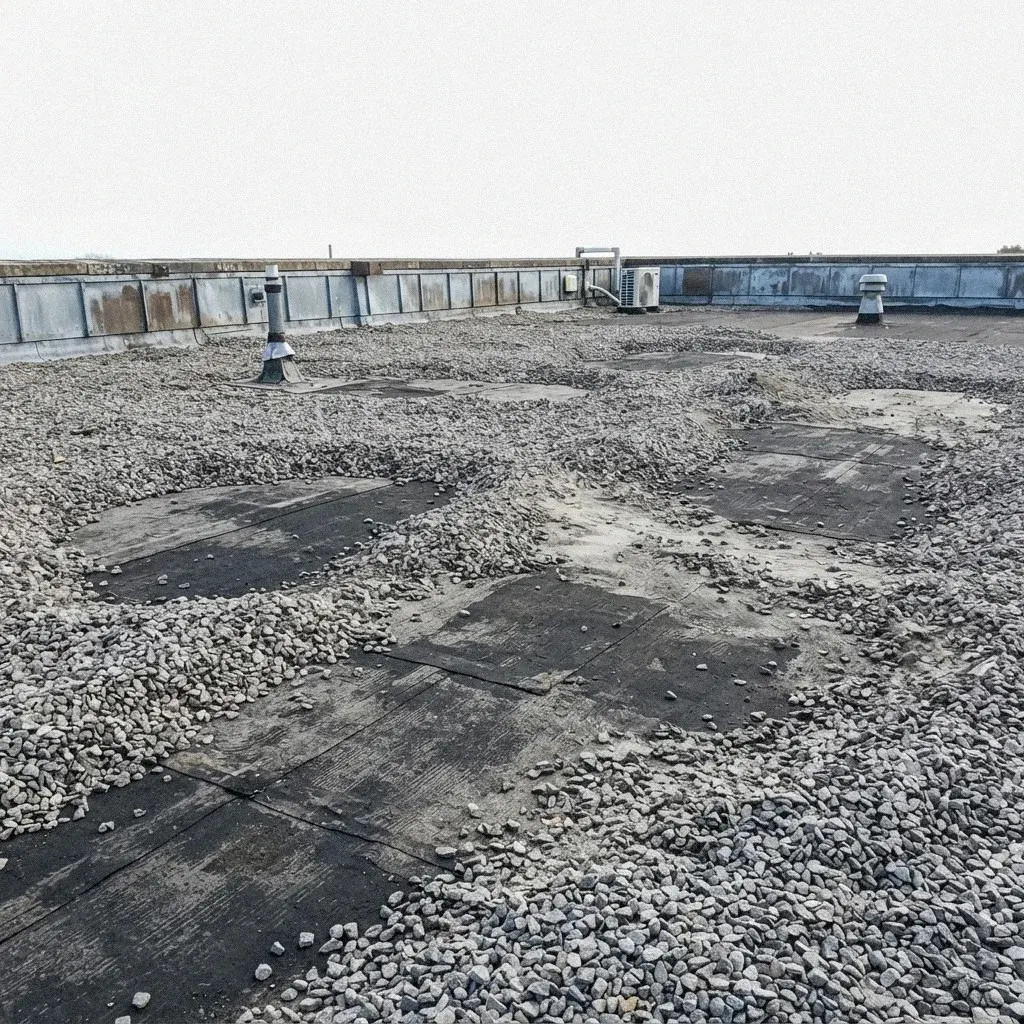
Leak sources, tenant lease responsibility, and after-hours repair timing for Minneapolis offices and storefronts.
A leaking roof over a Minneapolis office or storefront usually starts at a rooftop HVAC unit's equipment curb, a roof hatch, or an old sign penetration, not the shingles. Tenant lease terms decide who calls it in, and after-hours work windows keep the sales floor open.
A storefront on Nicollet Mall or an office suite in Downtown East cannot close because a ceiling tile is dripping. Customers still need a way in, merchandise still needs to move, and a suspended ceiling tile going soft over the sales floor turns into a liability problem fast. Minneapolis office and retail buildings run on business hours that don't bend for weather, so a roof leak found at 10 a.m. has to be triaged, not scheduled for whenever someone gets around to it.
Most office and retail buildings around downtown and along corridors like Lake Street sit under a flat or low-slope roof, and the rooftop HVAC units bolted to that roof are the usual place water gets in. Every unit sits on an equipment curb, and curb flashing that has pulled loose or cracked from freeze-thaw cycling lets water track down into the ceiling below. A leak that looks like it started at the unit itself often started at the curb seam instead.
Because closing the doors isn't realistic, most repair work on Minneapolis commercial roofs happens in an after-hours work window, once the last customer leaves a shop near Uptown or the last employee clocks out of an office near the Mill District. Some buildings push it further and hold the work for a weekend. Either way, the roof gets fixed without anyone on the sales floor ever seeing a ladder.
Business-hours disruption is usually the bigger cost, more than the roof repair itself. A retail space open through normal hours near Eat Street or an office suite running a full day near Loring Park loses money for every hour customers can't get past a blocked entrance or employees can't reach their desks. A short repair during business hours can cost a tenant more in lost sales than the roofing bill.
Weekend work is the other option, and it fits a strip retail building or a small professional office differently than a weeknight job does. A property near Kingfield or Fulton with light Saturday traffic can absorb a daytime repair that a downtown office tower never could. The trade-off is availability, since weekend crews and material deliveries have to be lined up ahead of the storm damage, not after it.
| Spot | Cause | Fix |
|---|---|---|
| HVAC curb flashing | Sealant cracked from freeze-thaw cycling | Reflash and reseal curb joint |
| Old sign penetration | Abandoned bolt holes never sealed | Patch and cover penetration |
| Roof hatch | Gasket cracked by winter cold | Reseal or replace gasket |
| Parapet wall | Cap flashing pulled loose by wind | Resecure and reflash cap |
| Interior roof drain | Debris clog or cracked drain bowl | Clear drain or replace bowl |
| Storefront canopy | Tie-in seam separated from main roof | Reseal canopy tie-in seam |
| Sign or awning penetration | Bolt holes cut through the membrane without proper sealing | Re-flash around the mount and reseal |
| Roof hatch frame | Curb seam opened by repeated freeze and thaw | Reseal hatch curb and check the gasket |
Inventory protection is the sharpest version of this problem for a retail tenant. Stock on shelves or boxed in a back stockroom near a leaking roof section doesn't survive the way a house's carpet might survive a slow drip. A shop near Linden Hills or Uptown with water tracking down through the ceiling toward shelved goods needs the leak stopped and covered fast, not diagnosed at length.
A server room changes the stakes again. A small server room or data closet often sits in a back corner of an office building, sometimes directly under a section of flat roof nobody walks past often. Water finding its way into equipment there isn't a ceiling-tile problem, it's a business-continuity problem, and it usually isn't discovered until something stops working.
Office and retail leases around Minneapolis generally split roof duties along a familiar line: the landlord holds the roof structure and membrane, and common-area maintenance charges typically fold in the cost of keeping it that way. A tenant's own storefront canopy or a sign penetration through the roof deck for an illuminated sign, though, can fall into a gray area the lease doesn't spell out clearly.
Lease-split responsibility is where a lot of office and retail roof problems in Minneapolis stall before anyone picks up the phone. A tenant assumes the landlord already knows about the stain spreading across a ceiling tile, or assumes it's not their problem to report. Minnesota's landlord repair obligations under state law apply to residential leases, not commercial tenant-landlord disputes, so a commercial tenant is working from the lease terms, not a housing statute.
A tenant running a shop near Whittier or an office near Elliot Park is better off reporting a ceiling stain or a soft spot in the tile the day it's noticed rather than waiting to see if it dries out on its own. Documenting it in writing, even a short email to the property manager, gives both sides a record of when the damage started, which matters once the bill for repair or replacement gets sorted out between landlord and tenant.
Interior roof drains are standard on flat commercial roofs around Minneapolis, and they're an easy thing to overlook until one clogs. Debris backing up in a drain during a summer thunderstorm sends water pooling across the membrane instead of off the building, and a roof built to shed water in minutes ends up holding it for hours. That standing water finds the nearest weak seam or flashing detail and gets inside.
A roof hatch used for HVAC servicing gets stepped past during a routine walk and left slightly open or poorly reset more often than anyone would guess. The next rain or the next snowmelt off a Minneapolis roof after a winter storm finds that gap immediately. Parapet walls create a similar trap, holding water against the roof edge instead of letting it run off, which is part of why flat commercial roofs need someone checking them on a schedule.
An office or storefront near Nicollet Mall or the North Loop stays open because customers and tenants expect it to. Treating the roof as part of running that building, not as a problem to deal with only after something drips, is the difference between a planned repair and a scramble on a Friday afternoon with a bucket under a ceiling tile.
The licensed pros we connect you with can check rooftop HVAC units, curb flashing, interior roof drains, and parapet condition in one visit rather than several separate trips. They can work around a business's open hours or hold the job for an after-hours window or a weekend, and help sort out what falls on the landlord's side of the lease versus the tenant's.
An office or retail lease in Minneapolis usually hands the roof structure and membrane to the landlord and the rooftop equipment to whoever installed it, but that split rarely matches what either side remembers signing. When a leak starts at a curb or a sign bracket, tenant and landlord can each assume the other covers it, and the ceiling tile keeps dripping while that gets sorted out. Reading the maintenance and alterations clauses before a leak happens saves that argument.
Roofing crews get booked solid in the short stretch of warm, dry months when the work is easiest to schedule. Waiting until snow is already on the ground to call about a problem usually means a longer wait and fewer material choices than acting earlier in the season.Longfellow, Edina and Bloomington. Roof trouble here rarely announces itself all at once. Snow melts and refreezes at the eaves, water backs up under shingles, and the damage sits inside the roofline for weeks before ceiling marks or attic frost give it away. Hail from a summer storm can crack shingles that keep shedding water fine, right up until they don't.
A roof's real condition often has little to do with its listed age. Two houses with the same shingle year can differ once you weigh attic insulation, tree cover, and how many winters of ice-damming they have taken. A number on paper tells you less than a look at the decking underneath.No two roofs near Bde Maka Ska or out toward Tangletown price the same, because the number follows what the shingles and decking show once someone's actually up there. A foursquare with original flashing reads differently than a re-roofed bungalow near the Mississippi River. Get the estimate from what's on the roof, not a guess from the street. pricing guide, and the commercial overview covers how a scheduled program works.
Condo & HOA Roofs
Multifamily Roofing
Usually the landlord, under the lease's common-area maintenance clause, since the roof deck and membrane are structural. But many Minneapolis office and retail leases shift responsibility to the tenant for anything the tenant installed on the roof, including HVAC units, signage, and antennas. Check the maintenance and alterations sections before assuming either way, and call whoever the lease actually names first.
Rooftop HVAC units are the most common source on Minneapolis office and retail buildings. The equipment curb underneath and the flashing wrapped around it take direct wear from vibration, foot traffic during servicing calls, and the freeze-thaw cycle that comes with a Minneapolis winter. Sign penetrations and roof hatches left unsealed after a repair visit are the other frequent culprits.
Yes. Most roof repair and replacement work can run after normal business hours or on weekends so it doesn't shut down a sales floor or block a storefront entrance. The licensed pros we connect you with can typically schedule an after-hours work window, though material staging and lift placement near the building still need to be worked out in advance.
Move merchandise, files, or server room equipment out from under the leak first. Set a container to catch water and note where it's coming through a suspended ceiling tile, since that spot rarely lines up with the actual roof penetration above it. Photograph the damage before cleanup, then call your landlord or property manager if the lease puts roof repair on them.
Tell us the property type and whether the tenant lease or the landlord covers roof calls, and we will line up a pro for an after-hours work window.
Call (612) 493-0152