Schools & Campuses
Schools & Campuses
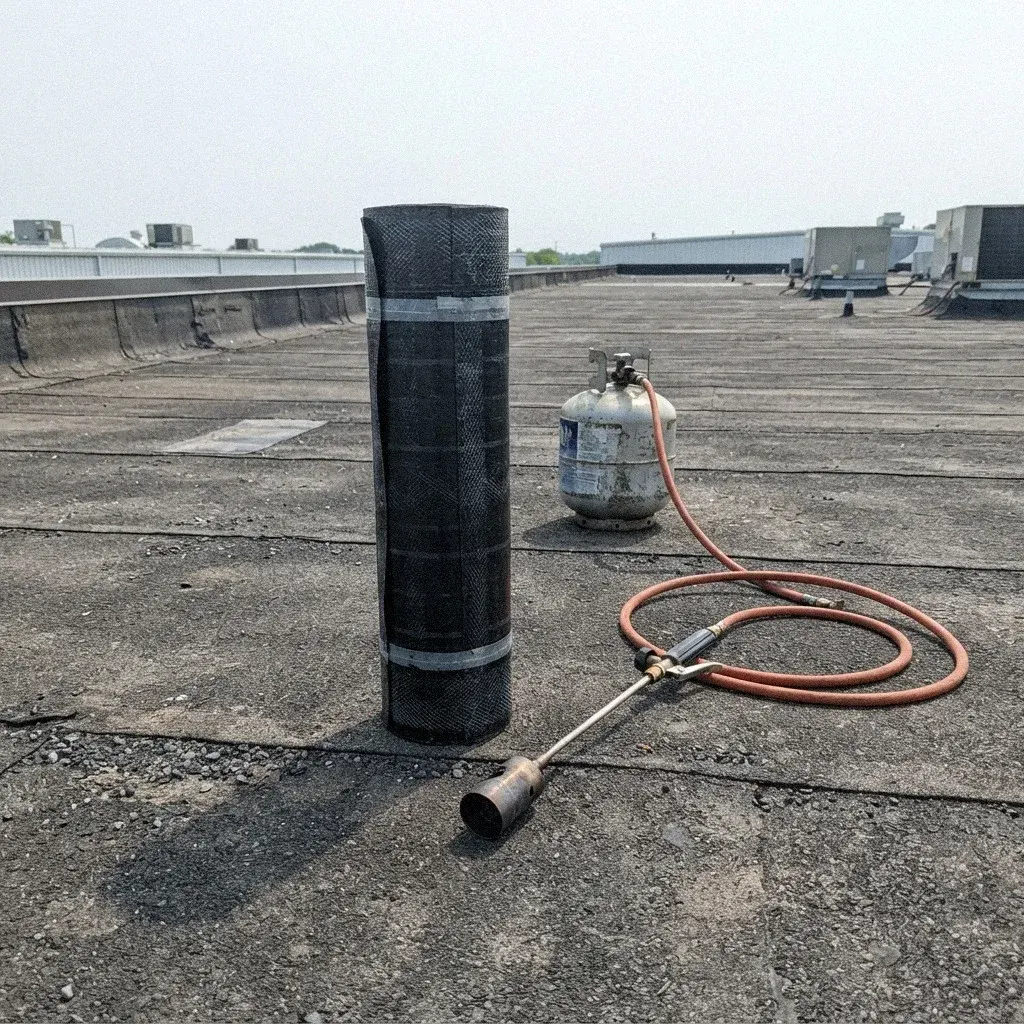
Grease, exhaust penetrations, and cooler curbs repaired around your Minneapolis kitchen's open hours.
Restaurant roofs in Minneapolis wear out at the kitchen exhaust, not in the open field. Grease from hood fans breaks down membrane and flashing around the curbs, and cooler and makeup-air units add more penetrations. Repairs get scheduled around service hours, usually early morning or after close.
Every restaurant kitchen in Minneapolis runs a hood over the line, and that hood ties into an exhaust duct that comes through the roof, not around it. Grease-laden vapor moves through that duct hour after hour during service, and the duct penetration is where the roof takes the first hit. A makeup air unit usually sits nearby, pulling in replacement air through its own curb. Two systems, two openings, both working while the kitchen is open.
Vapor cools once it clears the duct, and grease settles out onto whatever membrane is closest, not just around the curb. Grease breaks down roofing material faster than plain weathering does, softening seams and adhesives that were never built to sit under a film of cooking oil. A restaurant near Eat Street or Lyn-Lake with a busy line can see this show up years before a comparable roof over an office space would.
A grease containment system or grease guard is built to catch that discharge before it lands on the membrane, but it only does that job if it's sized for the hood output and cleaned on a schedule. A guard that's too small overflows onto the roof anyway. One that's never cleaned just becomes another surface holding grease against the membrane. The pros we connect you with check containment condition anytime they're called out for a kitchen-side leak.
Equipment curbs around exhaust fans and rooftop units carry weight and vibration that a flat roof deck wasn't built to absorb on its own. A curb flashed correctly at install can still work loose after years of Minneapolis freeze-thaw cycles pulling at the seal. Swap in a heavier exhaust fan during a kitchen remodel and the curb is now carrying a load it was never sized for, which shows up as a leak at the seam long before anyone notices the fan itself.
Walk-in cooler condensers add a separate set of rooftop penetrations, usually placed away from the kitchen exhaust equipment on its own stretch of membrane. Drain lines and refrigerant lines each need their own curb seal, and each seal is a spot that can fail independently of anything happening near the hood. A restaurant in the North Loop or Downtown East running both a walk-in and a full kitchen line effectively has two separate rooftop systems to watch, not one.
| Spot | What Happens | Why It Matters |
|---|---|---|
| Hood and duct penetrations | Grease vapor degrades membrane | Grease guard and containment check |
| Makeup air unit curb | Separate seal wears from vibration | Curb flashing inspection |
| Walk-in cooler condenser pad | Condensate pooling softens membrane | Drain grate clearing, pad recheck |
| Dining room ceiling stain | Slow leak above finished space | Trace to nearest penetration |
| Dish area moisture | Steam and leak combine near curb | Ventilation and membrane check |
| Patio cover edge | Exposed to snowmelt and spring runoff | Flashing and drain grate review |
| Dish room duct stretch | Constant humid air meets grease residue | That section wears out ahead of the rest of the roof |
| Patio cover anchor points | Bolts break the membrane's factory seal | Winter freeze-thaw works those holes wider every year |
A leak over the dining room ceiling gets noticed the same day it starts, because it shows up in front of seated customers in a restaurant in Uptown or the Mill District. A brown stain spreading over a table nobody can seat is a problem an owner has to act on immediately, not something that can wait for a slower week. That urgency is different from almost any other kind of commercial leak.
A leak over the dish area or a dry storage room plays out on a slower clock. Staff notice it, a bucket goes down, and the fix can sit for a few days without a customer ever seeing it. That doesn't mean the damage is smaller. Water sitting near dish machines or dry storage in a Whittier or Seward kitchen can reach food-safe surfaces and stored goods just as easily as it reaches a dining room ceiling, just without an audience.
The pros we connect you with trace where a leak starts before deciding how fast it needs to move, because a leak near a duct penetration can travel sideways under the membrane and surface somewhere else entirely. Knowing whether water is coming from the exhaust curb, the makeup air unit, or a walk-in cooler condenser changes both the repair and how much of the kitchen has to come off line while it happens.
A restaurant in Dinkytown or Cedar-Riverside doesn't get to close the dining room for an afternoon the way a retail shop might. Roof work over a working kitchen gets scheduled around service hours, which often means closed-hours work late at night or early morning before prep starts, so the crew is off the roof before the first ticket of the day goes up.
Service door access and delivery windows matter just as much as when the dining room seats guests. A kitchen runs on trucks arriving on schedule, and a crew blocking that door, even for a short repair, can back up a delivery that a walk-in cooler or dry storage room was counting on. Coordinating around that access window is as much a part of the job as the roof work itself.
A patio cover changes how water moves across a restaurant roof that has one, since it often isn't draining on its own. Instead it sheds toward or across the main roof surface, adding volume the original drainage wasn't sized to handle. A restaurant near Lake Harriet or Lake of the Isles with outdoor seating can end up with a low-slope section carrying more runoff than the roof plan ever accounted for.
Drain grates near the kitchen wing collect grease residue on top of the usual leaves and grit that settle on any low-slope Minneapolis roof. A grate that's slow to drain during a summer thunderstorm can back water up against a duct penetration or curb seal that was never meant to sit wet. Checking those grates alongside the equipment they sit near catches a problem before it becomes standing water.
A restaurant roof problem left alone tends to worsen right at the points tied to kitchen equipment, not evenly across the whole surface. An inspection that only checks general wear and skips the hood curb, the makeup air unit, and the walk-in cooler condenser misses exactly where a Minneapolis restaurant roof actually fails first.
Restaurants carry a kind of wear other Minneapolis commercial tenants simply don't produce. The hood runs grease-laden vapor over the same stretch of membrane every service, and months of that film working into seams and containment systems adds up to damage that looks different from ordinary weathering, and needs someone who knows to look for it there first.
A North Loop kitchen running brunch through late dinner needs a different closed window than a Dinkytown spot near campus with a shorter lunch rush and a quiet late night. The licensed pros we connect you with ask about your actual service hours before setting a schedule, not after. That means confirming when the hood shuts down, when the walk-in condenser can go unmonitored, and when a delivery truck is due at the service door.
Roofing crews get booked solid in the short stretch of warm, dry months when the work is easiest to schedule. Waiting until snow is already on the ground to call about a problem usually means a longer wait and fewer material choices than acting earlier in the season.Tangletown, Diamond Lake and Keewaydin. Most roof damage in Minneapolis builds slowly rather than arriving all at once. Melting and refreezing snow backs up at the eaves, ice dams form, and water works under shingles into the attic before anyone sees a stain on a ceiling below.
A roof's real condition often has little to do with its listed age. Two houses with the same shingle year can differ once you weigh attic insulation, tree cover, and how many winters of ice-damming they have taken. A number on paper tells you less than a look at the decking underneath.No two roofs near Bde Maka Ska or out toward Tangletown price the same, because the number follows what the shingles and decking show once someone's actually up there. A foursquare with original flashing reads differently than a re-roofed bungalow near the Mississippi River. Get the estimate from what's on the roof, not a guess from the street. pricing guide, and the commercial overview covers how a scheduled program works.
Schools & Campuses
Churches & Nonprofits
Multifamily Roofing
Grease-laden vapor moves up through the exhaust hood and cools against the underside of the membrane near the duct penetration, leaving a residue that softens seams faster than sun and Minneapolis winters do on their own. Left unchecked, that softened membrane gives water a path in, and a leak here often shows up as a stain nowhere near the actual duct.
Most hood and duct penetration repairs at a Minneapolis restaurant happen after close, since the work requires shutting exhaust airflow down completely. A kitchen near Eat Street running dinner service late into the evening needs a shorter closed window than a breakfast-focused spot in Linden Hills that clears out earlier. The pros we connect you with build the schedule around your actual hours.
Yes. A walk-in cooler condenser sits bolted to its own curb, and the seal around that curb carries the unit's weight plus constant low-level vibration, which works against the membrane over time. That stress often shows up first as a soft spot or a slow leak right at the curb edge, not somewhere else on the roof.
Often, yes. A single hood curb or one equipment penetration can usually be worked on while the rest of the kitchen keeps operating, as long as the makeup air unit and walk-in condenser stay protected. The pros we connect you with map out which systems have to go offline and which can keep running during the repair.
Get a kitchen exhaust penetration and grease containment check scheduled around your Minneapolis restaurant's service hours.
Call (612) 493-0152