Condos & HOAs
Condo & HOA Roofs
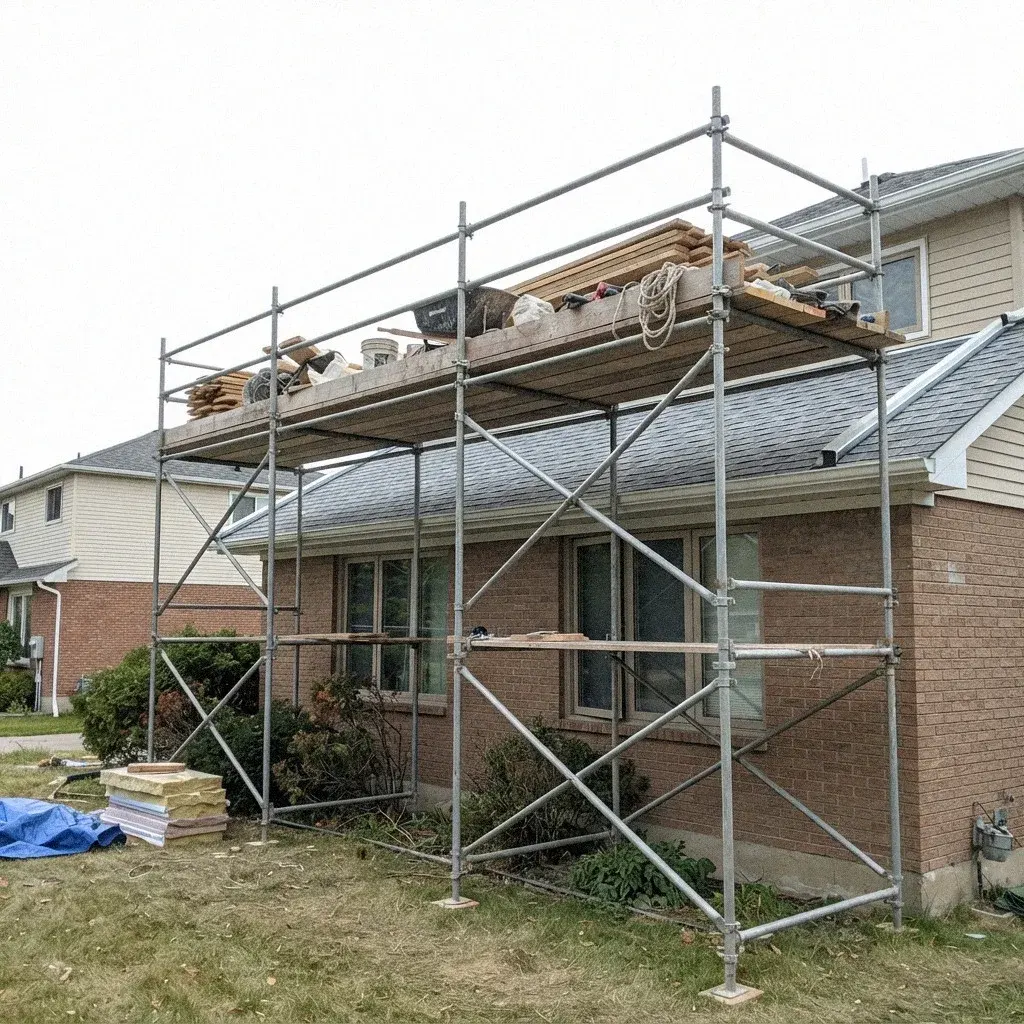
A phased scope, a volunteer board vote, and work timed to services in Minneapolis.
A church or nonprofit roof in Minneapolis gets planned around capital-campaign funding and the worship schedule: a phased scope a volunteer board can approve in pieces, with steeple, bell tower, and mixed steep-and-low-slope sections assessed and protected before work starts near the sanctuary.
A church roof in Minneapolis doesn't fail on a convenient week. A steeple over the sanctuary, a bell tower at the corner, and a fellowship hall wing added later all sit under one roof budget but rarely one roof shape. Congregations from Whittier to Kingfield deal with the same pattern: a steep, visible section the neighborhood notices and a low-slope section behind it that fails first and quietly.
Mixed steep and low-slope geometry means more transitions, and every transition is a place water can find a way in. Where a steep nave roof meets a flatter classroom or office addition, flashing has to shed water from one plane onto another without trapping it. Older Minneapolis churches near Lowry Hill East or Prospect Park often have two or three of these joints, each added in a different decade by a different crew.
None of that repair work happens on a roofer's schedule alone. A Sunday service, a Saturday wedding, a funeral called on short notice, and a weekday preschool or tutoring program all need the building quiet and dry. A congregation in Longfellow or Seward planning a roof project has to work backward from those fixed dates, not forward from when a crew happens to be free.
A leak over the sanctuary does more damage than a leak almost anywhere else a church owns. Water tracks along a plaster ceiling until it stains or drops, finds the lead lines of a stained glass window, or reaches a pipe organ that costs far more to dry out and re-voice than the roof ever cost to fix. A fellowship hall leak is a nuisance; a sanctuary leak is a restoration project.
A steeple or bell tower is its own structure sitting on the main roof, often framed and flashed differently than the rest of it. Access matters too — a steep, narrow steeple roof over a Minneapolis sanctuary near Kenwood or Tangletown isn't reached the same way as a low fellowship hall roof, and it needs its own inspection, not a glance from the ground during a walk of the main roof.
| Concern | What It Reaches | Why It Matters |
|---|---|---|
| Funding source | Capital campaign, memorial gifts, grants | Operating budget or loan |
| Approval process | Volunteer board vote | Property manager signs off |
| Roof geometry | Steeple, bell tower, mixed steep and low-slope | Single low-slope field |
| Scheduling constraint | Services, weddings, funerals, weekday programs | Business hours only |
| Interior at risk | Sanctuary, stained glass, plaster ceiling, pipe organ | Office space, storage |
| Typical approach | Phased scope tied to campaign pacing | Single full replacement |
| Water tracking into the sanctuary | Plaster ceiling, stained glass framing, pipe organ | Memorial gifts and instruments are not replaceable |
| Fitting work around the calendar | Weekday programs, weddings, funerals, Sunday worship | A sanctuary closed on short notice has no backup date |
Money for a church roof in Minneapolis rarely shows up as one deposit. It comes together through a capital campaign, a grant application, a memorial gift given in someone's name, and general donated funds already committed elsewhere. That mix is normal, but it means the roof project usually has to be scoped before anyone knows exactly how much is available, not after.
Phasing a roof to match a capital campaign's pace can work, but only if the whole roof was assessed as one project first. Splitting the steep sanctuary section from the low-slope fellowship hall section into separate phases is reasonable; splitting them without a shared plan for flashing and drainage between them usually means paying twice to fix the same seam.
A volunteer board making this call is usually not made up of building professionals, and that's normal. What matters is a written scope covering the full roof condition, not just the section with budget attached this year, so the board is choosing a sequence on purpose instead of discovering the rest of the roof later at a worse price.
Worship schedule drives everything about when work happens. Weekly services, weddings, funerals, and weekday programs all need the building usable, and a funeral can't be rescheduled around a crew. A congregation near Cedar-Riverside or Marcy-Holmes with a shared building for community programs has even less flexibility, since the calendar is booked by more than one group.
Minnesota's winter closes the practical window for steep and low-slope roof work for months at a time, and ice dams don't wait for a capital campaign to finish raising money. A congregation that waits until a leak shows up in January is choosing between rushing a phased decision or living with buckets in the sanctuary until spring.
A nonprofit running a food pantry or shared community space in a neighborhood like Powderhorn Park or Seward faces the same timing mismatch as a church. Grant cycles and board approval take months, and a roof doesn't wait for the next funding round to decide when it's done leaking. The building often serves several programs at once, so downtime has to be split across more than one group's calendar.
The same approach that helps a church board helps a nonprofit board: get the whole roof assessed and documented before deciding what gets funded first. A single low-slope roof over a shared community room is often easier to phase than a mixed steep-and-low church roof, but the same rule holds — decide the sequence with the full picture in hand, not one section at a time.
In practice the scheduling runs backward. The congregation or nonprofit board names its fixed dates first — services, a booked wedding, a program that can't move — and the roof work gets planned around what's left. A bid should still cover the building's full roof condition in writing, steep and low-slope sections both, whether the funding covers one phase or all of it.
What a church or nonprofit board in Minneapolis is really deciding isn't just steeple versus fellowship hall, or this phase versus the next one. It's how to protect a sanctuary, a donated organ, and stained glass that can't be replaced with the same money that paid for them the first time, while keeping services, weddings, and weekday programs running on schedule.
A sanctuary leak in Minneapolis rarely announces itself right away. Water can travel along a rafter or valley and show up over the plaster ceiling well away from where it entered, staining a medallion or a wall near stained glass before anyone in the congregation notices. By the time it's visible, insulation and lath above the sanctuary may already be soaked, which is why a small leak reported after a Sunday service deserves a same-week look rather than a spot on next month's agenda.
Roofing crews get booked solid in the short stretch of warm, dry months when the work is easiest to schedule. Waiting until snow is already on the ground to call about a problem usually means a longer wait and fewer material choices than acting earlier in the season.North Loop, Downtown West and Downtown East. Roof trouble here rarely announces itself all at once. Snow melts and refreezes at the eaves, water backs up under shingles, and the damage sits inside the roofline for weeks before ceiling marks or attic frost give it away. Hail from a summer storm can crack shingles that keep shedding water fine, right up until they don't.
A roof's real condition often has little to do with its listed age. Two houses with the same shingle year can differ once you weigh attic insulation, tree cover, and how many winters of ice-damming they have taken. A number on paper tells you less than a look at the decking underneath.No two roofs near Bde Maka Ska or out toward Tangletown price the same, because the number follows what the shingles and decking show once someone's actually up there. A foursquare with original flashing reads differently than a re-roofed bungalow near the Mississippi River. Get the estimate from what's on the roof, not a guess from the street. pricing guide, and the commercial overview covers how a scheduled program works.
Condo & HOA Roofs
Commercial Roofing
Industrial Roofing
Most Minneapolis congregations we hear from want scope broken into phases tied to what a capital campaign or memorial gift can realistically cover across two or three budget years. A volunteer board can authorize the steeple or the worst section of the sanctuary roof first and hold the fellowship hall or education wing for a later phase once more giving comes in.
Usually, yes. A steeple or bell tower needs a lift or scaffold rather than a ladder, and its flashing meets the main roof at angles a standard Minneapolis bungalow roof never has. Where a steep sanctuary section joins a flat-roofed fellowship hall or office wing, that transition is inspected separately, since the two coverings age and fail on different timelines.
Rarely. Weddings, funerals, choir practice, and weekday preschool or meal programs keep most Minneapolis church buildings occupied on some schedule nearly every day. The licensed pros we connect you with typically plan tear-off, re-decking, and any loud work around a calendar the church provides, naming blackout dates up front so nothing scheduled months out gets disrupted.
It depends on the source. A grant or memorial gift earmarked for roofing often comes with its own reporting requirements, so documentation in writing, with photos and a clear scope, matters more than on an ordinary home repair. A donated fund may also cover materials and labor but not the full scope a board hoped for once old covering comes off and hidden damage shows.
Bring the board a phased scope with photos of the steeple and sanctuary. Call, and the licensed pros we connect you with will plan it around your calendar.
Call (612) 493-0152