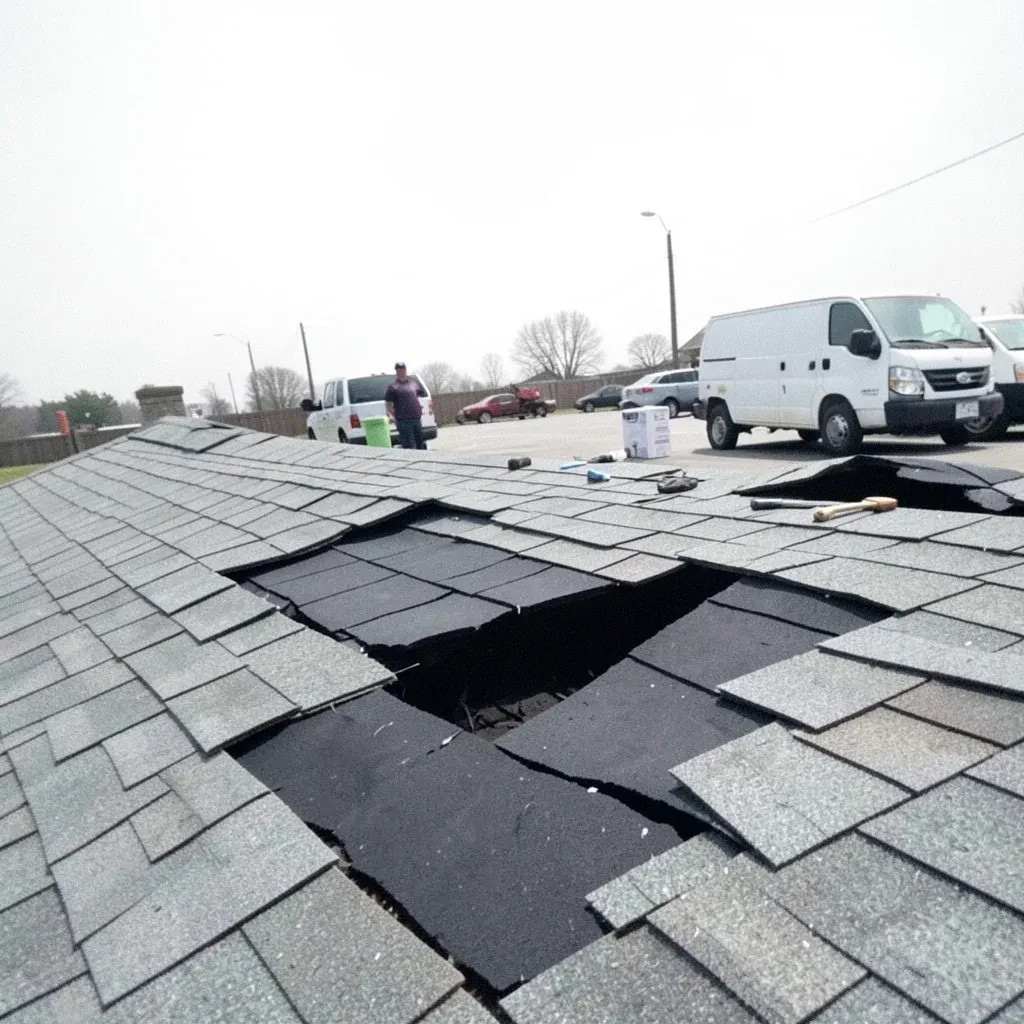
What Roofs Here Are Up Against
Steel shake and tile profiles show up on newer builds and reroofs across Linden Hills and Tangletown where homeowners want the snow-shedding speed of metal without the flat, plain look of a standing-seam panel on a Craftsman bungalow roofline.
The stamped shake or tile pattern also suits Colonial Revival and Queen Anne houses near Kenwood and Lowry Hill, where a plain metal panel would look out of place but composition shingle wears out faster under repeated ice dam cycles.
Attic insulation and ventilation levels vary a lot between a 1920s bungalow and a house built after current energy codes. Upgrading one without checking the other can trap heat or moisture where it does not belong, which shows up on the roof deck first.
Storm Damage vs. Normal Wear
- Service life
- A steel shake or tile roof commonly runs three to five decades in Minneapolis, well past a three-tab or architectural shingle's working life.
- Roof weight
- Stamped steel panels weigh less per square than concrete tile and close to standing seam, so most Tangletown or Kingfield rafters carry it without added framing.
- Minimum slope
- Steel shake and tile panels need at least a 4:12 slope to keep water moving off their stamped ridges before wind can drive it back under a course.
- Walkability
- Walkable by design, with a ribbed or interlocking profile that holds foot traffic better than clay tile or synthetic slate during an inspection.
- Damage repair
- A roofer unclips the damaged panel along its course, slides in a matching replacement, and re-engages the interlock and fastener pattern at the seam.
- Time of year
- Late summer through fall, once severe thunderstorm season past the Mississippi River eases up, is the steadier window for a steel reroof in Minneapolis. Panels install fine in cool weather, but a dry deck matters more than the temperature outside.
- Estimated cost
- an estimated $11000–$30000
Questions Worth Asking Before Anyone Climbs Up
Steel shake and tile profiles get confused with standing seam, another metal roof but a plain vertical-seam panel rather than a stamped shake or tile pattern. Homes in Bryn Mawr or Linden Hills might carry either, and from the street both simply read as a metal roof. Standing seam shows continuous raised seams running straight up the slope with no texture between them. Steel shake and tile profiles are stamped into overlapping shingle or tile shapes with visible shadow lines and exposure, closer in look to the cedar or composition roofs common across Diamond Lake and Cleveland.
What a Repair Actually Fixes
A steel shake or tile reroof starts with a tear-off down to solid decking, since these panels need continuous, sound sheathing rather than the skip sheathing found under some older cedar roofs in Prospect Park or St. Anthony East.
Underlayment goes down next, often with added ice-and-water protection at eaves and valleys given how often Minneapolis sees ice dams, then panels are fastened per the manufacturer's pattern with matching trim at ridges, hips, and rake edges.
A basement leak sometimes starts at the roof, not the foundation. Water can travel a long way down through old framing before it shows itself, so a stain on a second floor ceiling might trace back to a cracked vent boot or worn valley far above it. Tracing it takes someone who checks the roof first.
Which of the two you actually need
| The situation |
Usually the right call |
|---|
| One failure in one place, found early | One visit |
| A repair that has already been done once and failed | Replacement rather than another repair |
| Water that has got past the underlayment | Replacement, because the structure is involved |
Who Must Be LicensedSteel panel roofing in Minneapolis needs a permit the same as any other covering, since the city does not set a threshold by material or by area. Beyond that, most of what governs a steel roof comes from the manufacturer rather than the code: fastener spacing, clip pattern, underlayment, and minimum slope are all written into the product's requirements, and departing from them is what voids the coverage.
The Slow Slide from Small Leak to Big Repair
Steel shake and tile profiles degrade mainly through paint chalking and fading after years of sun and freeze-thaw cycling, coating breaks at cut edges or fastener heads that let rust start, and occasional hail denting that can crack the finish over a panel face.
Roof Tasks A Homeowner Can Handle
Panel installation calls for exact fastener spacing and clip alignment that a confident homeowner in Webber-Camden or Folwell can get wrong on the first try. Ask the licensed pros we connect you with about fastening pattern and underlayment before signing anything.
Why Small Problems Turn Into Big Repairs
Rust that reaches bare steel and keeps weeping can stain siding or gutters on a house near Cedar Lake or Brownie Lake, but it's a cosmetic and structural concern rather than a mold risk, since steel itself doesn't feed fungal growth like damp wood decking does.
Know The Cost Before Winter Decides For You
Expect an estimated $11000 to $30000 for steel shake and tile profiles here, with the pitch, the access and how much decking is sound doing most of the moving. Minneapolis winters kill off the insects that drive roofing costs elsewhere, so a licensed inspector isn't pricing carpenter ant or wood-boring damage here. What shows up instead near Longfellow or Kingfield bungalows is ice dam rot at the eaves and nail corrosion from decades of freeze-thaw. That's a moisture and age question, not a pest one, and it changes what actually gets quoted. pricing guide.