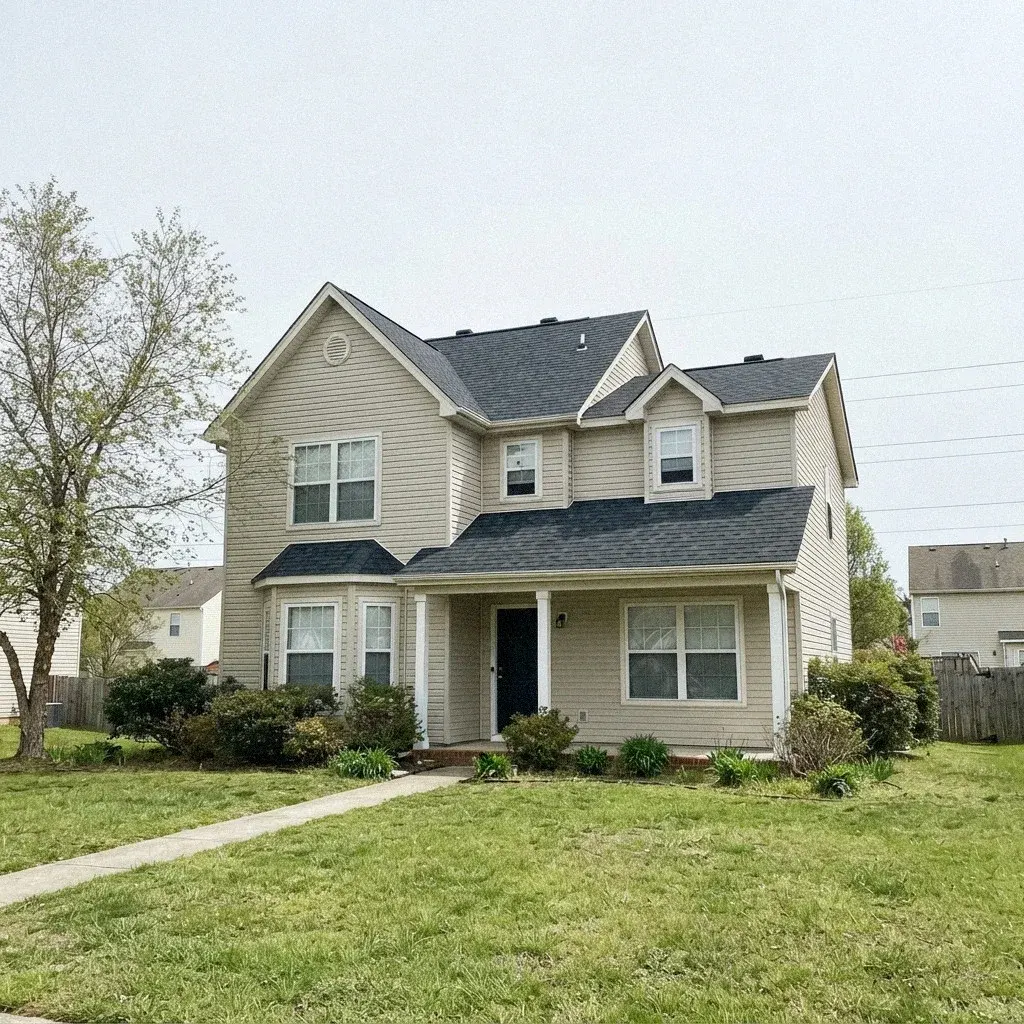
A shingle color that looks right on the brochure card can look wrong the moment it goes up over a Kingfield foursquare or a Tangletown bungalow. The house has siding, trim, brick, or stone already in place, and the roof either sits with those tones or fights them. Choosing a shingle blend is less about picking a favorite color and more about reading the house that's already there, then checking how that reading holds up against the houses next to it.
What A Color Blend Means
Most architectural shingles are not one flat color. They're a blend, several granule shades mixed together, and that blend is what creates a shadow band, the darker line that falls across each course and gives the roof depth instead of a flat painted look. A tight, low-contrast blend reads calmer from the street. A wider blend with more shade variation reads busier up close but can hide dirt, streaking, and age better over years of Minneapolis weather.
Reading Brick And Stone Undertones
Undertone is the quieter color hiding inside a shade that looks neutral at first glance. A gray shingle can lean warm, with brown or tan mixed in, or cool, with blue or charcoal mixed in. Brick and stone have the same thing going on underneath. A brick foundation or chimney on an older Minneapolis home often carries a warm, reddish-brown undertone, and a shingle blend with a cool gray base can sit oddly against that instead of matching it.
Warm Tones Versus Cool Tones
Warm versus cool isn't about the color name on the shingle wrapper, it's about which direction that color leans. Two shades both called gray can be a warm gray and a cool gray, and set side by side they clash more than a gray and a brown would. Siding color is the other half of that comparison. A house with warm cedar-toned siding or tan stucco generally sits better under a warm-leaning shingle blend than a cool, blue-gray one.
Setting The Contrast Level
Contrast level is how far apart the lightest and darkest tones in the blend sit from each other. A monochromatic scheme keeps trim, siding, and roof close in tone, which tends to make a smaller Longfellow or Seward bungalow look larger and less broken up. A higher-contrast approach, where the trim and fascia color stand apart from the roof and siding, can suit a bigger Queen Anne or Colonial Revival home in Linden Hills or Kenwood with more architectural detail to frame.
Checking Trim And Fascia
Trim and fascia color is often the piece homeowners forget to check against a new roof color. White trim reads differently next to a warm brown shingle than it does next to a cool charcoal one, and fascia boards sit right at the roofline where any mismatch is hardest to miss. Before settling on a blend, it helps to look at trim color, siding color, and roof color together as one set, not as three separate decisions made on three separate days.
Getting The Ridge Cap Right
A ridge cap is usually cut from the same shingle as the field, but on some blends the ridge cap match can look slightly different once it's up, since it sits at a different angle to the sun than the rest of the roof. It's worth asking to see a ridge cap sample alongside the field shingle before the roof goes on, rather than assuming they'll read identically from the sidewalk on a street like those around Powderhorn Park or Seward.
Why Swatches Mislead You
A brochure swatch is a two-inch chip lit under indoor light, and it almost never predicts how a color reads across a full roof slope in daylight. A full-size sample board, several shingles laid out together, shows the actual blend and shadow band at real scale. Minneapolis light changes with the seasons too; a blend that looks fine under a gray November sky can look different in the flatter light of a Minnesota winter afternoon.
Doing A Real Mock-Up
A mock-up viewing means looking at that sample board outdoors, against the actual house, not propped against a wall inside a showroom. Walk it to the street and look from the same distance a neighbor walking past on the sidewalk would see it. Colors that look identical indoors under fluorescent light can separate into clearly different tones once they're outside next to real brick, real siding, and real daylight.
Watching For Dye Lot Shifts
Shingles are manufactured in batches, and color can shift slightly from one production run to the next, something suppliers call dye lot variation. It matters most on a repair or a partial replacement, where new shingles have to blend with an existing roof section rather than cover the whole house. For a full reroof it matters less, but it's still worth confirming that all the bundles delivered for one job came from the same run before they go up.
Judging From The Street
Full-size sample boards matter more than brochure swatches once you compare a shingle blend against actual siding and trim in daylight. Bungalows in Linden Hills and foursquares near Tangletown often carry brick or stone undertones that shift a color blend warmer or cooler than the rack sample suggested. Prop the board against the fascia, step back to the curb, and check it again near dusk before deciding on contrast level or shadow band depth.
Making The Final Call
None of this is about matching a single approved list; there's no board that has to sign off on a color choice the way there can be for other exterior changes. It's a judgment call made by looking at the house, the block, and the sample outdoors before anything goes on the roof. Getting a second, trained eye on that comparison, someone who's looked at a lot of these decisions on Minneapolis homes, tends to catch a mismatch before it's nailed down.
Dealing with this in your home?
Minneapolis roofs carry the weight of two seasons pulling in opposite directions. Bungalows near Kingfield and Longfellow trap heat in poorly vented attics, melting snow that refreezes at the eaves into ice dams. Come summer, hail off a Hennepin County thunderstorm can strip granules city-wide, no matter the neighborhood.